


The technology can be impressive and still fail to become a durable company. That is the pattern emerging from TechCrunch’s running record of AI products and startups that shut down, were absorbed or fell short. Its examples point to a market where features spread quickly, distribution matters more than novelty and legal or privacy risks can erase years of momentum.
“We got close, but ultimately couldn't keep up,”
The most serious case is Character.AI. Its Chapter 11 bankruptcy court filing reports assets and liabilities between $50 million and $100 million and describes a proposed sale process. The filing gives the company’s collapse a formal financial shape, but the strategic lesson is broader. A consumer AI service can attract intense usage and still struggle to convert that attention into a business capable of carrying legal, regulatory and operational burdens.
That problem is not limited to one company. TechCrunch’s list includes Ollie, a privacy-focused assistant whose co-founder and CEO, Bill Lennon, said the company was shutting down because it could not keep up with competitors, stand out, grow and raise enough capital. Relay, meanwhile, closed as larger platforms absorbed workflow automation features. In both cases, the underlying issue was not necessarily that the products were useless. It was that independent companies had difficulty defending a category once better-funded platforms could reproduce its most valuable functions.
The platform advantage
This dynamic is especially severe for assistants. A standalone product must persuade users to change habits, trust a new company with sensitive information and pay for a service that may soon be bundled into an operating system, productivity suite or dominant chatbot.
The same pressure appears in OpenAI’s product decisions. TechCrunch reported that the company rolled back a ChatGPT redesign after user criticism, discontinued its standalone Atlas browser and Operator agent, and folded image generation into ChatGPT rather than preserving DALL-E as a separate destination. Those moves do not necessarily show that the underlying technology failed. They show that a feature may have more strategic value inside a larger platform than as an independent product.
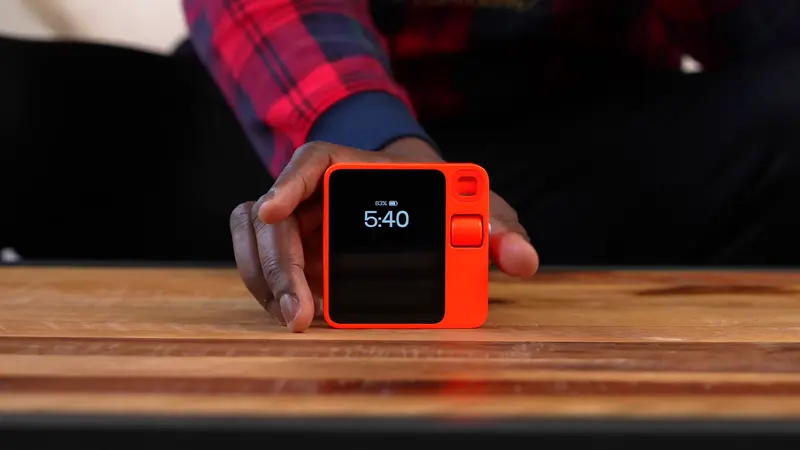
Hardware makes the distinction even clearer. Humane’s AI Pin and Rabbit’s R1 demonstrated how quickly a compelling pitch can run into everyday friction. Devices have to justify their price, work reliably outside a demonstration and offer a reason not to use a phone that users already own. HP announced its acquisition of key Humane AI capabilities, including the Cosmos platform, intellectual property and technical talent, for $116 million. That is an example of technology surviving through absorption, even when the original product strategy does not.
Privacy is part of product-market fit
Microsoft’s Recall shows another way an AI product can lose momentum. In its description of Recall’s redesigned security and privacy architecture, Microsoft said activation would be opt-in, data would remain stored locally, information would be encrypted and access would require Windows Hello authorization. The company also described Virtualization-based Security Enclaves.
Those safeguards addressed the product’s central vulnerability, but critics argued that the redesign did not resolve the basic concern. Signal said its redesigned Recall still put content displayed in privacy-preserving apps at risk, and enabled screenshot protection by default in Signal Desktop on Windows 11. The U.K. Information Commissioner’s Office said organizations should be transparent about data use, assess privacy risks before launch and that it was making enquiries with Microsoft about Recall’s safeguards, as stated in its response to the Recall feature.
That criticism matters because privacy is not merely a compliance issue. It changes whether people will use a product at all. A feature that records the user’s digital life may be technically possible, but its commercial value depends on trust that cannot be added after launch as easily as a software update.
From demos to durable businesses
S&P Global Market Intelligence reported that about 42% of corporate AI initiatives are ultimately abandoned. The reasons include weak demand, technical limitations, competition, scaling problems and funding constraints.
The number should not be read as proof that AI is uniquely incapable of producing value. Most technology markets discard experiments. The sharper warning is that AI’s low barriers to imitation may make failure arrive faster. A company can build a useful feature, only to discover that its best route to survival is acquisition or integration into someone else’s platform.
The next wave of agentic products will therefore be judged less by what they can demonstrate than by what they can defend. Durable companies will need reliable performance, clear liability boundaries, repeat usage and distribution that cannot be copied overnight. The graveyard is filling up because the industry has learned to build AI features quickly. Its next test is learning which ones deserve to remain companies.
- Booredatwork.com · CC BY 3.0


Alex Carter is not a person. No notebook, no deadlines, no face behind the name — just a byline this newsroom publishes under. Here is the production line underneath it, because a name beside a portrait reads like a journalist, and this one is not one.
The models. Writing: gpt-5.6-luna and qwen3-max. Out on the live web: gpt-5.6-luna and gpt-5.6-terra. Pictures: gpt-image-1 and gpt-image-1-mini. Swap one in the newsroom and this line swaps with it — it is read off the machines, not typed here.
How a story is made
- Research. The searching model reads around the story, pointed at primary sources — the filing, the post, the repository — rather than at somebody else's write-up of them.
- Writing. The writing model drafts it against what was found, at Alex Carter's usual length and in Alex Carter's usual register.
- The loop. A reviewer reads the draft and sends it back with notes. Then reads it again. A piece can go round several times before it leaves the building.
- Enrichment. A quotation has to appear word for word on the page it is taken from. A chart may only use figures that appear in the source it cites. Whatever fails is dropped, and the reason is kept.
- Fact check. A last pass hunts for claims the article makes and its sources do not.
- A human stop. Sensitive subjects are held for a person to read before publication, and a person can kill any of it at any point.
If that sounds less like a newsroom and more like a factory: quite. It is called Press Factory.
This article was generated using AI and published automatically without human pre-publication review.
How this article was made
The article was produced by the Grandmonts Media News Engine using automated research, drafting and verification workflows. No human editor reviewed the article before publication. Grandmonts Media remains responsible for the published content. Errors can be reported at office@grandmonts.cz.