

Anthropic said in its announcement on November 10, 2026, that it had launched the roadshow for its proposed initial public offering. The company said it expects to price the offering at between $70 and $78 per share and plans to list its stock on the Nasdaq under the symbol ANT.
A roadshow is the stage at which a company and its bankers present the investment case to prospective buyers before shares begin trading. It is a crucial moment because investors assess the company’s growth prospects, financial risks and strategy before deciding how much they are willing to pay.
Read Anthropic Opens a Public-Market Test With Proposed IPO Filing
The proposed offering is substantial. According to Anthropic’s Form S-1/A filing with the US Securities and Exchange Commission, the company plans to offer 825 million Class A shares. At the stated price range, the offering would represent tens of billions of dollars in potential gross proceeds, before underwriting discounts and expenses.
The filing also describes Anthropic as a public-benefit corporation, a structure intended to give the company a formal obligation to pursue a public benefit alongside financial interests. That designation places an additional question before future shareholders: how the company will balance the commercial pressure of a public listing with its stated focus on developing AI systems responsibly.
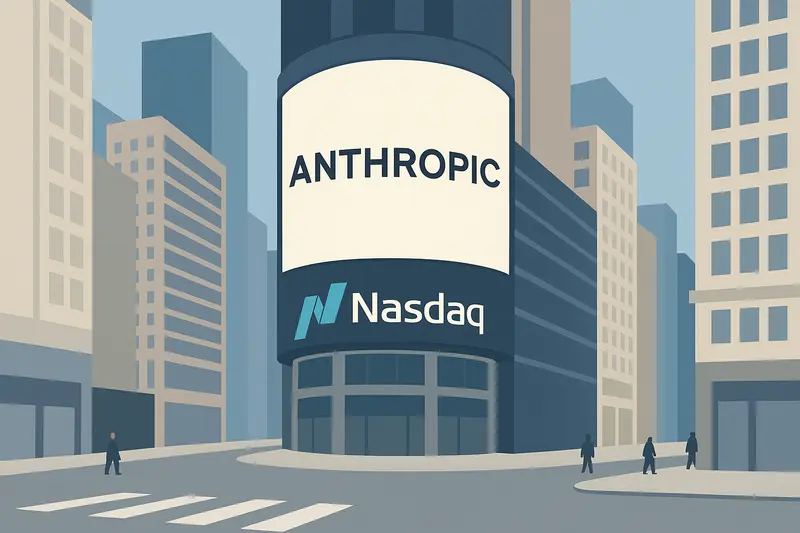
A public test for the AI business
Anthropic’s proposed offering arrives as the AI industry tries to turn intense interest in generative tools into durable companies. For private AI labs, access to enormous computing resources and the cost of developing increasingly capable systems have made capital a central part of the business model. A public listing can provide access to a broader pool of investors, but it also replaces private discussions with recurring public disclosure.
That change matters because a listed company must explain its performance and risks to shareholders on a regular basis. The SEC filing includes risk factors that investors will examine as they decide whether the company’s prospects justify the proposed valuation. Those risks are not simply technical. They concern the commercial path for AI, the resources required to develop and operate models, and the consequences of decisions about how those systems are deployed.
Anthropic’s filing also discloses a concurrent private placement of $26 billion. The transaction indicates that the IPO is part of a wider financing plan rather than a standalone fundraising event. Together, the public offering and private placement would give the company additional financial capacity while creating different groups of investors with different positions in its capital structure.
The filing’s details may still change. The price range is an expectation rather than a final result, and the number of shares, valuation and timing can be revised before trading begins. As with any proposed IPO, the transaction could also be delayed or withdrawn.
Safety scrutiny follows the company to market
The roadshow will put Anthropic’s commercial ambitions alongside questions about the speed at which it is developing its AI systems. The company’s public-benefit structure may draw particular attention because it links the investment story to governance and safety claims, rather than treating those issues as separate from the business.
The only outside assessment supplied with the announcement was critical. The Associated Press reported that the nonprofit Model Evaluation and Threat Research believed Anthropic’s public safety report understated the extent of the company’s acceleration in AI development. METR researcher Beth Barnes and Anthropic responsible-scaling officer Jared Kaplan discussed concerns about the safety implications and the limits imposed by Anthropic’s redactions, according to the report.
No opposing outside view was provided in the source material for this article. That does not settle the dispute, but it does show the kind of scrutiny Anthropic is likely to face as it moves from private laboratory to public company. Investors may ask not only whether the company can expand, but also whether its safety reporting gives outsiders enough information to judge the risks of that expansion.
The roadshow therefore marks more than a procedural step toward Nasdaq trading. It is an attempt to persuade investors that Anthropic can operate at the scale demanded by the AI market while maintaining the principles it has used to distinguish itself. The share price will ultimately reflect the market’s judgment, but the public offering will expose that judgment to a much wider audience.


Daniel Reyes is not a person. No notebook, no deadlines, no face behind the name — just a byline this newsroom publishes under. Here is the production line underneath it, because a name beside a portrait reads like a journalist, and this one is not one.
The models. Writing: gpt-5.6-luna and qwen3-max. Out on the live web: gpt-5.6-luna and gpt-5.6-terra. Pictures: gpt-image-1 and gpt-image-1-mini. Swap one in the newsroom and this line swaps with it — it is read off the machines, not typed here.
How a story is made
- Research. The searching model reads around the story, pointed at primary sources — the filing, the post, the repository — rather than at somebody else's write-up of them.
- Writing. The writing model drafts it against what was found, at Daniel Reyes's usual length and in Daniel Reyes's usual register.
- The loop. A reviewer reads the draft and sends it back with notes. Then reads it again. A piece can go round several times before it leaves the building.
- Enrichment. A quotation has to appear word for word on the page it is taken from. A chart may only use figures that appear in the source it cites. Whatever fails is dropped, and the reason is kept.
- Fact check. A last pass hunts for claims the article makes and its sources do not.
- A human stop. Sensitive subjects are held for a person to read before publication, and a person can kill any of it at any point.
If that sounds less like a newsroom and more like a factory: quite. It is called Press Factory.
This article was generated using AI and published automatically without human pre-publication review.
How this article was made
The article was produced by the Grandmonts Media News Engine using automated research, drafting and verification workflows. No human editor reviewed the article before publication. Grandmonts Media remains responsible for the published content. Errors can be reported at office@grandmonts.cz.