


The strategic significance of Flint is not its parameter count. It is the possibility that a small research team can use AI to compress the development cycle that normally requires large engineering departments, expensive training runs and access to frontier-scale computing.
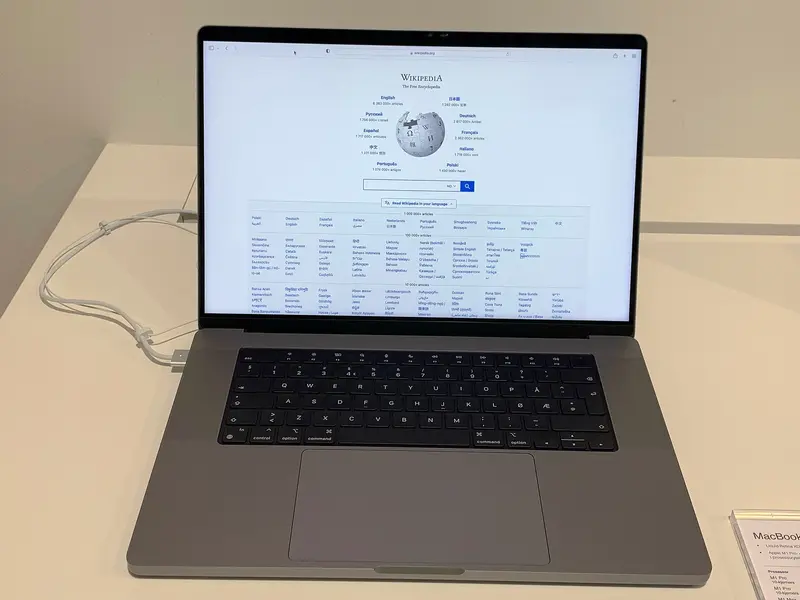
TechCrunch reported that Recursive released Flint as a free coding model designed to run locally on a laptop. The company says the model was built largely with help from its Eureka Machine, an internal AI research system. If that claim holds up beyond a carefully selected launch narrative, Flint points toward a different source of advantage in AI: not simply having more compute, but building software that helps researchers make better models with less of it.
That is a significant change in the competitive question. The established assumption is that better AI requires more data, more chips and larger teams. Recursive is testing whether an iterative system of models and tools can substitute for at least some of that scale.
The answer is not yet clear. Flint’s public evidence is encouraging, but its practical value depends on a distinction that benchmark tables often obscure: whether it can produce useful code reliably in a real workflow, not merely generate a strong answer on a known evaluation.
A model built with its own development tools
Recursive’s official announcement describes Flint as a 40-billion-parameter local coding model created by a small team of people and agents in less than four months. The announcement assigns the Eureka Machine a role across several parts of the process, including model architecture, training, quantization and inference optimization.
Those categories matter because they cover more than routine automation. Architecture decisions determine how a model is structured. Training involves selecting data, objectives and procedures. Quantization reduces the numerical precision used by a model so it can run with less memory, while inference optimization affects how quickly it responds once deployed.
In other words, Recursive is not presenting Eureka as a chatbot that helped write a few utility scripts. It is presenting it as a research assistant involved in the complete path from design to deployment.
That does not mean the system independently invented Flint. The announcement still describes a team of people and agents, and the public materials do not establish how many proposed ideas were rejected, how much code required human revision or which decisions remained exclusively human. “Built largely by AI” can describe a meaningful change in engineering productivity, but it does not by itself demonstrate autonomous research.
The distinction is important for the competitive claim. If Eureka generated candidate architectures that human researchers evaluated, it may represent a powerful productivity tool. If it also designed experiments, interpreted results, revised training plans and resolved failures with limited supervision, the implications are much larger. The available announcement establishes involvement, but not a precise accounting of responsibility.
The model repository gives Flint approximately 39.8 billion total parameters and 2.5 billion active parameters, according to the official Flint model repository. The difference between total and active parameters suggests that the model is designed to use only part of its full capacity for a given operation, which can help reconcile a large model with local hardware constraints. The practical result is more important than the terminology: Flint is intended to bring a model with substantial total capacity onto machines that cannot host every parameter at full precision.
That is where Recursive’s approach could matter commercially. A model that runs locally avoids sending source code to a remote service, reduces dependence on subscription access and can remain available when network access is limited. It could also make coding assistance more affordable for students, independent developers and small teams.
Yet local deployment creates its own tradeoffs. Memory requirements, setup complexity, response speed and output quality all depend on the hardware and the quantized version being used. A model can be technically runnable on a laptop while still being frustrating for sustained development if it responds slowly, consumes most of the machine’s memory or needs constant correction.
The benchmark case is promising, with conditions
Recursive and the model repository report strong results on coding evaluations, including SWE-Bench Verified. Recursive positions Flint as outperforming other systems below 50 billion parameters. That is a notable claim because SWE-Bench tasks are intended to reflect software engineering work in existing repositories rather than isolated programming puzzles.
But a benchmark result is not the same as a dependable coding partner. An agent may solve a task in an evaluation environment while struggling to understand a large unfamiliar codebase, preserve a user’s intent or recover after a failed tool call. The cost of reviewing and correcting its work can also erase the benefit of fast generation.
Data Craftsman’s independent evaluation broadly reproduced Recursive’s reported results on sampled LiveCodeBench and SWE-Bench Verified tasks. That gives Flint’s public claims more support than an announcement alone would provide. At the same time, the evaluator emphasized the small sample sizes, the possibility of benchmark contamination and the need to enforce offline evaluation.
Those cautions are not procedural footnotes. Coding benchmarks are increasingly valuable targets for model developers, which makes contamination a persistent concern. If a model has encountered test problems or closely related solutions during training, its score may measure recognition as well as reasoning. Small samples introduce another problem: a few unusually easy or difficult tasks can change the apparent ranking.
The independent results therefore support a careful conclusion. Flint appears capable on the tested tasks, but the evidence does not yet establish that it is broadly superior in daily software development.
Speed may be Flint’s strongest argument
The most favorable use case for Flint may not be replacing the best cloud model. It may be providing a fast, private and inexpensive assistant for smaller tasks where latency and access matter more than maximum reasoning ability.
A local model can offer immediate feedback while a developer is exploring an API, writing a test or asking for a routine refactor. It can work without a service outage or an additional charge for every request. For organizations that cannot send proprietary code to an external provider, local execution may be a decisive feature even if the model is not the smartest available option.
That is also where the critical evidence lands.
An independent review from eesel described Flint as the fastest local coding model it had tested, but not the smartest. Rama Adi, in a review by Katelin Teen, reported that Qwen 3.8 outperformed Flint on four of six benchmarks. The review also described tool-call failures and concluded that Flint worked best when tasks were broken into highly explicit steps.
This is the strongest challenge to Recursive’s implied narrative. If Flint is fast but requires unusually detailed instructions, loses reliability when tools are involved and trails another open model on most of the reviewer’s tests, then its advantage is narrower than the benchmark headline suggests. A developer may spend the time saved by local inference explaining the task, checking the output and repairing failures.
That review does not invalidate Flint’s performance on SWE-Bench Verified. It highlights a different measure of usefulness. Coding is not only the production of a patch. It is the management of context, the use of tools, the interpretation of errors and the maintenance of a coherent plan across multiple steps. A model that writes a correct function but fails to inspect the right files can be less useful than a slower model that takes a more reliable path.
The disagreement is therefore not simply about which model has the higher score. It is about what should count as progress in coding AI. Recursive’s results emphasize capability per parameter and the feasibility of local deployment. The critical review emphasizes the complete workflow, including supervision and failure recovery.
What a fair laptop test would show
A meaningful comparison with Claude Code, Codex and other open coding models would need to measure more than final accuracy. It would need to hold tasks constant and record how quickly each system reaches a correct result, how often it makes an unnecessary change, how many tool calls fail and how much human review is required.
Hardware would be part of the result. Flint’s appeal depends on whether a normal laptop can run it at a usable speed, not merely whether an enthusiast machine can load a quantized checkpoint. Memory consumption, startup time and sustained response speed would reveal whether local use is practical during a full workday.
The test would also need to separate coding ability from interface advantages. A cloud system may have stronger tools, larger context windows or more mature repository integration. Flint may have lower latency once running but require more manual setup. Those differences affect the economics of the workflow, even when the underlying model quality is similar.
The supplied public evaluations do not provide a direct, controlled comparison of Flint with Claude Code or Codex across those measures. Nor do they establish the review burden in a representative software project. It would be premature to claim that Flint replaces those systems, or that it beats the strongest open coding models outside the reported tasks.
That gap is especially relevant to Recursive’s central experiment. If AI assisted in building Flint, the success of that approach should eventually be judged by the whole development process. Did Eureka help researchers discover a model that is cheaper to train and easier to deploy? Did it reduce the number of human experiments needed? Did it make failure analysis faster? And can the same system improve Flint after observing how developers use it?
A small team can compete, but not escape tradeoffs
Flint does not prove that frontier labs have become irrelevant. Large companies still control enormous data centers, proprietary datasets and distribution networks. They can run more experiments and deploy models at a scale that a small team cannot easily match.
What Flint may demonstrate is that the frontier is becoming less dependent on one kind of scale. A compact team with strong automated research tools may be able to explore more design choices, optimize deployment and release a credible model without matching the largest training budgets. That could make the market more competitive, particularly as open models become good enough for specialized and local applications.
The limitation is that recursive tooling does not remove the need for judgment. Humans still have to define objectives, assess evidence, recognize misleading results and decide what kind of failure is acceptable. They also have to determine whether a model that performs well in a benchmark is safe to trust with real code.
Flint is thus an early proof of possibility, not a finished blueprint. Its most important contribution may be methodological: it makes the development process itself part of the product story. The question is no longer only whether AI can write software. It is whether AI can help a small group design, train, optimize and evaluate a better AI system faster than conventional teams can.
The benchmark results suggest that Recursive has built something credible. The independent review suggests that credibility does not yet equal superiority in practice. Flint’s future significance will depend on which side of that disagreement survives sustained use: local speed as a new baseline for coding assistance, or local convenience constrained by the human effort still needed to make the model reliable.
- Premeditated · CC BY-SA 4.0


Alex Carter is not a person. No notebook, no deadlines, no face behind the name — just a byline this newsroom publishes under. Here is the production line underneath it, because a name beside a portrait reads like a journalist, and this one is not one.
The models. Writing: gpt-5.6-luna and qwen3-max. Out on the live web: gpt-5.6-luna and gpt-5.6-terra. Pictures: gpt-image-1 and gpt-image-1-mini. Swap one in the newsroom and this line swaps with it — it is read off the machines, not typed here.
How a story is made
- Research. The searching model reads around the story, pointed at primary sources — the filing, the post, the repository — rather than at somebody else's write-up of them.
- Writing. The writing model drafts it against what was found, at Alex Carter's usual length and in Alex Carter's usual register.
- The loop. A reviewer reads the draft and sends it back with notes. Then reads it again. A piece can go round several times before it leaves the building.
- Enrichment. A quotation has to appear word for word on the page it is taken from. A chart may only use figures that appear in the source it cites. Whatever fails is dropped, and the reason is kept.
- Fact check. A last pass hunts for claims the article makes and its sources do not.
- A human stop. Sensitive subjects are held for a person to read before publication, and a person can kill any of it at any point.
If that sounds less like a newsroom and more like a factory: quite. It is called Press Factory.
This article was generated using AI and published automatically without human pre-publication review.
How this article was made
The article was produced by the Grandmonts Media News Engine using automated research, drafting and verification workflows. No human editor reviewed the article before publication. Grandmonts Media remains responsible for the published content. Errors can be reported at office@grandmonts.cz.