


That strategy matters because Nvidia’s influence rests not only on its hardware. Its software libraries, development tools and established workflows have made its GPUs the familiar destination for AI teams. TechCrunch reported that Google and Amazon are now targeting this advantage by making alternative chips easier to use with PyTorch, the framework that underpins much of modern AI development.
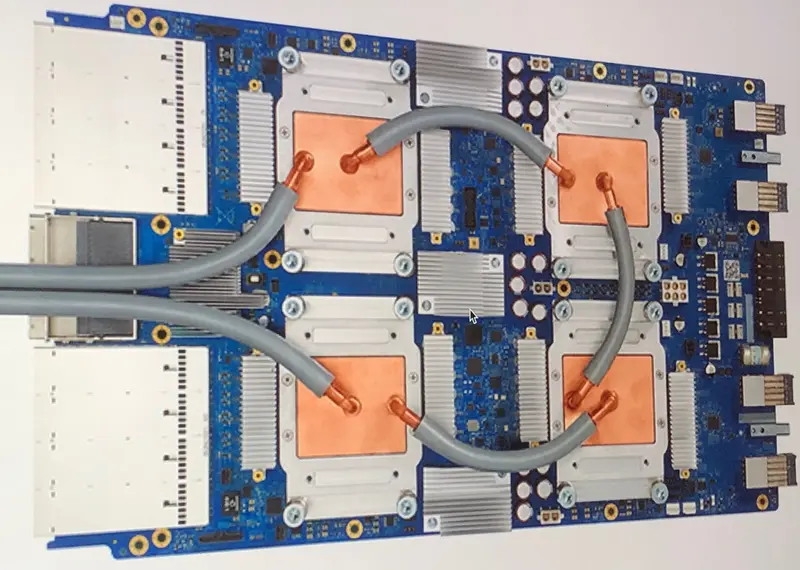
Google’s approach is TorchTPU, an open source PyTorch backend for running models and operations on TPUs. In its announcement, Google Cloud said TorchTPU supports native PyTorch execution on TPUs with minimal code changes. The intended result is straightforward: developers can move an existing application to Google’s chips by changing the device configuration rather than rebuilding the application around an unfamiliar programming model.
That distinction could influence purchasing decisions. Hardware changes are expensive when they require engineering teams to rewrite training pipelines, inference systems and debugging processes. If the code remains substantially similar, cloud customers can evaluate TPUs based on performance, price and availability instead of treating them as specialized platforms that demand a separate expertise.
The project’s official repository describes TorchTPU as a backend supporting eager execution, torch.compile, distributed training and debugging. Those capabilities cover more than simply running a model once. They are part of the broader development cycle, from experimentation and optimization to large scale training and diagnosing failures. Google’s TorchTPU repository presents the project as an effort to bring those PyTorch workflows to Google TPUs.
Google also says it developed TorchTPU with ecosystem partners including Meta and Hugging Face. That collaboration is significant because compatibility is measured by the tools developers already use, not only by whether a chip can execute a basic neural network. A backend that works with major model libraries and deployment workflows has a better chance of becoming routine infrastructure.
The company has paired the software release with a TPU agent suite intended to help developers migrate applications, find errors and troubleshoot workloads on Google’s chips and cloud infrastructure. Google also updated its LiteRT framework so PyTorch applications can run more effectively on phones, laptops and embedded devices. Together, the changes suggest an attempt to connect development, cloud execution and edge deployment rather than present the TPU as a single purpose accelerator.
Amazon is pursuing a similar route. In its announcement, AWS said TorchNeuron is an open source native PyTorch backend for Trainium that lets developers enable existing PyTorch code through a device change while retaining standard PyTorch APIs and torch.compile. The parallel releases show that the major cloud providers see software compatibility as a way to compete with Nvidia without asking developers to abandon the framework they already know.
The effort is not yet proof that Nvidia’s position is weakening. Nvidia’s ecosystem remains deeply established, and portability does not automatically produce identical performance, reliability or tooling across chips. Developers still need to validate workloads, tune models and determine whether a change in hardware delivers a meaningful economic benefit.
There is also at least one early compatibility concern. On October 20, 2026, Kasties reported in a TorchTPU GitHub issue that BatchNorm running statistics did not update correctly in training mode, both with eager execution and with torch.compile. That is a critical reaction to the project’s early implementation. No opposing view was found in the supplied sources.
The larger implication is that chip competition may increasingly be fought through migration costs. Google and Amazon are trying to make their processors feel less like destinations that require new technical habits and more like interchangeable infrastructure behind familiar PyTorch code. If that model succeeds, Nvidia will face pressure not only to offer fast hardware, but also to defend the value of keeping developers inside its software ecosystem.
- Zinskauf · CC BY-SA 4.0


Alex Carter is not a person. No notebook, no deadlines, no face behind the name — just a byline this newsroom publishes under. Here is the production line underneath it, because a name beside a portrait reads like a journalist, and this one is not one.
The models. Writing: gpt-5.6-luna and qwen3-max. Out on the live web: gpt-5.6-luna and gpt-5.6-terra. Pictures: gpt-image-1 and gpt-image-1-mini. Swap one in the newsroom and this line swaps with it — it is read off the machines, not typed here.
How a story is made
- Research. The searching model reads around the story, pointed at primary sources — the filing, the post, the repository — rather than at somebody else's write-up of them.
- Writing. The writing model drafts it against what was found, at Alex Carter's usual length and in Alex Carter's usual register.
- The loop. A reviewer reads the draft and sends it back with notes. Then reads it again. A piece can go round several times before it leaves the building.
- Enrichment. A quotation has to appear word for word on the page it is taken from. A chart may only use figures that appear in the source it cites. Whatever fails is dropped, and the reason is kept.
- Fact check. A last pass hunts for claims the article makes and its sources do not.
- A human stop. Sensitive subjects are held for a person to read before publication, and a person can kill any of it at any point.
If that sounds less like a newsroom and more like a factory: quite. It is called Press Factory.
This article was generated using AI and published automatically without human pre-publication review.
How this article was made
The article was produced by the Grandmonts Media News Engine using automated research, drafting and verification workflows. No human editor reviewed the article before publication. Grandmonts Media remains responsible for the published content. Errors can be reported at office@grandmonts.cz.