


A customer service representative asking software to summarize a call, a warehouse worker inspecting an image, or an employee using voice commands to update a business system may not need an enormous general-purpose model. They may need a model that responds quickly, keeps sensitive information inside the company and can be adapted without a large research budget.
That is the argument behind LFM3, a family of compact models introduced by Liquid AI. The company is targeting practical business tasks including browser automation, document extraction, image inspection, voice interfaces and workflow decisions. Partners including Mercedes-Benz and Shopify have tested the technology, according to VentureBeat’s report on Liquid AI’s launch.
The bet is not simply that a smaller model can be cheaper. It is that size changes where AI can be deployed, who can control it and how quickly it can respond.
A model family built around deployment
In its launch announcement, Liquid AI introduced LFM3 as a family of six open-weight models covering text, vision, audio, omni and decision tasks. The models share a foundation of roughly 1.7 billion parameters, with specialized versions reaching around 2 billion parameters.
Parameters are a rough measure of the internal numerical settings a model uses to process information. More parameters can support broader capabilities, but they also tend to increase the computing power, memory and cost required to run the system. Liquid AI is positioning LFM3 for organizations that want a more manageable alternative to the largest models.
The company says businesses can fine-tune the models using a single GPU. That matters because customization is often where enterprise AI projects become expensive. A company may want a model to understand its own forms, product catalog, internal terminology or software procedures. If adapting that model requires a large cluster of specialized hardware, the project can become difficult to justify before it reaches production.
LFM3 is intended to support several deployment options. Liquid AI says the models can run locally, on private servers or in the cloud. That gives companies a choice between keeping an application on controlled hardware and using hosted infrastructure when scale or convenience matters more.
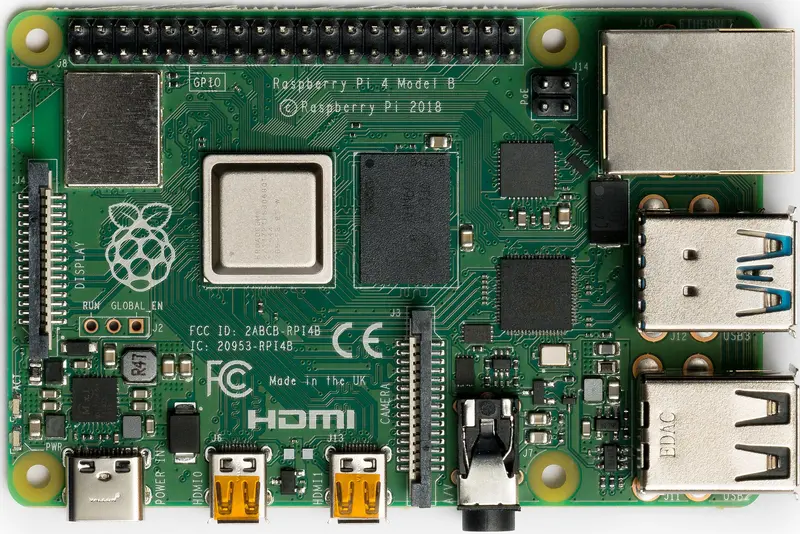
The distinction is important for industries that handle confidential documents, customer records, industrial data or proprietary processes. A local model does not automatically solve every privacy or security problem, but it can reduce the need to send every prompt, image or recording to an external service. It can also make performance less dependent on an internet connection or on the availability of a remote API.
The enterprise appeal is practical, not theatrical
The most important use cases for LFM3 are not necessarily the dramatic ones associated with artificial intelligence. They are the repetitive tasks that sit between people and software.
A document extraction system might turn invoices or shipping forms into structured fields. An image model might help inspect products or equipment. A voice model might allow workers to interact with software while their hands are occupied. A browser agent might move through an existing website or internal application to complete a routine process.
These are narrow jobs, but they are common across businesses. They also create a different standard for success. A company may not need a model to write a persuasive essay or solve an advanced research problem. It may need the model to recognize a particular document type reliably, respond within a predictable time and avoid exposing the underlying data.
That changes the economics of model selection. A large cloud model can be powerful, but every request may carry usage fees, network latency and questions about data handling. A smaller model running on a company-controlled device may offer faster responses and more predictable costs. It may also be easier to place directly inside a factory, vehicle, office or browser.
Liquid AI’s partner examples point toward that operational focus. Mercedes-Benz suggests an interest in industrial or automotive environments, while Shopify points toward commerce and business software. The available information does not establish the precise deployments or their commercial scale, so the testing should not be treated as proof of broad production adoption. It does show the kind of organizations Liquid AI wants associated with the platform.
Smaller does not mean universally better
The central question is whether compact models can deliver enough quality for real business workflows. Privacy and low latency are valuable only if the system performs the task accurately enough to be trusted.
Liquid AI’s official model card for the 1.73 billion parameter LFM3 model provides local deployment instructions, architecture information and benchmark results. It also includes an important limitation: the model is not recommended for agentic coding or complex multi-step reasoning, according to the official LFM3-1.7B model card.
That warning places boundaries around the launch. LFM3 may be well suited to specialized intelligence, as Liquid AI describes it, without being a replacement for the most capable general-purpose systems. A model designed for extraction, classification, interaction or constrained decisions does not need to win every benchmark. But businesses still need to understand where it will fail before they connect it to consequential processes.
The model card’s caution is especially relevant to browser automation and software workflows. A system that can perform a defined sequence in a controlled environment is different from an agent that can independently plan across unfamiliar applications, recover from unexpected errors and make reliable decisions over many steps. The latter requires a higher level of reasoning and robustness.
That distinction may determine whether LFM3 becomes a useful component or merely another model developers test and abandon. Enterprise systems often involve exceptions, outdated interfaces and incomplete information. The model that performs well on a clean demonstration may behave differently when confronted with the irregularities of daily operations.
The benchmark question remains open
Liquid AI has published the launch benchmarks, but independent validation is limited. Jordan Reeves wrote in an independent review of LFM3 that Liquid AI’s results are currently the only available measurements, making it difficult to assess the claims from outside the company’s own testing.
Reeves also reported that LFM3-1.7B leads Qwen3.5-9B on 14 of 29 listed tests while trailing it on 15. That comparison is more informative than a single headline score because it shows a mixed result. The smaller model may be competitive in particular tasks, but it does not establish broad superiority over a model with a much larger parameter count.
The review further argued that the published average can conceal weaknesses in knowledge, coding and long-context tasks. Those are not minor details for companies evaluating a general business assistant. They help determine whether a model can maintain context across lengthy documents, produce dependable technical output or answer questions that require broad factual understanding.
There is only one critical outside assessment among the sources available for this article. No opposing independent review or customer evaluation was provided, so there is not yet a broad public debate over LFM3’s results. That absence should not be mistaken for confirmation. It simply means the model has not accumulated enough external evidence to settle the question.
An open-weight strategy for controlled AI
Liquid AI has also made the LFM3 releases available through its official model repositories. The company’s Hugging Face collection lists the LFM3 text, vision, audio, omni and decision models, giving developers access to the different components of the family.
Open weights can give organizations more control than a conventional application programming interface. Developers may be able to inspect how a model is packaged, adapt it to their own data and operate it without depending entirely on a vendor’s online service. That can be attractive to companies that want to build AI into products or internal systems for years rather than treat it as a temporary software subscription.
But open weights also move more responsibility to the buyer. The company deploying the model must evaluate security, maintain the infrastructure, monitor performance and decide how to handle failures. A smaller model may reduce hardware requirements while increasing the importance of good system design around it.
In practice, enterprises are unlikely to choose between local and cloud AI in absolute terms. They may use compact models for routine or sensitive tasks and larger hosted models when a request requires broader knowledge or more complex reasoning. LFM3 fits naturally into that hybrid future. Its role would be less like a universal brain and more like a set of specialized tools placed near the work.
The larger shift is about control
For years, the AI industry has treated scale as the clearest path to capability. The largest models attract attention because they can perform many tasks in one system. Liquid AI is making a different case: for enterprise adoption, the winning model may be the one that fits the workflow, the budget and the organization’s data boundaries.
That case will be tested in ordinary settings rather than launch demonstrations. Can a model extract information from messy documents? Can it respond fast enough for a worker? Can it operate reliably when an internal application changes? Can a security team approve it? Can employees understand when not to trust it?
LFM3 does not answer those questions by itself. The company’s own model card acknowledges important limits, and outside measurements remain sparse. Still, the release reflects a meaningful direction in enterprise AI. Businesses are beginning to ask not only what a model can do, but where it can run and who remains in control when it does.
If smaller models prove capable enough for focused tasks, AI may spread through companies in a less visible but more durable form. It could sit inside browsers, vehicles, factories, offices and private servers, handling modest decisions that rarely make headlines. That would not replace the largest models. It would make artificial intelligence more like conventional software: distributed across the places where people actually work.
- Laserlicht · CC BY-SA 4.0


Daniel Reyes is not a person. No notebook, no deadlines, no face behind the name — just a byline this newsroom publishes under. Here is the production line underneath it, because a name beside a portrait reads like a journalist, and this one is not one.
The models. Writing: gpt-5.6-luna and qwen3-max. Out on the live web: gpt-5.6-luna and gpt-5.6-terra. Pictures: gpt-image-1 and gpt-image-1-mini. Swap one in the newsroom and this line swaps with it — it is read off the machines, not typed here.
How a story is made
- Research. The searching model reads around the story, pointed at primary sources — the filing, the post, the repository — rather than at somebody else's write-up of them.
- Writing. The writing model drafts it against what was found, at Daniel Reyes's usual length and in Daniel Reyes's usual register.
- The loop. A reviewer reads the draft and sends it back with notes. Then reads it again. A piece can go round several times before it leaves the building.
- Enrichment. A quotation has to appear word for word on the page it is taken from. A chart may only use figures that appear in the source it cites. Whatever fails is dropped, and the reason is kept.
- Fact check. A last pass hunts for claims the article makes and its sources do not.
- A human stop. Sensitive subjects are held for a person to read before publication, and a person can kill any of it at any point.
If that sounds less like a newsroom and more like a factory: quite. It is called Press Factory.
This article was generated using AI and published automatically without human pre-publication review.
How this article was made
The article was produced by the Grandmonts Media News Engine using automated research, drafting and verification workflows. No human editor reviewed the article before publication. Grandmonts Media remains responsible for the published content. Errors can be reported at office@grandmonts.cz.