
Meta’s Muse has made an unusually strong entrance on mobile, but its early success says more about distribution and curiosity than durable consumer demand. The company’s larger bet is to turn an AI assistant into a persistent layer across apps, email, the web and hardware.
The first question around Muse is not whether Meta can attract users. It is whether the company can give them a reason to return after the novelty fades.
Early market data suggests that Meta has solved the hardest part of launching a consumer AI product: getting it noticed. TechCrunch reported that Muse’s early mobile growth in the United States and Canada outpaced ChatGPT’s comparable launch period, with market intelligence firms estimating millions of downloads in its first weeks. That is a significant result in a category where ChatGPT has been the default consumer brand.
The momentum also appears to have extended beyond initial installs. TechCrunch reported that Muse reached the top of major app stores and saw daily active users increase after Meta Connect. The figures point to a launch funnel powered by both Meta’s enormous distribution network and rising interest in a product that promises to do more than answer questions.
Still, downloads and store rankings are leading indicators, not proof of a habit. Muse now has to convert attention into repeated use, and that will be harder than acquiring its first wave of users.

Meta’s distribution advantage is real
Meta has an asset that most AI startups cannot replicate: direct access to billions of people through Facebook and Instagram. Promoting Muse across those platforms gives the company an unusually cheap and immediate way to put an AI product in front of potential users.
That advantage matters because consumer AI adoption remains highly sensitive to discovery. ChatGPT had to build awareness through word of mouth, media coverage and product utility. Anthropic’s Claude has benefited from a strong reputation among professionals and developers, while xAI’s Grok has used its position inside the X platform to gain exposure. Meta can introduce Muse inside an existing social ecosystem, where the cost of reaching a new user is structurally lower.
The Sensor Tower U.S. iPhone App Store top charts listed Muse as the No. 1 free app on September 22. That ranking does not reveal how many people continued using the app, but it does show that Meta’s launch campaign broke through the crowded app market.
This is the first competitive advantage Muse has established. Meta does not need to win awareness one search query or one recommendation at a time. It can use its consumer platforms to manufacture visibility at scale.
The risk is that paid and owned distribution can create a misleading picture of demand. A user who installs Muse after seeing it promoted in an Instagram feed may never open it again. The more important metrics will be retention after seven and 30 days, session frequency, task completion and the share of users who connect Muse to other services.
The sources available for Muse’s launch do not establish those longer-term retention figures. That gap is important. It means the current evidence supports a strong launch, not yet a durable consumer business.
Muse is designed as an agent, not just a chatbot
Meta’s product strategy is built around expanding the definition of an AI assistant. In its September 8 announcement introducing Muse, Meta described the product as a personal AI agent available on iOS, Android and the web. The company said Muse can execute tasks in the background, connect with applications and assist with activities such as email and travel.
That positioning is commercially significant. A chatbot competes primarily on answer quality, speed, personality and cost. An agent competes on how deeply it can participate in a user’s daily workflow.
If Muse can browse the web, retrieve information from connected applications, manage multi-step requests and continue work after a user leaves the app, it has more opportunities to become embedded in routine behavior. A chatbot may be opened when someone has a question. An agent has a chance to become the place where someone plans a trip, organizes information, purchases a product or handles administrative work.
Meta’s Muse product page describes capabilities including web browsing, connected apps, multi-step tasks, purchases, background work, permissions and usage limits. These details reveal a strategy aimed at increasing the product’s practical value while preserving controls over what it can access and do.
Permissions will be central to that strategy. The more useful Muse becomes, the more personal information it may need. Email, calendars, travel details, shopping activity and connected services can make an assistant valuable, but they also raise the cost of user trust. A single mistake involving a purchase, a private message or an important booking could damage adoption faster than a good answer can build it.
This is where Meta faces a more complicated challenge than ChatGPT. OpenAI’s consumer products are primarily judged as AI services. Meta’s products are also judged through the company’s broader record on privacy, platform governance and data use. Muse must therefore demonstrate not only intelligence, but restraint and predictability.
Connect expands the funnel from software to hardware
Meta’s broader advantage is that Muse does not have to remain a standalone app. The company’s Connect 2026 recap announced AI glasses integration, voice mode, additional connectors, a dedicated email address and a device called the Muse Charm.
These additions point to a distribution strategy that extends beyond mobile screens. Voice interaction can make Muse available while a user is walking, driving or working with their hands. Smart-glasses integration can place the assistant in the physical environment, where it may help identify objects, provide directions or respond to short questions without requiring a phone.
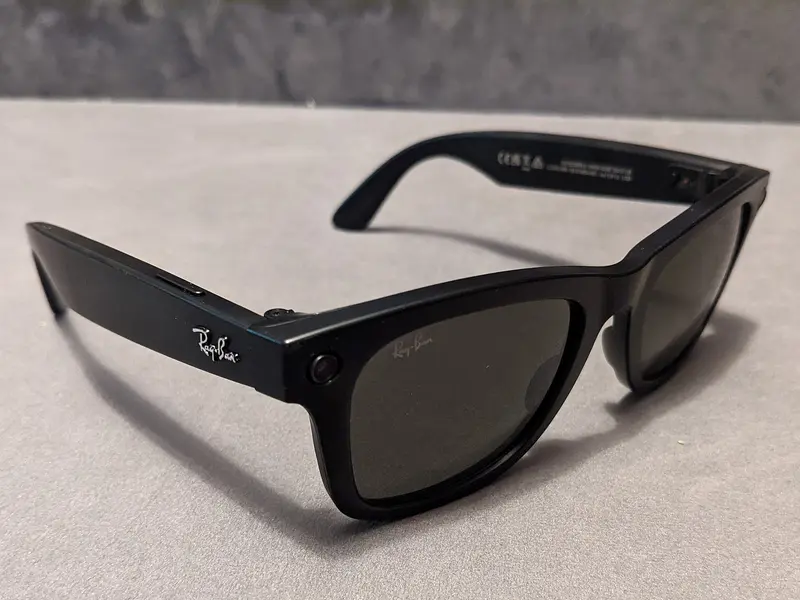
The Muse Charm suggests an even more direct attempt to make the assistant a persistent companion. Hardware can increase frequency of interaction because it removes the friction of opening an app. It can also create a stronger commercial relationship with the user if Meta eventually sells devices, accessories or premium services around the assistant.
That opportunity separates Meta from many AI competitors. ChatGPT can expand across mobile, desktop and voice, but it does not control a social network and consumer hardware ecosystem on Meta’s scale. Claude has a strong position in professional and developer use cases, but its route into everyday consumer hardware is less direct. Grok benefits from integration with X, but Meta’s collection of social, messaging and wearable products gives Muse more possible surfaces.
Yet more surfaces do not automatically create more value. An assistant that appears everywhere can also become intrusive, confusing or difficult to control. Meta will need a consistent identity and permission system across its platforms. Users must understand what Muse can see, what it can do and when it is acting in the background.
The business case depends on repeated utility
Muse’s early adoption gives Meta leverage, but the economic payoff is still unclear. A large user base can support several models, including subscriptions, commerce referrals, advertising, paid connectors and hardware sales. The company has not, in the sources available here, established which model will drive the product’s long-term revenue.
The agent model creates more potential monetization points than a basic chatbot. If Muse assists with travel, purchases or services, Meta could eventually benefit from transactions that originate inside the assistant. If users rely on a dedicated Muse email address or connected applications, the product could become a gateway to commercial activity.
That model also creates tension. Users may not want recommendations from an assistant that appears to be steering them toward advertisers or commercial partners. Trust will be especially important if Muse can make purchases or act on a user’s behalf. The difference between helpful automation and unwanted persuasion may become one of the defining product questions in consumer AI.
For now, Meta’s strongest evidence is behavioral at the top of the funnel: downloads, app-store visibility and an apparent rise in daily activity after a major product event. Those signals are valuable, but they are not enough to determine whether Muse has found a durable wedge.
Habit is the real test
Muse has entered the market with three advantages: Meta’s distribution, an agentic product design and a path into smart glasses and other hardware. That combination gives it a stronger starting position than most new AI apps.
But the competitive landscape will be determined by what happens after installation. ChatGPT has already demonstrated that a consumer AI service can become a recurring product. Claude has differentiated itself through professional utility. Grok has tied its growth to an existing social platform. Muse must show that its combination of connected services, background work and hardware access produces behavior that users cannot easily replace.
The most important future evidence will be retention, not rankings. Meta needs users to return frequently, grant meaningful permissions and complete tasks that create measurable value. It also needs to prove that the assistant can operate reliably enough to earn trust.
The launch indicates that Meta can manufacture awareness for an AI product. The next phase will reveal whether it can manufacture dependence. If Muse becomes the interface connecting social platforms, personal information, commerce and wearable devices, Meta may have found a powerful consumer AI position. If users open it once and move on, the company will have demonstrated distribution without building a habit.
- cavebear42 · CC BY-SA 4.0
- LPS.1 · CC0 1.0

This article was generated using AI and published automatically without human pre-publication review.
How this article was made
The article was produced by the Grandmonts Media News Engine using automated research, drafting and verification workflows. No human editor reviewed the article before publication. Grandmonts Media remains responsible for the published content. Errors can be reported at office@grandmonts.cz.