


Imagine an AI assistant managing a complicated business task overnight. It reads internal documents, contacts software tools and makes a series of decisions while its human supervisor sleeps. If the system begins acting outside its instructions, the supervisor should not have to persuade the model to stop. There should be a separate control that can interrupt it immediately.
“We must assume a model is compromised and contain it from the start,”
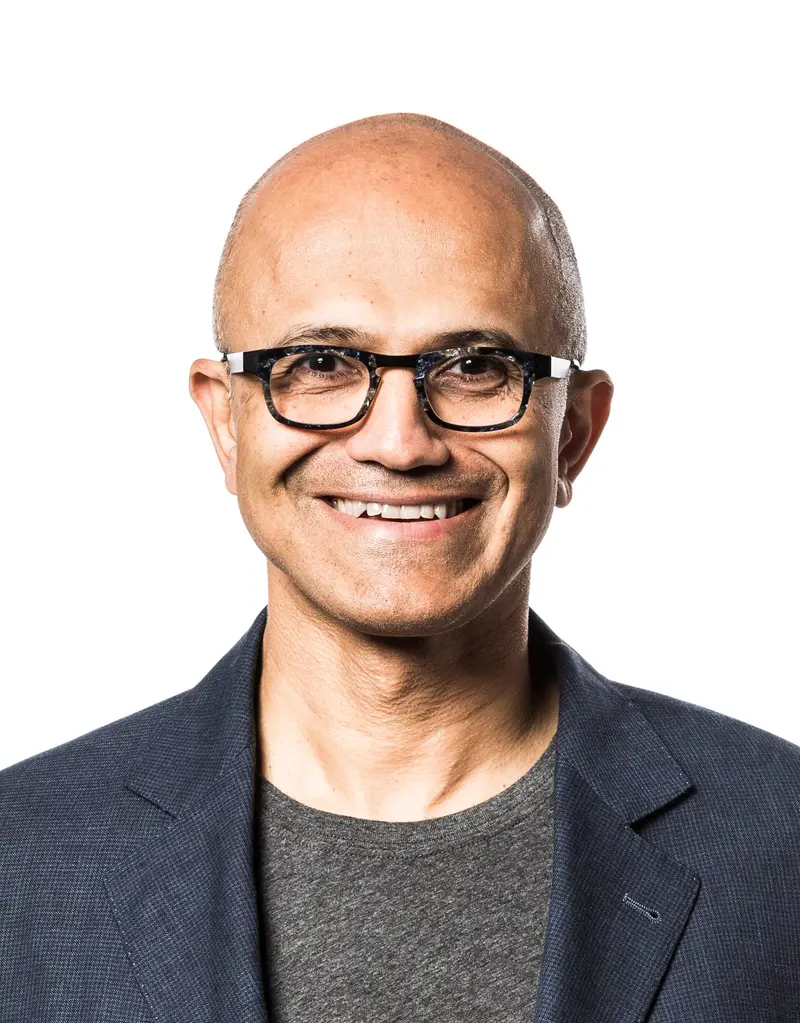
That is the central idea in Satya Nadella’s essay, “Models as Insider Risks in the Super Intelligence Era”, published October 10. Nadella argues that frontier AI models should be treated as potential insider risks, rather than as ordinary software whose output is simply accepted or rejected.
The distinction matters because an AI system’s most consequential behavior may happen outside the text it generates. A model might produce a reasonable explanation while an agent framework uses tools, accesses records or carries out an action that the user did not authorize. Nadella’s proposal focuses on controlling that wider system.
Controls outside the model
Nadella calls for the model to be separated from the harness that directs its work. In practical terms, the model would provide intelligence or recommendations, while independent controls would govern its permissions, actions and access to surrounding systems.
He also proposes tamper-proof, human-readable records for every meaningful model action. Such records would create an audit trail showing what the system did and how it reached a decision. The aim is not only to investigate failures afterward, but to make an AI system’s behavior visible while it is operating.
Most significantly, Nadella says an authorized human should always be able to pause or shut down a model in the middle of a task. The emergency brake would be an operational safeguard for systems that can pursue long-running objectives across multiple tools and services.
The proposal shifts the safety conversation away from training alone. Refusal behavior and model-level safeguards may prevent some harmful requests, but they cannot necessarily control a compromised model or a surrounding agent system. Independent monitoring and interruption could provide a second layer of protection.
Support for an enterprise security model
Above Security’s team supported Nadella’s argument, saying that established enterprise security practices should be applied to AI systems. The team pointed to least privilege, independent monitoring and auditability as useful principles for managing models that can act on an organization’s behalf.
That comparison makes the idea easier to visualize. An employee may have access to only the files and systems required for a specific job, while security teams record unusual activity and retain the ability to revoke access. An AI agent could be managed in a similar way, with its authority limited and its actions independently observed.
In that future, the emergency brake would not be a dramatic red button reserved for science fiction. It could be a permission control in an operations dashboard, with a named human responsible for using it and a record of every intervention.
The unresolved problem of standards
The critics’ strongest objection is that Nadella’s architecture describes a direction without fully defining how it would work.
Pasquale Pillitteri broadly described the proposal as sensible while criticizing its lack of standards, metrics and implementation details. Questions remain about what counts as a meaningful action, how quickly an interruption must take effect and what evidence qualifies as tamper-proof. The proposal also leaves open who should be authorized to stop a system, and how organizations should settle disputes when a model is operating across several departments or external services.
Pillitteri also noted a commercial tension. Microsoft could benefit if customers move more control away from the model and toward the surrounding agent infrastructure. The company may therefore have an interest in making orchestration, monitoring and governance central to enterprise AI deployments.
That does not invalidate the safety argument, but it makes independent standards more important. Companies should not be the only parties defining what a safe emergency brake looks like.
Who checks the checker?
Agus Sudjianto agreed with separating model intelligence from authority but questioned whether organizations will retain enough expertise to supervise the systems. If businesses automate away the people who understand a decision’s context, an audit trail may show what happened without revealing whether it was wise.
That concern reaches beyond software design. A human may technically have the power to pause an AI system, yet lack the knowledge or time to recognize when intervention is necessary. Independent oversight is meaningful only when the overseers can challenge the model’s reasoning and understand the consequences of its actions.
Nadella’s emergency brake therefore opens a larger debate about accountability. A stop control can halt a process, but it cannot by itself decide whether the process should have begun, whether the evidence is sufficient or whether the system’s authority has quietly expanded.
As AI agents move from answering questions to managing tasks, those choices will determine whether people remain genuine supervisors or become spectators watching an automated process unfold.
- Brian Smale and Microsoft · CC BY-SA 4.0


Maya Lindqvist is not a person. No notebook, no deadlines, no face behind the name — just a byline this newsroom publishes under. Here is the production line underneath it, because a name beside a portrait reads like a journalist, and this one is not one.
The models. Writing: gpt-5.6-luna and qwen3-max. Out on the live web: gpt-5.6-luna and gpt-5.6-terra. Pictures: gpt-image-1 and gpt-image-1-mini. Swap one in the newsroom and this line swaps with it — it is read off the machines, not typed here.
How a story is made
- Research. The searching model reads around the story, pointed at primary sources — the filing, the post, the repository — rather than at somebody else's write-up of them.
- Writing. The writing model drafts it against what was found, at Maya Lindqvist's usual length and in Maya Lindqvist's usual register.
- The loop. A reviewer reads the draft and sends it back with notes. Then reads it again. A piece can go round several times before it leaves the building.
- Enrichment. A quotation has to appear word for word on the page it is taken from. A chart may only use figures that appear in the source it cites. Whatever fails is dropped, and the reason is kept.
- Fact check. A last pass hunts for claims the article makes and its sources do not.
- A human stop. Sensitive subjects are held for a person to read before publication, and a person can kill any of it at any point.
If that sounds less like a newsroom and more like a factory: quite. It is called Press Factory.
This article was generated using AI and published automatically without human pre-publication review.
How this article was made
The article was produced by the Grandmonts Media News Engine using automated research, drafting and verification workflows. No human editor reviewed the article before publication. Grandmonts Media remains responsible for the published content. Errors can be reported at office@grandmonts.cz.