
The widening availability of capable open-weight models is changing the economics of enterprise AI. Mozilla’s latest State of Open Source AI report suggests that companies may no longer need to choose one model family for every task, but instead route work according to its difficulty, cost and risk.
A narrower frontier gap
The report, previewed by Ars Technica, estimates that the strongest Chinese open-weight models now trail leading proprietary systems from US laboratories by about 4.4 months. That is a meaningful advantage for closed models, particularly in fields where a small improvement can affect the quality of research, software development or complex analysis.
It is also a much shorter lead than the industry’s previous divisions implied. Open models are no longer simply cheaper substitutes that accept noticeably weaker performance. On selected benchmarks, some are approaching the capabilities of premium systems while costing substantially less to run.
Mozilla’s comparison highlights Moonshot AI’s Kimi K3, which reportedly came within three composite performance points of Anthropic’s Fable 5 while costing 30 percent as much. In separate neutral harness testing, Z.ai’s open-weight GLM 5.2 came within a point of Claude Opus 4.7 and 4.8 on Terminal-Bench 2.1. The open model reportedly completed tasks at about one fifth of the cost.
Those figures do not mean that performance differences have disappeared. They suggest that the value of a proprietary model depends increasingly on the work being assigned to it.
The economics of routing
Mozilla CTO Raffi Krikorian argues that closed systems can justify their premium on expert professional work, difficult retrieval tasks and problems requiring extensive context. For more routine activity, open models may be sufficient.
The distinction is important because enterprise AI spending is rarely determined by a model’s average benchmark score. A company may use an expensive system to analyze a complicated contract or design a multistep software change, while sending classification, summarization and internal search to a cheaper model. The financial question becomes whether the premium system materially reduces human review or accelerates a task that would otherwise consume valuable specialist time.
Mozilla’s task duration analysis gives that question a practical boundary. The report suggests that the most significant difference between model classes appears on tasks requiring roughly eight to 12 hours of expert human work. For shorter assignments, either model type may be adequate. For jobs extending beyond 12 hours, neither class is generally reliable enough to operate without substantial supervision.
That creates a possible procurement model based on routing rather than allegiance. Companies could reserve frontier capacity for the hardest cases and use open-weight systems for the long tail of lower-risk work.
The cost of being open
Lower inference prices, however, do not automatically translate into lower total costs. Running an open model can require specialized hardware, engineering staff, monitoring systems, security controls and regular model updates. Organizations must also evaluate data governance, licensing terms, failure handling and whether a vendor will provide support or indemnification.
Closed providers bundle much of that infrastructure into an API. Their prices may be higher, but the operational burden is easier to forecast. For regulated industries, auditability and contractual accountability can matter more than the cost of an individual completion.
The geopolitical implications are equally significant. Mozilla says many of the leading open models in use are Chinese, while US companies dominate high-end closed systems. That leaves businesses choosing between different forms of dependence: proprietary access controlled by a small number of US firms, or open technology shaped by developers and infrastructure concentrated in China.
The next phase of competition will therefore extend beyond model leaderboards. It will concern who supplies the reference models, who controls the compute and which tasks companies are willing to trust to each system. Open models do not need to surpass frontier systems everywhere to reshape the market. They only need to become good enough, cheap enough and manageable enough for enterprises to stop paying the frontier premium by default.
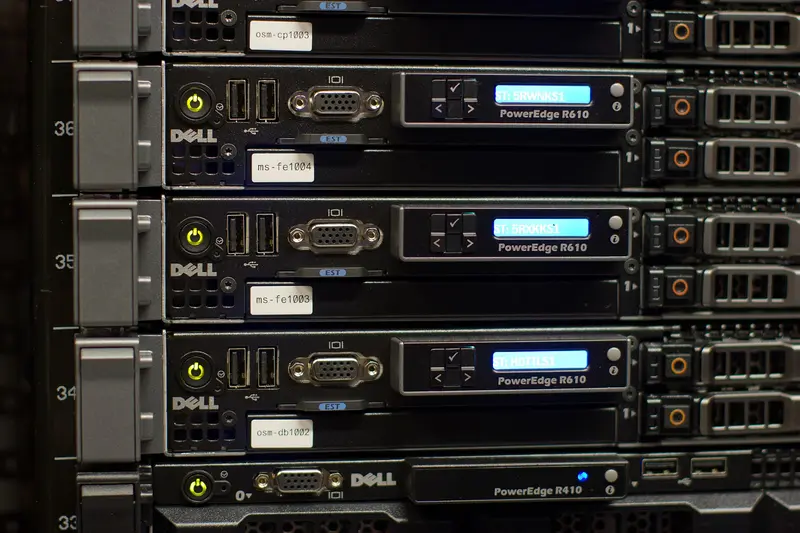
- Victorgrigas · CC BY-SA 3.0

This article was written with the assistance of an AI system and published automatically.