
Perplexity is betting that enterprise customers will not have to choose between the power of cloud AI and the privacy of local software. Its hybrid compute system keeps sensitive work on Apple silicon Macs while sending broader research and reasoning to cloud models, creating a potentially important new battleground for AI agents.
The commercial question is not whether local models can replace frontier systems. Perplexity’s strategy assumes they cannot, at least not for every part of a complex task. The more consequential question is whether an agent can divide work intelligently enough to use both environments without exposing confidential information or losing the context that makes an agent useful.
VentureBeat reported that Perplexity’s Computer agent can move a single task between cloud models and a smaller model running on an Apple silicon Mac. The system is intended to keep sensitive files and information on the user’s device while cloud models handle more demanding research and reasoning.
That architecture gives Perplexity a different answer to a problem facing nearly every AI provider. Companies want agents that can search, analyze, write and act across their systems. They also do not want confidential contracts, customer records, financial documents or internal prompts routinely sent to an outside model provider.
A fully local agent addresses the privacy problem but can impose limits on capability, speed and hardware. A fully cloud based agent offers access to larger models and centralized infrastructure, but it requires organizations to accept greater exposure of their data. Hybrid compute attempts to make the division itself the product.
A division of labor between the Mac and the cloud
Perplexity’s announcement describes Computer as a system that splits tasks between cloud models and a local model on an Apple silicon Mac. The local component is designed to process confidential files and information without sending them to the cloud.
The company’s product page describes the arrangement in more operational terms. Cloud models handle research and reasoning, while the Mac handles private files and other sensitive steps locally. That division matters because the most valuable enterprise workflows are rarely just question and answer sessions. They often combine public research with proprietary data.
For example, an agent might need to investigate a market, compare competitors and then use a company’s private sales documents to produce an internal recommendation. Under a conventional cloud workflow, the entire prompt and its attached files could be sent to a remote provider. Under Perplexity’s model, the public research and general reasoning could take place in the cloud, while the private document analysis remains on the Mac.
The business advantage is potentially significant. Perplexity can use large cloud models for the tasks that justify their cost, while using local computation for data that customers are unwilling or unable to transmit. The company does not need to prove that a local model is as capable as a frontier model. It only needs to prove that the local model is capable enough for the sensitive portion of a workflow.
That is a more achievable technical and commercial target than replacing cloud AI outright.
It could also improve Perplexity’s position against larger platform companies. Microsoft, Google and other enterprise vendors can offer access to powerful hosted models, identity systems and productivity applications. Their advantage is distribution and infrastructure. Perplexity’s opportunity is to make the agent itself more flexible about where computation occurs.
The risk is that flexibility can become a source of uncertainty. Customers will need to understand which parts of a task are sent to the cloud, which remain local and how the system behaves when the boundary is unclear. An agent that offers privacy only under ideal conditions will be difficult for security teams to approve.
Privacy depends on routing, not just local models
The local model is only one part of the privacy proposition. Data must also be classified correctly before it is routed. Perplexity says its system includes a local Privacy Gate and a PII Tracer designed to detect personal data before content leaves the device.
In Perplexity’s explanation of PII-TRACE, the company discusses the challenge of detecting personal information before sending content to cloud models. The post also acknowledges limits to reliable detection across long conversations.
That qualification is central to the product’s credibility. Sensitive information is not always formatted like a phone number, address or government identifier. A seemingly harmless sentence can reveal a company strategy when combined with other parts of a conversation. The risk can also emerge from context. A document may not contain an obvious personal identifier, yet still expose confidential pricing, legal advice or an unreleased product plan.
A privacy gate therefore has to do more than search for familiar patterns. It must understand the relationship between the current request, previous instructions, attached files and the action the agent is about to take. Perplexity’s discussion of limits across long conversations suggests that this remains a difficult engineering problem rather than a solved feature.
This creates a tension between privacy and agent performance. If the system is too cautious, it may keep large portions of a task on the Mac, increasing latency and reducing the quality of reasoning. If it is too permissive, it may send information that customers expected to remain local. Enterprise buyers will care less about a general privacy claim than about the system’s failure modes.
They will also want clear controls. Organizations may need policies that prohibit certain files from leaving a device under any circumstances, even if the agent believes the information is not personally identifiable. They may also require logs showing what was processed locally, what was sent to a cloud model and why.
Perplexity’s public material, as described in the available sources, establishes the routing concept and the detection system. It does not by itself resolve how the product will perform under every enterprise governance requirement. That gap could become a competitive opening for vendors that provide stronger auditability, administrative controls or guarantees around data handling.
The local engine is part of the moat
Perplexity’s local strategy also depends on the software that runs on the Mac. The company’s Lily repository describes an open source local inference engine optimized for Qwen3.6-35B-A3B on Apple silicon. Lily supports the on-device component of hybrid compute.
This choice gives Perplexity more control than simply asking customers to install a generic model runner. A purpose built inference engine can be tuned for Apple silicon, the company’s routing logic and the specific workloads assigned to the local model. That could help reduce the performance penalty that often makes local AI less attractive than hosted services.
Apple’s installed base is also strategically relevant. Apple silicon Macs offer a large pool of local processing capability, including unified memory that can be used by AI workloads. Perplexity is not asking enterprises to build private data center infrastructure before they can test the idea. It is targeting hardware already sitting on desks and in executive offices.
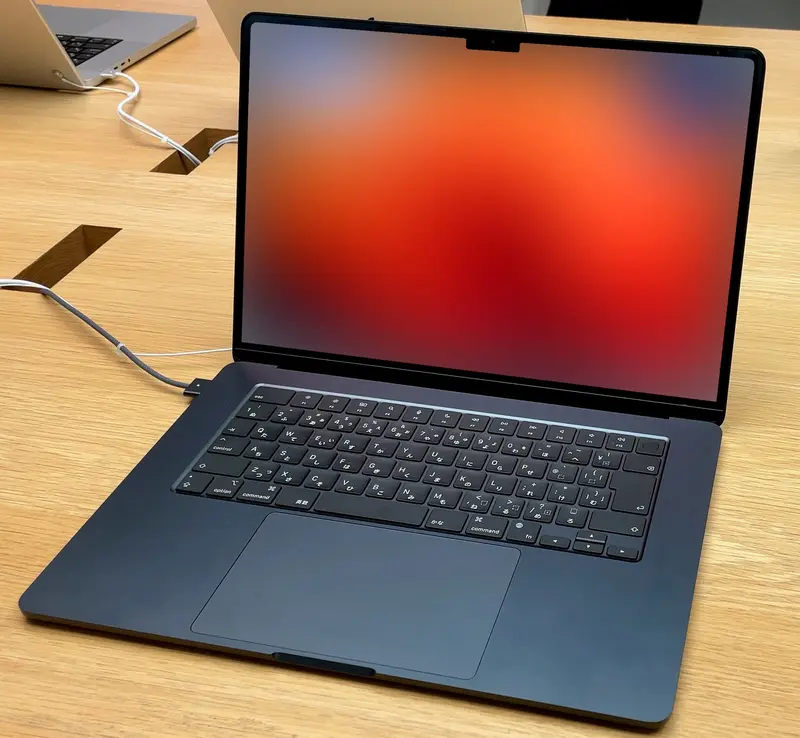
But this approach narrows the initial market. Hybrid compute on Mac is not the same as a hardware neutral enterprise privacy layer. Organizations with Windows fleets, thin clients or locked down virtual desktops may not be able to adopt the system in the same way. Hardware requirements, model size and local performance will influence whether the product can move beyond individual users and small teams.
The use of an open source inference engine may help with developer interest, but it also raises questions about support and accountability. Enterprises generally want a vendor to own the full operational chain when an AI system handles sensitive work. If local inference depends on a mix of Perplexity software, Apple hardware and an open model, customers will need confidence that updates and compatibility will be managed consistently.
Hybrid agents could change the economics of AI
If Perplexity’s approach works, it could alter the economics of agent deployment. Cloud inference is expensive when agents repeatedly process large files, maintain long contexts or perform many intermediate steps. Keeping some of that work on the customer’s hardware could reduce cloud usage and make high frequency automation more affordable.
The savings are not automatic. Local computation shifts costs to the customer’s device, and the quality of the user experience depends on available memory, processing power and workload complexity. Still, a hybrid architecture gives providers another way to manage inference costs. Instead of running every step through the most expensive available model, an agent can reserve cloud computation for tasks that genuinely need it.
That creates a potential advantage in pricing and margins. A provider that can deliver useful results with fewer cloud calls may have more room to offer aggressive subscriptions or enterprise contracts. It may also be able to scale agent usage without increasing infrastructure costs at the same rate.
The competitive threat to larger AI platforms is not that Perplexity has built a better general model. It is that Perplexity is proposing a different control plane for model usage. The agent decides where each part of a task should run, based on sensitivity and capability. If customers trust that decision, the architecture could become more valuable than a single model benchmark.
Trust remains the decisive variable. Hybrid agents will need to demonstrate that they preserve context when a task moves between models, identify sensitive information accurately and explain their decisions in a way that security teams can verify. They will also need to show that local processing does not make the system too slow or too difficult to manage.
Perplexity’s announcement is therefore best understood as a positioning move as much as a product release. The company is trying to make privacy part of the agent’s architecture rather than a restriction imposed after the model has already received the data. If it can execute reliably, hybrid compute could offer a credible middle ground between isolated local AI and unrestricted cloud automation.
The larger market will determine whether that middle ground is durable. If enterprises treat routing, auditability and hardware support as essential features, providers that control both cloud models and local execution may gain an advantage. If customers remain unwilling to trust automated data classification, hybrid systems may be reduced to a narrow set of carefully managed workflows.
Perplexity has identified the right strategic problem. The next test is whether its agent can make the privacy boundary dependable enough for businesses to use every day.
- User:KKPCW · CC BY-SA 4.0

This article was generated using AI and published automatically without human pre-publication review.
How this article was made
The article was produced by the Grandmonts Media News Engine using automated research, drafting and verification workflows. No human editor reviewed the article before publication. Grandmonts Media remains responsible for the published content. Errors can be reported at office@grandmonts.cz.