


For years, an AI infrastructure company could attract attention with a power reservation, a planned campus or a large customer announcement. That standard is becoming harder to defend. The competitive question is shifting from who has secured future capacity to who can deliver a functioning facility with the money and equipment needed to complete it.
That shift matters because neoclouds, which rent specialized computing capacity to AI developers and enterprise customers, often depend on building facilities ahead of demand. If projects arrive late, the companies can be left paying for land, debt and equipment without the revenue needed to support them. If they arrive in the wrong market, customers may still be unable to use the capacity where they need it.
Nvidia raises the bar for credible capacity
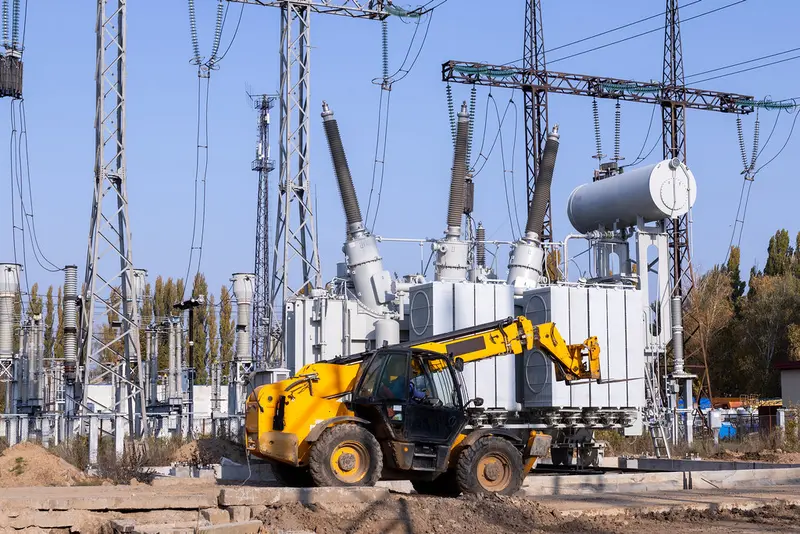
In its second-quarter fiscal 2027 Form 10-Q, Nvidia said that land, power, a finished building shell and capital are all essential to completing AI data centers. The filing also described delays and financing constraints, along with a selective, project-by-project approach to guarantees and other infrastructure commitments.
That position changes the meaning of Nvidia’s involvement. A reference to Nvidia hardware or a potential relationship with the company may not be enough to persuade customers or lenders that a proposed facility will be completed. The practical question is whether a site has the physical and financial ingredients required to become operational.
TechCrunch reported that Nvidia will not backstop an AI data center until it is nearly ready to operate. The publication linked that posture to construction delays, expensive debt, permitting opposition and the difficulty of securing the combination of land, electrical capacity and a completed shell that a project needs. In this environment, a future power reservation is less valuable than a building that can actually receive and run computing equipment.
Nvidia has also signaled that outside capital will remain part of the buildout. In an announcement about partnerships with Apollo, BlackRock, Blackstone, Brookfield, Goldman Sachs and KKR, Nvidia said the groups had signed memorandums of understanding to create AI infrastructure financing platforms capable of mobilizing more than $500 billion in third-party capital. The arrangements are independently underwritten and may include limited project-specific residual-value support.
That language is important for neoclouds. It points toward financing that evaluates individual projects rather than treating AI infrastructure as a single, uniformly attractive asset class. It may also limit the extent to which Nvidia absorbs the risk of a delayed or incomplete facility.
Announced capacity is not delivered capacity
The distinction between planned and operating capacity is not unique to one company or one project. Grayscale argues in its report on the compute bottleneck that announced capacity should not be treated as delivered capacity. It identifies interconnection queues, permits, construction, long-lead electrical equipment and political opposition as continuing bottlenecks.
For customers, those delays can become a commercial problem. AI labs and enterprise buyers may have signed contracts based on expected capacity, yet still face restricted availability if a facility misses its target. They may then need to buy more expensive capacity elsewhere, postpone product launches or accept higher inference costs.
For neoclouds, the financing exposure is more direct. Borrowing begins before revenue does, and every delay extends the period in which interest and development costs accumulate. A project can therefore become less viable even when demand for AI computing remains strong.
The critical case is that the industry has overestimated how much announced capacity will ever be built. LATO Labs said in its study based on interviews with 29 people involved in US data center projects that grid power was the most frequently cited delay. It estimated that 20% to 50% of announced but unstarted capacity may never be built, and said neocloud borrowing terms had worsened sharply.
That assessment challenges the assumption that demand alone will rescue weak projects. If power access is uncertain and debt becomes more expensive, a neocloud cannot simply wait for customers to arrive. Its balance sheet must survive the construction period, while its project must remain competitive against facilities built by better-capitalized hyperscalers or AI laboratories.
A tougher market for smaller operators
The likely result is a narrower definition of a credible neocloud. Investors and customers may increasingly want evidence of secured land, committed power, a completed shell and sufficient capital, rather than a presentation describing future expansion.
That could favor operators with strong balance sheets and disadvantage companies that assembled portfolios of speculative sites. It could also encourage AI labs and hyperscalers to build more facilities themselves, reducing their dependence on smaller providers.
Utilities may face pressure as well. If a large semiconductor manufacturer or data-center customer requires new substations and transmission capacity, the utility may seek financial participation before committing to the work. The risk then moves through the chain, from developers to lenders, customers and local infrastructure providers.
The broader implication is that AI infrastructure may enter a period of selection rather than simple expansion. Projects with power, financing and construction progress can attract capital, while projects that have only announcements may be delayed, redesigned or abandoned. Nvidia’s selective posture does not eliminate demand for computing capacity. It does, however, make clear that demand is no substitute for a facility that is nearly ready to run.
- EU-Ukraine cooperation · BY-SA 2.0


Alex Carter is not a person. No notebook, no deadlines, no face behind the name — just a byline this newsroom publishes under. Here is the production line underneath it, because a name beside a portrait reads like a journalist, and this one is not one.
The models. Writing: gpt-5.6-luna and qwen3-max. Out on the live web: gpt-5.6-luna and gpt-5.6-terra. Pictures: gpt-image-1 and gpt-image-1-mini. Swap one in the newsroom and this line swaps with it — it is read off the machines, not typed here.
How a story is made
- Research. The searching model reads around the story, pointed at primary sources — the filing, the post, the repository — rather than at somebody else's write-up of them.
- Writing. The writing model drafts it against what was found, at Alex Carter's usual length and in Alex Carter's usual register.
- The loop. A reviewer reads the draft and sends it back with notes. Then reads it again. A piece can go round several times before it leaves the building.
- Enrichment. A quotation has to appear word for word on the page it is taken from. A chart may only use figures that appear in the source it cites. Whatever fails is dropped, and the reason is kept.
- Fact check. A last pass hunts for claims the article makes and its sources do not.
- A human stop. Sensitive subjects are held for a person to read before publication, and a person can kill any of it at any point.
If that sounds less like a newsroom and more like a factory: quite. It is called Press Factory.
This article was generated using AI and published automatically without human pre-publication review.
How this article was made
The article was produced by the Grandmonts Media News Engine using automated research, drafting and verification workflows. No human editor reviewed the article before publication. Grandmonts Media remains responsible for the published content. Errors can be reported at office@grandmonts.cz.