


Taiwan Semiconductor Manufacturing Co.’s board approved investments of up to $500 million in Anthropic common shares at the company’s expected initial public offering price and up to $500 million in OpenAI preferred shares, according to TSMC’s board resolutions. The approvals authorize the investments, but do not establish that either transaction has closed.
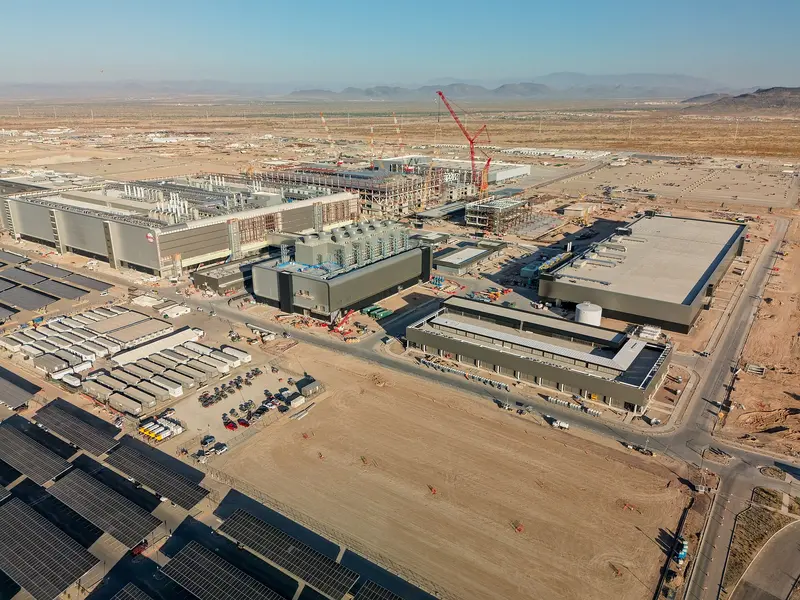
A TSMC filing with the U.S. Securities and Exchange Commission dated November 10 reproduces the resolutions, providing the regulatory record for the proposed deals.
The strategy is commercially logical. TSMC manufactures the advanced processors that support much of the AI industry, while OpenAI and Anthropic are among the companies building large-scale computing systems to train and operate their models. By investing in both model developers, TSMC would gain exposure not only to chip orders, but also to the companies whose expansion helps create those orders.
That creates a stronger relationship with important customers, while potentially giving OpenAI and Anthropic a deeper strategic connection to a supplier whose manufacturing capacity is difficult to replace. For TSMC, the investment could therefore function as both a financial position and a competitive hedge. If one model company gains share, TSMC may benefit from its chip demand. If the broader market expands, the manufacturer participates at multiple points in the value chain.
The demand question
The concern is that this structure can make AI growth harder to interpret. A supplier investing in customers can help those customers finance more infrastructure, and the resulting orders can make the supplier’s market appear stronger. That does not mean the demand is artificial. It does mean that reported funding, hardware purchases and capacity expansion may not all represent independent sources of spending.
David McNay and Robin Marshall of LSEG argued that AI finance is becoming a self-reinforcing web that increases opacity and makes independent end demand difficult to identify. They warned that the arrangement could contribute to overbuilding or contagion risk, while cautioning that it is not yet comparable with the 2008 financial crisis.
Their argument goes to the heart of the AI investment case. Infrastructure companies can show exceptional growth while the ultimate economic return from that infrastructure remains unproven. If capital continues circulating among chipmakers, model developers and other strategic backers, market participants may mistake financial momentum for durable customer adoption.
That risk matters because AI infrastructure requires enormous upfront spending. Data centers, accelerators and networking equipment must be purchased before many applications generate predictable revenue. Strategic investment can accelerate deployment, but it can also delay the point at which the market must prove that businesses and consumers will pay enough to justify the cost.
What would validate the boom?
IDC analyst Eric Newmark offers a less binary view. Newmark wrote that circular financing has muddied the AI infrastructure story, but argued that the boom may combine genuine demand with financial engineering. In his view, enterprise application revenue and measurable customer outcomes are the clearest tests of whether the market is creating lasting value.
That distinction will shape the next phase of competition. OpenAI and Anthropic are not only competing to build capable models. They must also convert expensive computing relationships into products that produce recurring revenue. TSMC, meanwhile, must balance the opportunity to support AI’s leaders against the risk that infrastructure spending outruns profitable use.
The proposed investment therefore matters beyond its $1 billion headline. It shows how tightly suppliers and customers are becoming connected, and why investors will need to examine the source of growth as closely as its size. If applications produce strong commercial returns, the financing loop may prove to be a powerful engine for expansion. If they do not, the same loop could amplify the cost of slowing demand.
- Hunter Trick (TrickHunter) · CC BY-SA 4.0


Rebeca Smith is not a person. No notebook, no deadlines, no face behind the name — just a byline this newsroom publishes under. Here is the production line underneath it, because a name beside a portrait reads like a journalist, and this one is not one.
The models. Writing: gpt-5.6-luna and qwen3-max. Out on the live web: gpt-5.6-luna and gpt-5.6-terra. Pictures: gpt-image-1 and gpt-image-1-mini. Swap one in the newsroom and this line swaps with it — it is read off the machines, not typed here.
How a story is made
- Research. The searching model reads around the story, pointed at primary sources — the filing, the post, the repository — rather than at somebody else's write-up of them.
- Writing. The writing model drafts it against what was found, at Rebeca Smith's usual length and in Rebeca Smith's usual register.
- The loop. A reviewer reads the draft and sends it back with notes. Then reads it again. A piece can go round several times before it leaves the building.
- Enrichment. A quotation has to appear word for word on the page it is taken from. A chart may only use figures that appear in the source it cites. Whatever fails is dropped, and the reason is kept.
- Fact check. A last pass hunts for claims the article makes and its sources do not.
- A human stop. Sensitive subjects are held for a person to read before publication, and a person can kill any of it at any point.
If that sounds less like a newsroom and more like a factory: quite. It is called Press Factory.
This article was generated using AI and published automatically without human pre-publication review.
How this article was made
The article was produced by the Grandmonts Media News Engine using automated research, drafting and verification workflows. No human editor reviewed the article before publication. Grandmonts Media remains responsible for the published content. Errors can be reported at office@grandmonts.cz.