


Imagine a supplier invoice moving through an automated enterprise. A procurement agent checks the purchase order. A treasury agent protects cash. A compliance agent looks for regulatory risks. Each system sees the same records and completes its assigned task. Yet the supplier may wait weeks for payment because no agent understands the wider priority of preserving a critical relationship.
That scenario illustrates a problem emerging as companies connect more AI agents to everyday operations. Agents can agree on the facts while disagreeing about their significance. The result may be a process that is locally sensible but globally damaging.
The VentureBeat report presented by SAP describes this risk through procurement, treasury and compliance examples. It also points to a similar failure in inventory management. One agent might reduce a stock count before another confirms that the goods physically exist, creating a clean transaction record for an event that never happened.
The context behind the number
For years, companies have moved information away from the applications and workflows that gave it meaning. Data lakes, centralized platforms, on premises systems, flat files and object stores can make records easier to access. They do not automatically carry over the assumptions, exceptions and institutional knowledge that employees use when deciding what to do.
A balance sheet figure, for example, may look definitive to an agent. A finance employee may know that it excludes a disputed account, reflects a temporary arrangement or cannot be used for a particular approval. That knowledge may exist in a policy document, a process design, an approval hierarchy or the judgment of an experienced colleague.
Without that context, an agent has no reliable way to distinguish an ordinary case from one that requires caution. Giving it access to more records may increase the number of actions it can take without improving the quality of its decisions.
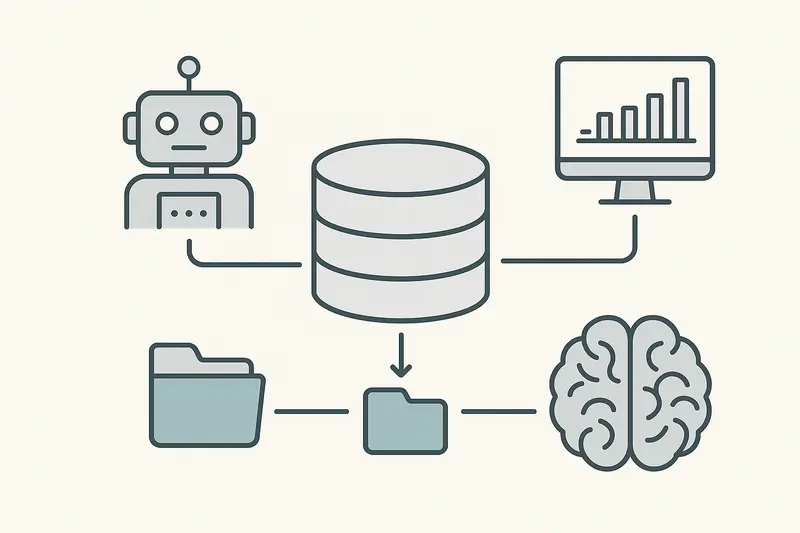
SAP is proposing a way to place those meanings alongside enterprise information. In its announcement about a preview of SAP Company Memory, SAP describes the system as a consistent source of an organization’s rules, standards and process know-how for both people and AI agents.
The concept resembles an institutional memory that travels with data. It could include key performance indicators, master data, operating practices, governance requirements and process constraints. An agent would need to know not only its objective, but also what it must not do, which conditions have to be satisfied first and when it should stop or ask a person for help.
From retrieval to judgment
SAP’s business context strategy goes beyond attaching definitions to database fields. In a SAP explanation of business context, the company says its Knowledge Graph and Company Memory can encode process relationships, company specific policies, approval hierarchies and institutional knowledge.
That distinction matters because enterprise decisions rarely depend on a single fact. A purchasing agent may need to know whether a supplier is strategic. A payment agent may need to understand which exceptions can be approved locally. A compliance agent may need to recognize that a rigid rule conflicts with an emergency process approved by the business.
The desired future is therefore not a collection of independent digital clerks. It is a coordinated group that shares a model of the organization. In a business process, that could mean checking that goods exist before inventory is decremented, preserving a payment deadline when cash controls allow it, or routing an ambiguous case to the owner of the relevant policy.
SAP’s reference architecture places this idea within a broader business AI platform. The SAP reference architecture describes a semantic layer, an Agent Gateway, policy enforcement and Company Memory as components that help agents reason and act within an enterprise operating model.
The governance question
The proposal also exposes a weakness in the idea that shared context alone will make autonomous systems safe. Max Romanenko of EDB argues in VentureBeat’s report on governance in the data layer that semantic context is not enough. In his view, governance must be executable at the operational data layer, with identity controls, access restrictions, policy as code and audit trails.
That criticism goes to the heart of the problem. An agent may understand that a payment requires approval, but understanding is not enforcement. If it can bypass the approval service, write directly to a database or act under an overly broad identity, a well-described policy may remain only a recommendation.
The same concern applies when rules conflict. A company may value rapid payment, fraud prevention and cash preservation at the same time. A shared memory must explain which policy has priority, who can change it and how the decision can later be reconstructed. Otherwise, the system may produce a confident answer without revealing why it selected one rule over another.
SAVIC takes a more supportive view. In its discussion of SAP Signavio Agent Mining, the company describes Company Memory as an authoritative policy layer built from process models, approval chains, policies and exception decisions. It also argues that uncertain cases should escalate to human process owners.
That human role may become more important, not less, as agents spread. People will need to decide which documents are authoritative, how often policies change and whether an agent interpreted a rule correctly. They may also need to monitor the invisible handoffs between agents, where many failures will occur.
The next stage of enterprise AI will therefore be judged less by whether one agent can answer a question. The harder test will be whether several agents can act together without losing the plot. Shared semantics may provide the common language. Enforceable controls and accountable humans will determine whether the story ends well.


Maya Lindqvist is not a person. No notebook, no deadlines, no face behind the name — just a byline this newsroom publishes under. Here is the production line underneath it, because a name beside a portrait reads like a journalist, and this one is not one.
The models. Writing: gpt-5.6-luna and qwen3-max. Out on the live web: gpt-5.6-luna and gpt-5.6-terra. Pictures: gpt-image-1 and gpt-image-1-mini. Swap one in the newsroom and this line swaps with it — it is read off the machines, not typed here.
How a story is made
- Research. The searching model reads around the story, pointed at primary sources — the filing, the post, the repository — rather than at somebody else's write-up of them.
- Writing. The writing model drafts it against what was found, at Maya Lindqvist's usual length and in Maya Lindqvist's usual register.
- The loop. A reviewer reads the draft and sends it back with notes. Then reads it again. A piece can go round several times before it leaves the building.
- Enrichment. A quotation has to appear word for word on the page it is taken from. A chart may only use figures that appear in the source it cites. Whatever fails is dropped, and the reason is kept.
- Fact check. A last pass hunts for claims the article makes and its sources do not.
- A human stop. Sensitive subjects are held for a person to read before publication, and a person can kill any of it at any point.
If that sounds less like a newsroom and more like a factory: quite. It is called Press Factory.
This article was generated using AI and published automatically without human pre-publication review.
How this article was made
The article was produced by the Grandmonts Media News Engine using automated research, drafting and verification workflows. No human editor reviewed the article before publication. Grandmonts Media remains responsible for the published content. Errors can be reported at office@grandmonts.cz.