
A chatbot built with Google’s Gemini and xAI’s Grok could soon become the first stop for millions of people seeking benefits, visas, tax information and public services. Its success will depend less on how fluent the models sound than on whether they know when to answer, when to ask for clarification and when to direct people to a human official.
Imagine opening America.gov because you need to renew a passport, check whether your family qualifies for a health program or find out when a tax form is due. Instead of searching through agency websites, you type a question into a single conversational window. The system responds in plain language, perhaps in your preferred language, and points you toward the right form or office.
That experience is the promise of the White House’s new chatbot initiative. It is also the point at which a familiar consumer technology enters a much less forgiving environment.
TechCrunch reported that America.gov is being built with Google’s Gemini and xAI’s Grok. The pairing turns two general purpose AI models into a possible front door for government information, placing them between citizens and the complex network of agencies, rules and deadlines that shape everyday life.
The project could make government services feel more like a conversation and less like a maze. Yet a polished answer is not necessarily a reliable one. A mistake in a restaurant recommendation is inconvenient. A mistake about immigration paperwork, benefits eligibility or a filing deadline can cost someone money, time or legal status.
A new kind of model test
The deployment creates an unusually consequential comparison between Gemini and Grok. The models will not simply be asked to summarize articles or generate workplace text. They may have to retrieve current public information, explain policies, distinguish federal programs from state programs and recognize when a user’s situation is too complicated for an automated answer.
They will also need to handle the language of government without reproducing its opacity. People rarely ask questions in the precise terms used by statutes and agency forms. A person may ask, “Can I get help paying for medicine?” when the relevant answer depends on age, income, residence, disability status and the specific program involved. The chatbot must translate the user’s everyday language into an accurate path through official requirements.
That is a product design challenge as much as a model challenge. The best system may not be the one that writes the most complete response. It may be the one that asks one useful follow-up question before offering guidance, separates confirmed facts from possibilities and makes the next step unmistakable.
For example, a good answer might explain that eligibility depends on several factors, identify the official agency responsible and link directly to the application process. It should also tell the user which details could change the result. A less reliable system might offer a confident paragraph that sounds authoritative while quietly filling gaps with assumptions.
The cost of a plausible answer
Government information changes constantly. Forms are revised, programs expire, emergency rules appear and agency responsibilities shift. A chatbot that relies on outdated material could provide advice that was accurate months ago but is now wrong.
This makes freshness and traceability central to the project. Users should be able to see where an answer came from, when the information was last checked and which agency owns the policy. If the system cannot verify a claim, it should say so plainly. The words “I am not sure” may feel less impressive than a smooth answer, but in public services they can be a safety feature.
The system also needs a clear boundary between information and action. Explaining how to apply for a benefit is different from submitting an application. Telling someone which documents are usually required is different from confirming that an individual qualifies. If America.gov eventually connects users to transactions, the consequences of an incorrect answer will become even more serious.
Privacy will be another test. Questions about taxes, health coverage, immigration and family finances can reveal highly sensitive information. People may assume that a government chatbot is an official and secure place to share personal details, even if the system is only providing general guidance. The interface should make clear what is stored, who can access it and when users should avoid entering identifying information.
Governance matters more than personality
Gemini and Grok also arrive with distinct public identities, but the government context should reduce the importance of personality and increase the importance of controls. A lively tone can make a system easier to use, yet charm is not evidence. Citizens need consistency, citations and dependable escalation paths.
Reporting so far does not establish which model will handle which tasks, whether both models will answer the same questions, or how their responses will be checked before reaching the public. It is also unclear how errors will be reported, corrected and measured across languages and communities.
Those details will determine whether the project becomes a useful layer over existing government services or another source of confusion. Independent testing could help. Evaluators might submit thousands of realistic questions, including incomplete descriptions, contradictory facts and urgent deadlines. They could compare not only whether answers are correct, but whether the chatbot knows when it lacks enough information.
The results should be published in terms ordinary users can understand. A high accuracy score would mean little if the system fails on the questions asked by people with limited English proficiency, low digital access or unusual family circumstances. A public service tool should be judged by its hardest cases, not just its easiest demonstrations.
The future front desk
If it works, America.gov could change what citizens expect from public institutions. Instead of knowing which agency to visit first, people could begin with a single question and receive a guided route through the system. That would be especially valuable for people who are unfamiliar with government terminology or who cannot spend hours navigating disconnected websites.
But the chatbot should not become a wall between citizens and public employees. The best future version would behave like a patient front desk, not an automated authority. It would answer routine questions quickly, explain its sources, recognize uncertainty and hand difficult cases to a person without forcing users to start over.
The technology may make government feel more accessible, but accessibility is not the same as trust. Trust will come from visible safeguards, accurate information and honest disclosure when the system fails. Gemini and Grok may provide the conversational engine. The harder work will be designing the rules around it so that a helpful sounding answer is never mistaken for a guaranteed one.
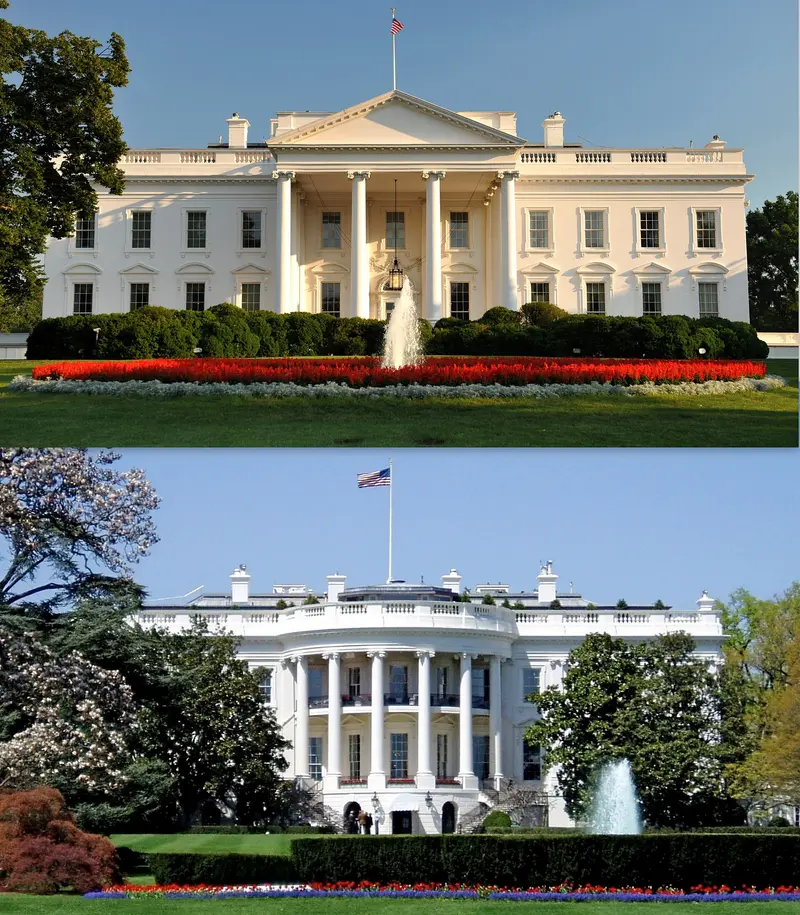
- (top) Cezary p (bottom) MattWade · CC BY-SA 4.0

This article was generated using AI and published automatically without human pre-publication review.
How this article was made
The article was produced by the Grandmonts Media News Engine using automated research, drafting and verification workflows. No human editor reviewed the article before publication. Grandmonts Media remains responsible for the published content. Errors can be reported at office@grandmonts.cz.