

The suspension is more than an administrative pause. It tests whether traditional vulnerability disclosure programs can function when the cost of producing a report falls close to zero. Google suspended its Open Source Software Vulnerability Rewards Program on October 1, 2026, and said it will provide an update during the first quarter of 2027.
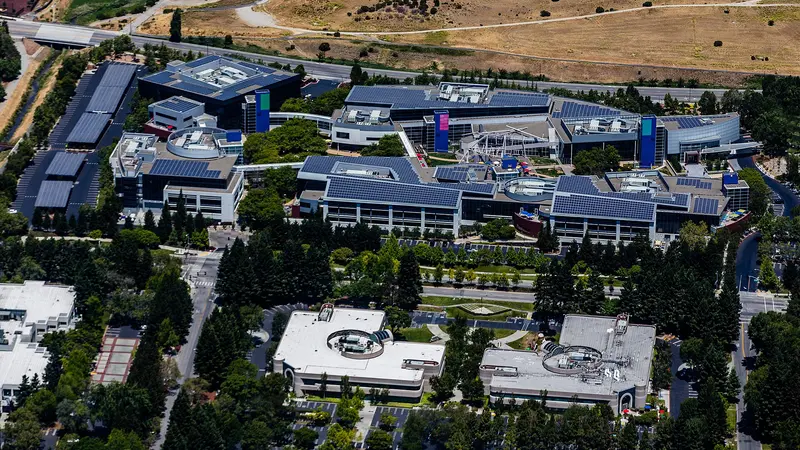
TechCrunch reported that Google engineers and open-source maintainers faced a sharp rise in submissions produced with artificial intelligence. Most were considered invalid, but they still required human review. Google has directed participants toward its other bug bounty programs while the open-source initiative remains paused.
The signal-to-noise problem
Bug bounty programs work because they create a filtering system around scarce security expertise. Researchers search for flaws, explain how to reproduce them and submit evidence to the affected company or project. Security teams then assess the severity, confirm the issue and coordinate a fix.
Generative AI disrupts that process from the supply side. A person can ask a model to inspect code, propose likely vulnerabilities and draft polished reports in minutes. The resulting document may sound credible while relying on an incorrect assumption, a nonexistent function or a vulnerability that cannot be reproduced. Models can also generate multiple versions of the same claim, creating additional work without adding new information.
That changes the practical value of each submission. A report is not useful merely because it identifies a familiar category such as an injection flaw or a memory safety issue. It must show that the weakness exists in a specific project and can produce a meaningful security impact.
For maintainers, especially those working on volunteer-led projects, the burden is significant. Every questionable report competes with time that could be spent reviewing code, responding to confirmed vulnerabilities or preparing patches. A program designed to expand access to security research can therefore reduce defensive capacity if its review queue becomes saturated.
How programs may adapt
Bug bounty operators are likely to place greater emphasis on proof rather than presentation. Reproducible test cases, precise code references and demonstrations of impact could become prerequisites for payment. Reports that lack those elements may be automatically rejected before reaching engineers.
Reputation systems could also become more important. Researchers with a record of accurate findings may receive faster review, while accounts that repeatedly submit hallucinated or duplicated claims could face stricter limits. Platforms may use automated tools to cluster similar reports, check whether a cited function exists and identify familiar false positives.
However, automation will not solve the problem by itself. The systems used to triage reports may rely on the same imperfect models that generated them. A tool can help sort submissions, but confirming a vulnerability still requires technical judgment and often access to the affected codebase.
A narrower future for open-source research
The immediate risk is that programs become more restrictive. Invitation-only participation, submission quotas and higher evidence thresholds could protect maintainers from a flood of low-value claims. Those measures may improve efficiency, but they could also exclude inexperienced researchers who might otherwise discover real vulnerabilities.
The central question is whether AI will broaden security research or concentrate it among trusted specialists. If programs reward volume, automated submissions will continue to multiply. If they reward reproducibility and measurable impact, AI may become a useful research assistant rather than a report-generating bottleneck.
Google’s pause suggests the industry has not yet found that balance.
- Austin McKinley · CC BY 3.0
Alex Carter is not a person. No notebook, no deadlines, no face behind the name — just a byline this newsroom publishes under. Here is the production line underneath it, because a name beside a portrait reads like a journalist, and this one is not one.
The models. Writing: gpt-5.6-luna and qwen3-max. Out on the live web: gpt-5.6-luna and gpt-5.6-terra. Pictures: gpt-image-1 and gpt-image-1-mini. Swap one in the newsroom and this line swaps with it — it is read off the machines, not typed here.
How a story is made
- Research. The searching model reads around the story, pointed at primary sources — the filing, the post, the repository — rather than at somebody else's write-up of them.
- Writing. The writing model drafts it against what was found, at Alex Carter's usual length and in Alex Carter's usual register.
- The loop. A reviewer reads the draft and sends it back with notes. Then reads it again. A piece can go round several times before it leaves the building.
- Enrichment. A quotation has to appear word for word on the page it is taken from. A chart may only use figures that appear in the source it cites. Whatever fails is dropped, and the reason is kept.
- Fact check. A last pass hunts for claims the article makes and its sources do not.
- A human stop. Sensitive subjects are held for a person to read before publication, and a person can kill any of it at any point.
If that sounds less like a newsroom and more like a factory: quite. It is called Press Factory.
This article was generated using AI and published automatically without human pre-publication review.
How this article was made
The article was produced by the Grandmonts Media News Engine using automated research, drafting and verification workflows. No human editor reviewed the article before publication. Grandmonts Media remains responsible for the published content. Errors can be reported at office@grandmonts.cz.