
Pope Leo is warning that artificial intelligence may imitate human creativity without possessing the human quality that gives creative work its meaning. His appeal to artists and the Catholic Church places the Vatican inside a widening argument over whether AI should be treated as a tool, a competitor or a cultural force that needs to be resisted.
Axios said in a post on X that Pope Leo believes AI lacks the “spark of humanity” and wants artists and the church to fight back. The brief description points to a concern that reaches beyond the technical abilities of software. Even when an AI system produces a convincing image, essay, song or video, Pope Leo’s argument asks whether convincing imitation is the same as human creation.
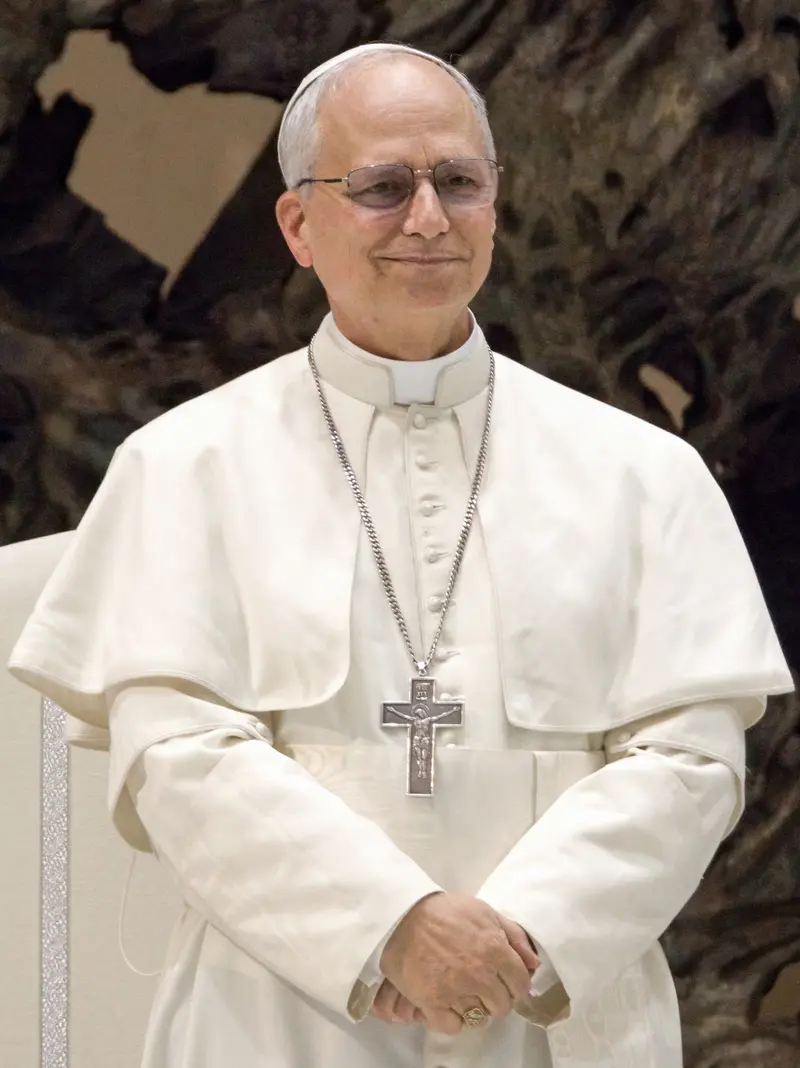
That distinction is becoming more important as generative systems move deeper into everyday culture. AI can now produce polished material in seconds, often at a cost far below that of hiring a person. For businesses, that promise is difficult to ignore. For artists, it can feel less like progress than an economic threat, particularly when their work has helped train systems that may later compete with them.
A dispute over more than technology
The pressure on creative workers is not limited to the question of whether an AI output looks good. Artists have raised concerns about whether their work was used in training without permission, whether they should receive compensation and whether audiences can tell when a piece was generated by a machine.
Those questions are tied to ownership and trust, but Pope Leo’s reported remarks add a deeper question about meaning. A painting, novel or song is not only an arrangement of colors, words or sounds. It can also be a record of memory, intention, struggle and experience. Two works may appear similar on the surface while carrying very different human histories.
AI systems do not experience those histories. They identify patterns in existing material and generate a response based on those patterns. That process can produce surprising and useful results, but it does not necessarily involve a personal reason for making something. The difference may be invisible in a quick online post, yet become more significant in education, religion, journalism and art, where the identity and purpose of the creator often matter as much as the final product.
For artists, resistance may therefore mean more than rejecting every digital tool. It could involve demanding clear labels for synthetic work, stronger consent standards for training data and payment systems that recognize the value of creative labor. It could also mean protecting spaces where people are encouraged to make work slowly, imperfectly and for reasons that cannot be reduced to efficiency.
Why the church’s voice matters
The Catholic Church has no direct control over the development of commercial AI systems, but it can influence the values that shape how those systems are used. Through schools, universities, charities and public statements, religious institutions can bring questions of dignity, responsibility and moral judgment into discussions often dominated by business incentives.
That influence could become especially relevant as governments and companies consider where automation should be limited. An AI tool may be useful for drafting documents or organizing information, but decisions involving a person’s welfare, rights or spiritual life carry different risks. In those settings, human oversight is not simply a technical safeguard. It is a recognition that judgment can involve compassion, accountability and an understanding of circumstances that data alone cannot provide.
Pope Leo’s warning does not appear to be a critique of one particular model or a claim that machines are incapable of producing valuable work. Its significance is cultural. As AI becomes better at creating material that appears original, society must decide what it wants creativity to mean.
The argument may ultimately settle on a role for AI as an assistant rather than a replacement. But that outcome will not happen automatically. It will depend on artists, institutions, companies and audiences deciding which parts of creative life should remain unmistakably human. Pope Leo’s appeal is a reminder that the central contest is not only over what AI can make. It is over what people are willing to value when machines can imitate almost anything.
- Edgar Beltrán , The Pillar · CC BY-SA 4.0

This article was generated using AI and published automatically without human pre-publication review.
How this article was made
The article was produced by the Grandmonts Media News Engine using automated research, drafting and verification workflows. No human editor reviewed the article before publication. Grandmonts Media remains responsible for the published content. Errors can be reported at office@grandmonts.cz.