
For developers choosing an AI model, the most important question is no longer which system wins a benchmark. It is whether that system can complete useful work reliably, cheaply and with enough openness to be trusted. Xiaomi’s MiMo-V2.6-Pro is forcing that question into the center of the frontier AI race.
A new open-weight model from Xiaomi has moved ahead of several better-known systems on Artificial Analysis’ Intelligence Index, including xAI’s Grok 4.6, Google’s Gemini 3.8 Flash and DeepSeek’s V4.1 models. The result gives China’s growing open-weight ecosystem a conspicuous new contender, while also challenging the assumption that the strongest AI systems must come from closed American companies.
But the benchmark result is only the beginning of the story. Xiaomi is presenting MiMo-V2.6-Pro alongside a less expensive Flash model, open model files and a growing set of tools aimed at coding, automation and cybersecurity. The company is not simply releasing a chatbot. It is trying to build a platform that can perform tasks on behalf of users and organizations.
That distinction matters because the next phase of AI competition will be decided less by isolated question answering and more by whether models can operate inside messy, multistep workflows. A model that writes a good paragraph is useful. A model that can inspect a codebase, make a plan, use tools, recover from mistakes and deliver a working result is potentially much more valuable.
From benchmark surprise to product strategy
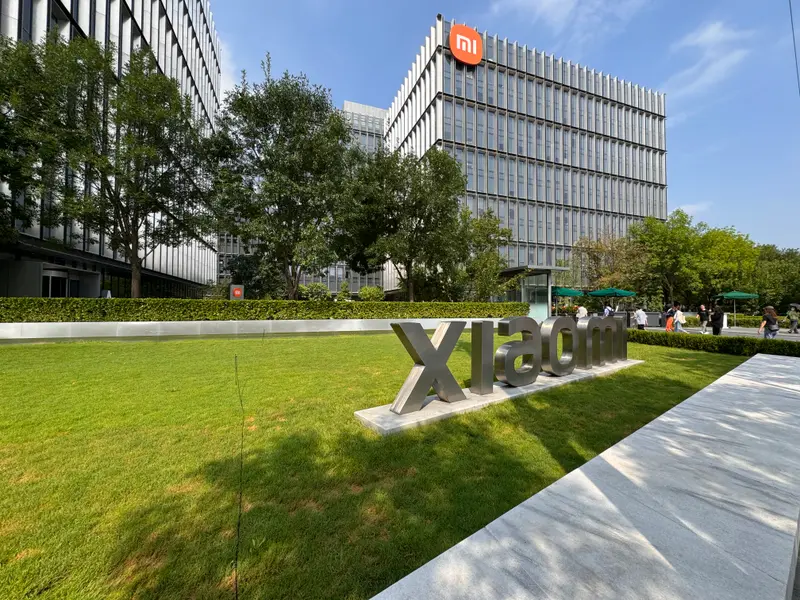
VentureBeat reported on Xiaomi’s release as a major open-weight challenge to the current frontier-model hierarchy. The significance of the comparison is not that one model has won one leaderboard. It is that MiMo-V2.6-Pro is being positioned across several dimensions at once: capability, cost, openness and agentic use.
Xiaomi’s official announcement of the MiMo-V2.6 series introduces two models. MiMo-V2.6-Pro is the flagship system, while MiMo-V2.6-Flash is designed to provide a faster and cheaper option. Xiaomi also describes applications involving coding, automation and cybersecurity, and makes the models available through its own services and open-weight channels.
“In an era when compute is brutally scarce, we still chose to dedicate a team of several dozen people to one goal over an extended period: scaling up RL.”
That pairing reflects a familiar pattern in the technology industry. A high-end model attracts attention and establishes a company’s technical credibility. A smaller model often determines whether the technology becomes widely used. Most businesses do not need the absolute strongest system for every request. They need a system that is good enough, fast enough and inexpensive enough to run repeatedly.
In practical terms, a development team might use the Pro model for difficult software architecture decisions while routing routine code edits or document processing to Flash. An operations team might reserve the more capable model for complex investigations and use the cheaper system for classification, extraction or repetitive automation. If Xiaomi’s two-model strategy works, it could make the release more important than the headline ranking suggests.
What open weight changes
The models’ open-weight status also changes the nature of the competition. A closed model is generally accessed through a company’s application programming interface or consumer product. Users can send requests, receive answers and evaluate performance, but they have limited control over the underlying system.
Open weights give developers access to the model files needed to run, inspect or adapt the system, subject to the relevant license and technical requirements. That does not make deployment effortless. Organizations still need computing capacity, engineering expertise and safeguards. It does, however, provide more control over where the model runs and how it is integrated.
Xiaomi’s official MiMo-V2.6-Pro-RL repository on Hugging Face identifies the model as being released under the MIT license and includes model files and deployment instructions. For companies concerned about vendor dependence, that can be as important as a few points on a benchmark.
The appeal is especially clear in markets where data residency, customization and operational independence matter. A company may not want sensitive source code, customer records or internal research sent to an external provider. Running an open-weight model in a controlled environment can reduce that dependence, although it also transfers responsibility for security, monitoring and maintenance to the user.
This is where Xiaomi’s release intersects with geopolitics. China’s AI industry has been developing under restrictions on access to advanced chips and technology, while American companies have dominated much of the global conversation around frontier models. Open-weight releases give Chinese laboratories and companies a way to compete through distribution, adaptation and developer adoption, even when access to the largest computing resources is uneven.

The result is not automatically a victory for China, nor does one release establish technological parity across the industry. It does show that the competitive map is becoming more complicated. Model capability is increasingly shaped not only by the size of a company’s training budget, but also by how effectively it turns research into something developers can download, test and build around.
The training story behind the models
Xiaomi’s MiMo-V2.6 technical report documents the model’s training approach, reinforcement-learning runs, environments and evaluation results. Reinforcement learning is important to the model’s intended role because it can help a system improve at tasks where success depends on a sequence of decisions rather than a single fluent response.
For a user, the difference can be described simply. A conventional language model may produce an attractive answer immediately, even when the answer is incomplete. An agentic model is expected to work through a problem, use available tools and check whether its actions achieved the desired result. That process creates more opportunities for useful behavior, but also more opportunities for failure.
The technical challenge is therefore not just making a model knowledgeable. It is teaching the model to remain oriented toward an objective. In coding, that might mean changing a program without breaking existing functions. In cybersecurity, it might mean identifying a vulnerability while staying within a defined environment. In automation, it might mean completing a sequence of actions without losing track of permissions or user intent.
Xiaomi’s emphasis on these areas suggests that it sees models as workers inside software systems rather than merely as conversational interfaces. That is a consequential shift. The value of an agent is measured by the outcome it produces, not by how impressive its intermediate explanation sounds.
It also raises the standard for evaluation. A system can perform well on a general intelligence index and still disappoint when it encounters ambiguous instructions, unfamiliar software or a task that requires sustained attention. The technical report’s evaluation results provide evidence of progress, but they cannot fully answer how the models will behave across the huge variety of real-world environments used by businesses and individuals.
Why the leaderboard is not the finish line
Artificial Analysis’ comparison of MiMo-V2.6-Flash and MiMo-V2.6-Pro provides the underlying data for the models’ Intelligence Index score, benchmark results, costs, speed, context window, parameter counts and open-weight status. Those categories help explain why Xiaomi’s release has attracted attention beyond its headline ranking.
A leaderboard compresses many capabilities into a single number. That is useful for establishing a broad signal, but it can obscure the tradeoffs that matter to a purchaser. A model may be stronger at reasoning but slower in production. It may offer a larger context window but cost more to operate. It may be excellent at coding and less reliable at factual research. The right choice depends on the task.
The comparison between Pro and Flash is therefore particularly important. If Flash delivers a large share of Pro’s useful performance at a lower cost and higher speed, developers may choose it for the majority of their workloads. That could create a more durable advantage than a narrow win on a difficult benchmark.
Cost also changes how people use models. When each request is expensive, teams tend to reserve AI for high-value tasks and limit experimentation. When inference becomes cheaper, companies can build AI into routine processes, run more attempts, use additional verification steps and give systems broader responsibilities. Lower prices can turn a model from a specialist tool into infrastructure.
Still, low cost can amplify mistakes as well as successes. An inexpensive agent that makes an occasional error across thousands of automated actions may create a larger problem than an expensive assistant used cautiously. Adoption will depend on whether organizations can combine lower inference costs with strong controls, clear permissions and human review where the consequences are serious.
The unanswered test: work in the wild
The central question for MiMo-V2.6-Pro is whether its advantage survives contact with ordinary work. Can it complete long coding tasks without constant supervision? Can it use tools consistently? Can it explain what it changed? Can teams deploy it without spending more on monitoring and correction than they save on model access?
Those questions are difficult because agentic work has no single definition. A software engineer may judge a model by whether it produces maintainable code. A security analyst may care more about cautious behavior and accurate prioritization. A business user may value dependable spreadsheet manipulation over abstract reasoning ability.
Xiaomi’s release gives each group a reason to experiment. The Pro model offers a high-capability option, Flash creates a path to cheaper deployment and the open-weight repository gives technical teams more control than a conventional closed API. That combination could help the models spread even if they do not dominate every benchmark.
The risks are equally clear. Open models can be modified and deployed in settings that their creators do not control. Agentic systems can act on external tools, which makes permissions and audit trails essential. And benchmark success can encourage organizations to move faster than their testing processes allow.
For now, MiMo-V2.6-Pro should be viewed as a serious signal rather than a final verdict. Claude and OpenAI models still lead on several evaluations, and no single index captures the full range of capabilities that determine whether an AI system is useful. Yet Xiaomi has assembled a credible challenge around more than raw performance.
The broader contest is shifting from who can produce the most impressive model in a laboratory to who can make advanced intelligence available at a price, speed and level of openness that people can actually use. If MiMo-V2.6-Pro and Flash perform reliably in real workflows, Xiaomi may have done more than place a new name near the top of a leaderboard. It may have helped make open-weight AI a practical alternative to the closed systems that have defined the market so far.
- Justin Sijbolts · BY 4.0

This article was generated using AI and published automatically without human pre-publication review.
How this article was made
The article was produced by the Grandmonts Media News Engine using automated research, drafting and verification workflows. No human editor reviewed the article before publication. Grandmonts Media remains responsible for the published content. Errors can be reported at office@grandmonts.cz.