
AI Model
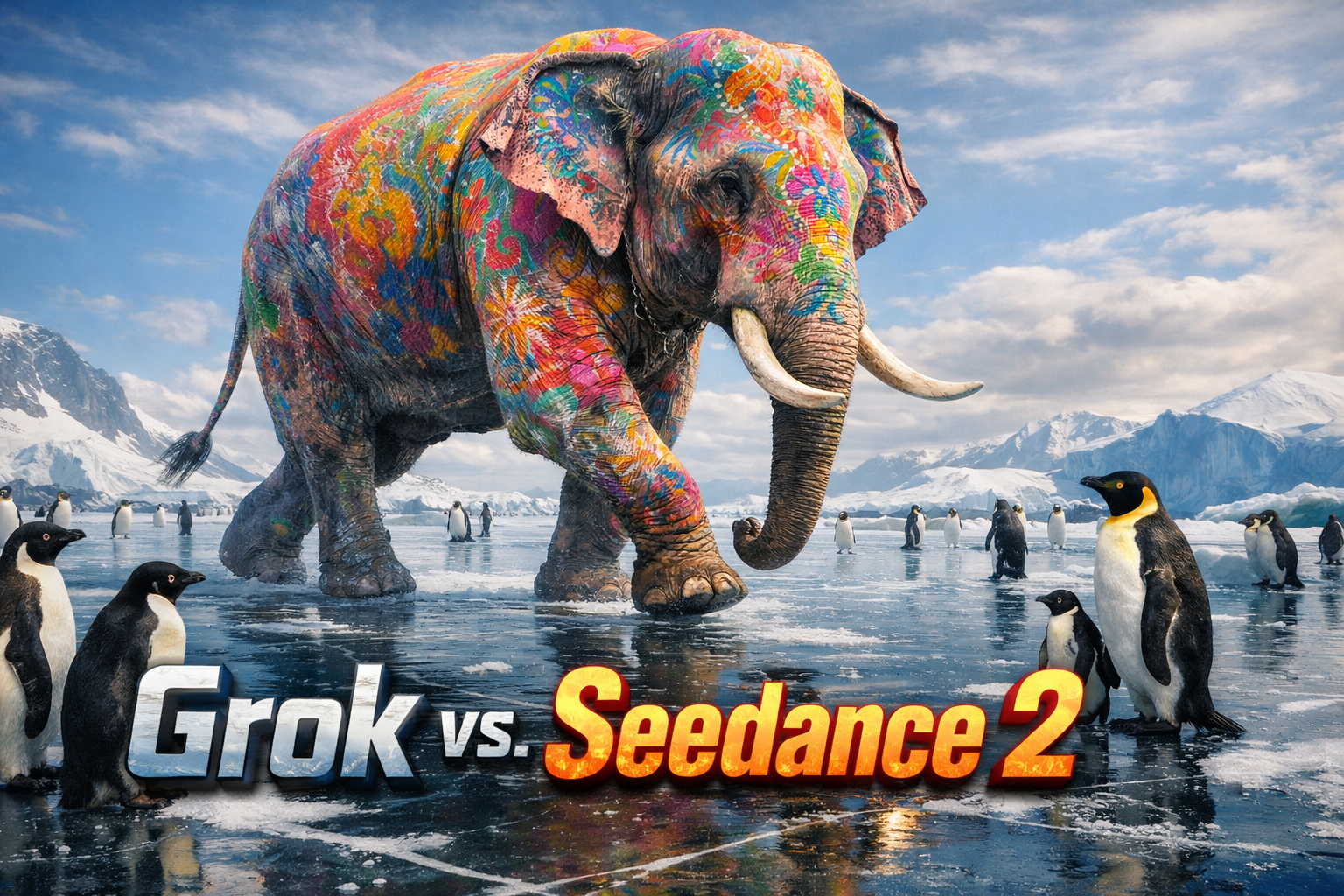
Grok vs. Seedance 2: Inside the New AI Video Arms Race

- Share
- Tweet /data/web/virtuals/375883/virtual/www/domains/spaisee.com/wp-content/plugins/mvp-social-buttons/mvp-social-buttons.php on line 63
https://spaisee.com/wp-content/uploads/2026/03/grok-1000x600.png&description=Grok vs. Seedance 2: Inside the New AI Video Arms Race', 'pinterestShare', 'width=750,height=350'); return false;" title="Pin This Post">
The race to build the world’s most capable generative video system has become one of the most intense competitions in artificial intelligence. Only a few years ago, AI video generation was largely experimental, producing distorted faces, unstable motion, and clips that barely lasted a few seconds. Today the technology has advanced dramatically. Systems are capable of generating cinematic camera movement, realistic lighting, synchronized audio, and characters that behave consistently across shots. The implications stretch far beyond entertainment. Marketing, social media, gaming, filmmaking, and education may all be reshaped by tools that can create convincing video on demand.
Two systems illustrate the diverging directions of this rapidly evolving field: Grok’s video generation tools, developed by Elon Musk’s AI company xAI, and Seedance 2, the advanced video model released by ByteDance. Both platforms aim to convert prompts and reference material into fully animated scenes, yet they represent very different design philosophies. Grok emphasizes speed, accessibility, and large-scale distribution through social platforms, while Seedance 2 prioritizes cinematic realism, multi-modal control, and professional production workflows. The contrast between them reveals not only the technical state of AI video generation but also the strategic choices shaping the industry’s future.
Understanding how these two systems compare requires examining several dimensions: user adoption, technical capabilities, video quality, generation methods, infrastructure constraints, and the broader ecosystems in which they operate. When placed side by side, Grok and Seedance 2 reveal two competing visions of how AI-generated video will ultimately be used.
The Origins of Grok’s Video Ecosystem
Grok began as a conversational AI developed by Elon Musk’s company xAI and integrated directly into the social platform X. The system was initially introduced as an alternative to existing large language models, designed to answer questions with a more conversational tone and real-time awareness of social media discussions. However, xAI quickly expanded Grok’s capabilities beyond text.
The introduction of Grok Imagine marked the company’s entry into generative media. The model enabled users to produce images and later short video clips from simple prompts. Unlike some competing AI systems that focused on highly detailed cinematic scenes, Grok’s media generation tools were designed around rapid iteration. Users could produce several variations of a clip within seconds, adjust prompts, and refine the output through repeated attempts.
This iterative design reflects the culture of social media platforms, where speed and experimentation matter more than perfection. Short videos dominate modern online communication, particularly on platforms such as TikTok, Instagram, and X. Grok’s video generation tools were therefore built to produce short clips that can be created quickly and shared immediately.
Most Grok-generated videos are relatively brief, often lasting only a few seconds. The system typically generates footage at around 720p resolution with frame rates near 24 frames per second. While this does not match professional film production standards, it is more than sufficient for social media content. In practice, the system excels at creating memes, promotional clips, quick concept animations, and experimental visual ideas.
Another key feature is integrated audio generation. Grok’s system can synthesize sound effects or dialogue alongside the visual output, meaning users can create a complete audiovisual clip in a single generation step. This reduces the need for separate editing software and aligns with the goal of making video creation accessible to everyday users.
Grok’s architecture also emphasizes scalability. The underlying model uses a mixture-of-experts transformer design, allowing different neural components to specialize in specific tasks such as motion synthesis, lighting generation, or audio production. This modular approach allows the system to generate results quickly while maintaining acceptable visual coherence.
Seedance 2 and ByteDance’s Vision for AI Video
Seedance 2 emerged from a very different environment. ByteDance, the parent company of TikTok, has spent years developing advanced machine learning systems for recommendation algorithms, computer vision, and generative media. The company’s expertise in short-form video content gave it a unique perspective on how AI video tools might evolve.
The first version of Seedance already demonstrated impressive capabilities, but the release of Seedance 2 represented a major leap forward. The new model expanded the system’s ability to generate realistic motion, stable camera movement, and coherent scenes that persist across multiple shots.
Where Grok relies primarily on text prompts, Seedance 2 adopts a reference-driven workflow. Creators can supply a variety of inputs including images, video clips, audio tracks, and written prompts. These inputs act as anchors that guide the generation process. By referencing existing material, the model can maintain consistent characters, environments, and visual styles across a sequence of shots.
This approach makes Seedance 2 particularly useful for storytelling. Instead of producing isolated clips, creators can design entire sequences that resemble scenes from a film. Characters can appear repeatedly in different camera angles, environments can remain stable across cuts, and lighting conditions can evolve naturally.
The model can also accept numerous reference inputs simultaneously. In some demonstrations, creators provide a collection of images representing characters, backgrounds, and stylistic elements. The AI then synthesizes a new scene that integrates all of those references while following the user’s textual instructions.
Seedance also generates synchronized audio, including environmental sound effects and speech patterns. The integration of sound and motion contributes to the sense of realism, making the resulting clips feel closer to traditional film footage than earlier generations of AI video.
Comparing Video Quality
The most visible difference between Grok and Seedance 2 lies in the quality and style of their generated videos. Grok’s clips tend to prioritize speed and spontaneity. They often feature stylized visuals, simplified motion, and relatively short durations. While the output can be impressive, especially when generated in seconds, the system does not yet aim for full cinematic realism.
Seedance 2 aims much higher. Demonstrations of the system show scenes with complex camera movement, detailed lighting interactions, and characters that behave in a physically believable way. Motion is smoother, environmental details are richer, and the overall visual fidelity approaches that of high-end animation or live-action footage.
Another key advantage of Seedance is temporal consistency. Maintaining stable characters across multiple frames is one of the hardest challenges in generative video. Early AI systems often produced flickering faces or changing clothing patterns between frames. Seedance’s reference-driven architecture significantly reduces these artifacts.
However, achieving this level of quality requires far more computational power. Generation times are longer, and the system demands significant GPU resources. This limitation has influenced how widely the technology can be deployed.
User Base and Platform Reach
One of Grok’s greatest advantages is its distribution. Because the system is integrated directly into X and available through subscription tiers such as Premium Plus and SuperGrok, millions of users have access to its capabilities. Even people who primarily use Grok as a conversational assistant can experiment with media generation.
This built-in audience dramatically accelerates adoption. When new generative tools appear within a major social platform, users begin experimenting immediately. Viral clips spread across timelines, inspiring others to try the technology themselves. In some cases, tens of millions of AI-generated images have been created within a single day following the release of new features.
Seedance operates under very different circumstances. The system is currently available primarily within ByteDance’s internal ecosystem and certain Chinese applications. Access remains limited due to the immense computing resources required to run the model. As a result, many users encounter queues or delays before their generation jobs begin.
Although the number of Seedance users is smaller, the system has attracted significant attention from professional creators, AI researchers, and filmmakers. Its ability to generate cinematic scenes has sparked widespread discussion about how generative video might reshape the entertainment industry.
Generation Speed vs. Creative Control
The differences in user experience between Grok and Seedance become particularly clear when examining how creators interact with the systems. Grok is built for rapid experimentation. A user can type a prompt, generate a clip in seconds, and immediately try again with slight variations. This encourages playful exploration and quick iteration.
Seedance encourages a more deliberate workflow. Creators often assemble reference materials, design prompts carefully, and generate scenes that align with a larger narrative structure. The process resembles pre-production in filmmaking, where directors plan shots and visual styles before filming begins.
This difference reflects the broader strategies of the companies behind the models. xAI appears focused on democratizing media creation for everyday users, while ByteDance is experimenting with tools that could transform professional content production.
Infrastructure and the Cost of AI Video
Behind the scenes, both systems face the same fundamental challenge: generative video is extremely expensive to compute. Unlike text generation, which produces a sequence of words, video generation requires synthesizing thousands of individual frames while maintaining consistency between them.
Each frame must match the visual context of previous frames while also introducing natural motion. Lighting, perspective, character movement, and environmental interactions all have to evolve smoothly over time. Achieving this coherence requires enormous neural networks and vast amounts of computational power.
Grok addresses this challenge by focusing on short clips that can be generated quickly. Seedance pursues higher realism and longer sequences, which increases the computational burden dramatically.
This trade-off between quality and scalability will likely remain one of the defining tensions in the AI video industry.
Legal and Cultural Controversies
As generative video becomes more powerful, it has also attracted criticism from artists, filmmakers, and copyright holders. Both Grok and Seedance have faced scrutiny for different reasons.
Grok’s relatively open content policies have raised concerns about the potential for misuse. Critics worry that loosely restricted image and video generation tools could be used to create misleading or inappropriate media.
Seedance has encountered a different form of controversy. Some demonstrations appeared to replicate visual styles and characters from well-known films and celebrities. Entertainment industry organizations have expressed concern that generative models may rely on copyrighted training data without permission.
These debates are likely to intensify as AI video tools continue to improve.
The Strategic Implications for the AI Industry
When viewed in a broader strategic context, Grok and Seedance illustrate two distinct visions of how generative video technology might evolve. One vision treats AI video as a social communication tool, integrated directly into online platforms where millions of users create short clips for everyday interaction.
The other vision treats AI video as a professional production engine capable of generating cinematic scenes for films, advertising, and digital media.
Both paths are plausible, and the industry may ultimately adopt elements of both approaches. Social media platforms will likely drive mass adoption, while professional tools push the limits of visual realism and storytelling.
The Future of Generative Video
The comparison between Grok and Seedance 2 reveals how quickly generative media is evolving. Only a few years ago, AI-generated video was limited to brief, unstable animations. Today systems are approaching the ability to produce fully coherent scenes with synchronized sound and realistic motion.
As computing power increases and models continue to improve, the gap between synthetic and real video will continue to shrink. Resolution will rise, generation times will fall, and creative control will expand.
In the long run, generative video may become as common as digital photography. Anyone with a prompt could create short films, animated advertisements, or immersive visual experiences. The technologies being developed today by companies like xAI and ByteDance represent the first steps toward that future.
The competition between Grok and Seedance is therefore about more than just technical benchmarks. It is a glimpse into the next phase of digital media, where the boundary between imagination and production may disappear entirely.











AI Model
Google’s Gemini Omni Flash Enters the AI Video Wars: Who Should Use It, and When Seedance 2.0, Runway, Sora, Kling or Firefly Is the Smarter Choice

AI video has crossed a threshold. The old question was whether a model could produce a beautiful five-second clip without melting hands, warping faces or forgetting what a camera was supposed to do. The new question is more strategic: which model belongs inside a real production workflow? Google’s Gemini Omni Flash, ByteDance’s Seedance 2.0, Runway, Sora, Kling, Luma, Pika, Adobe Firefly and Synthesia are no longer chasing the same user. They are splitting the market into distinct creative territories: cinematic ideation, multimodal editing, social-video speed, enterprise explainers, brand-safe marketing, avatar-based training and full audio-video generation.
The Big Shift: From Prompt-to-Video to Conversation-to-Video
Google’s Gemini Omni Flash matters because it reframes the AI video tool as less of a generator and more of a creative operating layer. Google describes Omni Flash as a model that can create and edit video from text, image, audio and video inputs, with high-resolution video and audio as output. It is distributed through Gemini, YouTube and Google Flow, and Google positions conversational editing as one of its defining traits.
That distinction is important. Most video tools still behave like slot machines with increasingly good odds. You enter a prompt, maybe attach a reference image, generate a clip, then regenerate until the model approximates your intention. Omni Flash points toward a different interface: a model that can understand what is already in the clip, accept layered references and respond to iterative instructions. For creators, that means less time rewriting prompts and more time directing.
Seedance 2.0 is moving in the same direction, but from a different cultural and product base. ByteDance presents Seedance 2.0 as a unified multimodal audio-video model supporting text, image, audio and video inputs, with strong motion stability, synchronized audio-video generation and director-level control over lighting, performance, shadows and camera movement. Its technical materials describe support for short audio-video generation and multiple reference assets, including images, videos and audio clips.
The result is an unusually direct contest. Omni Flash is Google’s bet on reasoning, ecosystem integration and conversational editing. Seedance 2.0 is ByteDance’s bet on multimodal control, motion, entertainment fluency and fast creator workflows. They overlap, but they do not feel identical.
What Gemini Omni Flash Is Best For
Gemini Omni Flash is best suited for creators and teams who need a flexible video generation layer that can reason across multiple inputs. The natural user is not only a filmmaker, but a creative strategist: someone who has a mood board, a product photo, a rough clip, a soundtrack idea and a written concept, then wants the model to synthesize those inputs into a coherent video.
This makes Omni particularly attractive for agencies, YouTube creators, product marketers, educators and small production teams already living in Google’s ecosystem. If a team uses Gemini for planning, Google Flow for visual development and YouTube as the publishing environment, Omni Flash reduces friction. The tool’s advantage is not merely that it can generate video. The advantage is that it sits close to the places where ideas, references and distribution already happen.
The most compelling use case is iterative concept development. A creative director can begin with a rough brand idea, generate a short visual direction, then refine the tone through conversation. “Make it less futuristic and more documentary.” “Keep the same character, but change the environment.” “Use the uploaded product shot as the hero object.” “Turn the pacing into something suitable for a YouTube pre-roll.” That kind of workflow is exactly where prompt-only tools feel brittle.
Omni Flash is also well suited for knowledge-grounded videos. Google says Omni combines Gemini’s reasoning with generative media capabilities and can generate videos grounded in real-world knowledge. That does not mean it should be trusted blindly for factual claims, but it does mean the model is designed for more context-aware generation than purely aesthetic video models. For explainers, visual metaphors, educational shorts and product demonstrations, that could become a meaningful differentiator.
Another good fit is video-to-video editing. The market has plenty of tools that can create a clip from scratch, but fewer that can take an existing clip and let the user manipulate it conversationally without forcing a full manual editing workflow. For social teams and smaller studios, this matters because most real work starts from something: a phone video, a rough animatic, a product render, a testimonial, a stock shot or a previous AI generation.
Where Omni Flash May Not Be the Best Choice
Omni Flash is not automatically the right tool for every video job. Its current positioning emphasizes short-form generation, multimodal inputs and conversational editing. That makes it powerful for ideation and controlled edits, but less obviously ideal for long-form structured production, enterprise avatar training, highly brand-safe commercial campaigns or specialized cinematic workflows where another tool has deeper production controls.
If your main task is producing a polished training video with a presenter speaking in multiple languages, Synthesia is usually a better fit. Synthesia is built around AI avatars, scripts, voiceovers, localization, enterprise security and LMS-style distribution rather than cinematic scene generation.
If your highest priority is brand safety and legal comfort for commercial marketing assets, Adobe Firefly deserves serious consideration. Adobe explicitly positions Firefly around commercial safety, permissioned training data and IP protection for qualifying plans. That does not make Firefly the most cinematic model in every situation, but for enterprise marketing departments, legal departments often matter as much as frame quality.
If your goal is a multi-shot cinematic sequence with consistent characters, locations and objects, Runway remains one of the strongest specialist choices. Runway’s Gen-4 was built around world consistency, using references and instructions to preserve characters, locations, objects, style and cinematographic language across scenes. For directors trying to build a sequence rather than a standalone clip, that consistency layer is not a luxury. It is the difference between a demo and a usable production asset.
Gemini Omni Flash vs Seedance 2.0
The cleanest way to compare Omni Flash and Seedance 2.0 is to say that Omni feels like a multimodal creative assistant, while Seedance feels like a multimodal video engine.
Omni’s likely strength is interpretive control. It is designed around Gemini’s reasoning, conversational editing and integration into Google Flow. For users who want to steer a video through natural language and combine references without building a complicated production pipeline, Omni is highly attractive. It is the model to reach for when the brief is still evolving and the creator wants to shape the result through dialogue.
Seedance 2.0’s strength is production momentum. ByteDance emphasizes audio-video joint generation, motion stability and director-level control. Its technical materials are unusually specific about supported durations, reference inputs and native resolutions. It also benefits from ByteDance’s cultural understanding of short-form video. That matters. TikTok-style content is not only about image quality; it is about rhythm, motion, visual punch and immediate recognizability.
For creators making social-first entertainment, Seedance 2.0 may feel more native. It is likely to shine in anime-inspired clips, dynamic camera moves, stylized character action, viral short scenes and fast-turnaround creative experimentation. If a creator wants to generate multiple energetic concepts in a style closer to social media and entertainment fandoms, Seedance is hard to ignore.
For brand teams, Omni may be easier to justify, especially if they already trust Google’s stack. Google’s advantage is ecosystem, enterprise familiarity and potential integration into broader Gemini workflows. A marketing team may prefer Omni for product explainers, platform-native YouTube experiments, concept boards and iterative edits. A creator studio may prefer Seedance for punchier short-form sequences where motion and audio-visual energy matter more than corporate workflow integration.
The risk profile also differs. Seedance 2.0 has already attracted copyright and likeness controversy because users reportedly generated videos involving protected entertainment properties and celebrity-like content. Omni has faced similar concerns in early coverage around recognizable copyrighted characters, which means neither model can be treated as a legal free-for-all. The practical lesson is simple: use these systems for original concepts, licensed materials and approved references, not for imitation of protected franchises or real people without permission.
How Runway Fits Into the Picture
Runway remains the tool for creators who think like filmmakers. Its biggest advantage is not that it can produce attractive clips; many tools can now do that. Its advantage is production vocabulary. Gen-4’s emphasis on consistent characters, objects and locations makes it useful for storyboards, short films, music videos, commercials and previsualization.
Use Runway when continuity is the priority. If the same character must appear across a city street, an apartment, a close-up and a car interior, Runway’s consistency features are directly relevant. If a director needs a controlled camera language, a coherent world and an aesthetic that survives across multiple shots, Runway is often a better choice than more general-purpose tools.
Omni Flash may compete with Runway as Google Flow matures, especially because Omni’s conversational editing could reduce the need for manual prompt surgery. But Runway has a head start with professional creators and a brand built around film-adjacent workflows. For serious narrative production, Runway remains one of the default tools to test.
How Sora Fits Into the Picture
OpenAI’s Sora 2 occupies a different space. OpenAI described Sora 2 as a flagship video and audio generation model with improved physical accuracy, realism, controllability, synchronized dialogue and sound effects. However, OpenAI has also changed the availability and product structure around Sora over time, which complicates its practical role for creators depending on region, account type and access.
Strategically, Sora matters because it shaped expectations for physically plausible AI video. It pushed the market toward longer, more coherent generated scenes and made “world simulation” part of the video-generation conversation. But availability matters. A tool that is technically impressive but not accessible in a stable production environment is less useful than a slightly weaker tool that a team can actually deploy.
Use Sora when it is available inside the workflow you are using and when realism, physics and synchronized audio are central. Do not build an entire production plan around it without confirming access, policy limits and export constraints. In 2026, the best video tool is not always the most famous model; it is the one that can reliably deliver inside your pipeline.
How Kling Competes
Kling has become one of the strongest names for motion, character action and social-video realism. Its recent positioning around broad multimodal capabilities, character consistency and audio makes it a natural competitor to both Seedance and Google. While official claims should always be tested in production, Kling’s reputation among creators has been built on fluid motion, cinematic movement and strong handling of human subjects.
Kling is worth using when motion is the brief. Dancing, sports, fight choreography, expressive body movement, camera sweeps and dynamic scenes often expose weaknesses in video models. If a model can maintain anatomy and motion under stress, it becomes valuable for entertainment, ads and creator content. Kling is also a good candidate when lip-sync and talking characters are required, though teams should compare outputs against Synthesia when the task is formal presenter video rather than cinematic dialogue.
Compared with Omni Flash, Kling may feel more specialized around kinetic generation. Compared with Seedance 2.0, it competes more directly in the social-entertainment lane. The decision often comes down to taste, access, pricing and whether the platform gives enough control over characters and references.
How Luma Ray Fits Into the Picture
Luma’s Ray line has leaned into realism, physics, high-fidelity motion and fast creative iteration. Luma positions Ray around stronger realism, physics, character consistency and instruction following, with recent versions adding higher-resolution generation, faster performance and lower cost.
Luma is a strong choice for visual exploration. It is especially useful when a team wants cinematic realism without building a heavy editing workflow. Product shots, atmospheric scenes, architecture, natural motion, camera exploration and visually rich concept clips are all good fits.
Use Luma when you want high-fidelity visual output quickly and do not need the deepest conversational editing layer. Omni Flash is more attractive when you need to keep talking to the model and refine an existing idea through multiple modalities. Luma is attractive when the priority is visual beauty, speed and motion coherence.
How Pika Fits Into the Picture
Pika is best understood as the playful social-video tool. It is not trying to be the most enterprise-safe platform or the deepest cinematic production suite. Its appeal is immediacy, effects and shareability. Pika’s public positioning emphasizes quick transformations, image-to-video generation and prompt-driven animation.
Use Pika when the job is a viral effect, a quick meme-like transformation, a playful product teaser or a social post that benefits from novelty. Do not use Pika as the first choice for a regulated enterprise campaign, long-form narrative continuity or a serious training library. It is strongest when speed and delight matter more than exact directorial control.
Compared with Omni Flash, Pika is lighter and more entertainment-oriented. Compared with Seedance, it is less of a full multimodal production model and more of a fast creative effects playground. That is not a weakness. It is a clear use case.
How Adobe Firefly Fits Into the Picture
Adobe Firefly is the tool for cautious professionals. It may not always generate the flashiest clip, but its value proposition is unusually clear: commercial safety, brand integration and professional creative workflows. Adobe positions Firefly around licensed and permissioned content sources, making it especially relevant for companies that need stronger assurances around commercial use.
That makes Firefly a serious option for enterprises, agencies, financial institutions, healthcare companies and global brands. In those environments, the key question is not “can this model make a cool video?” It is “can we publish this without creating legal, compliance or reputational risk?”
Use Firefly when the video is going into a paid campaign, a brand system or a corporate channel where provenance matters. Use Omni or Seedance earlier in the ideation phase if they help generate bolder concepts, then move into Firefly or Adobe’s broader suite when the asset must satisfy brand and legal constraints.
How Synthesia Fits Into the Picture
Synthesia should not be compared directly with Omni Flash as a cinematic generator. It is solving a different problem: scalable business communication. Synthesia is built for AI avatars, voiceovers, scripts, translation, templates and enterprise deployment. It is the right tool when the output needs to look like a presenter-led explainer, onboarding module, sales enablement video or compliance training asset.
Use Synthesia when the script matters more than the scene. If a company needs to turn a long policy update into a clean internal video in multiple languages, Omni Flash is not the obvious answer. Synthesia is. If an HR team needs consistent avatar-led training across markets, Synthesia is far more practical than a cinematic generator.
Omni could eventually generate more visually imaginative explainer scenes around a topic, but Synthesia remains stronger for repeatable, governed, human-presenter workflows.
The Practical Decision: Which Tool Should You Use?
For Gemini Omni Flash, the ideal user is a creator, marketer, educator or production team that wants multimodal generation plus conversational editing. Use it when you have mixed inputs and an evolving brief. Use it for YouTube concepts, product videos, educational shorts, rapid ad variations, video-to-video edits and creative development inside the Google ecosystem.
Use Seedance 2.0 when you need energetic, multimodal short-form generation with strong motion and audio-video integration. It is especially suitable for entertainment creators, social-first studios, music-video experiments, anime-style concepts, character-driven short scenes and creators who want to feed the model multiple references.
Use Runway when you need cinematic continuity. It is the better bet for multi-shot scenes, consistent characters, production-style previsualization and serious narrative experiments.
Use Kling when motion, action, bodies and expressive character performance are the priority. It is worth testing for dance, sport, stylized action and dialogue-heavy social clips.
Use Luma when you want visual realism, smooth motion and polished cinematic exploration without overcomplicating the workflow.
Use Pika when you want fast, playful, highly shareable effects.
Use Adobe Firefly when commercial safety, brand governance and legal comfort are the deciding factors.
Use Synthesia when the job is presenter-led business video, training, localization or internal communications at scale.
The Bottom Line
Google’s Gemini Omni Flash is not just another video generator. It is part of the industry’s move toward multimodal creative agents: systems that accept messy inputs, understand context, generate video with audio and let users edit through conversation. That makes it one of the most important tools for teams that want flexibility rather than a single-purpose clip machine.
But the market has matured enough that no single model should be treated as universal. Seedance 2.0 may be better for fast, vivid, entertainment-native generation. Runway may be better for narrative continuity. Firefly may be better for brand-safe campaigns. Synthesia may be better for corporate training. Pika may be better for viral effects. Luma may be better for polished visual exploration. Kling may be better for dynamic motion.
The smartest creators in 2026 will not choose one AI video tool and defend it like a religion. They will build a stack. Omni Flash belongs near the center of that stack for multimodal ideation and conversational editing. Seedance belongs near the edge where culture, motion and speed collide. The rest of the tools fill specialized roles. The winner is not the model with the loudest demo. It is the workflow that gets from idea to publishable video with the fewest compromises.

The most important thing about Grok is not that it is another chatbot. The market already has plenty of those. What makes Grok different is where it lives. On X, it is not sealed inside a private productivity app, waiting for a user to open a blank chat window and ask a carefully formed question. It sits inside the noisy, fast-moving, argumentative bloodstream of the internet. Users call it into conversations, ask it to explain viral clips, challenge political claims, summarize market rumors, interpret screenshots, generate memes, and turn chaotic threads into something closer to usable intelligence. In doing so, Grok has become more than a feature. It is one of the clearest experiments in what happens when artificial intelligence is embedded directly into a public social platform.
The AI Assistant That Lives Inside the Feed
Most AI tools begin with a prompt. Grok often begins with a post.
That distinction matters. A traditional chatbot session is usually private, deliberate, and task-oriented. A user asks for a draft email, a code snippet, a translation, a travel plan, or an explanation of a concept. Grok on X is more reactive. It is summoned in the middle of public discourse, often when a post is confusing, suspicious, technical, inflammatory, funny, or too dense to parse quickly.
The result is a different kind of AI behavior. Grok is not only answering questions. It is mediating attention.
On X, users face an endless stream of claims, charts, screenshots, breaking-news fragments, crypto narratives, political accusations, AI demos, product launches, and culture-war bait. The platform has always been fast, but speed creates a problem: people see information before they understand it. Grok enters that gap. A user can ask what a post means, whether a claim is supported, what context is missing, what a chart shows, whether an image appears manipulated, or how a thread can be summarized.
This makes Grok especially relevant for power users. Journalists, investors, creators, founders, traders, analysts, researchers, and highly online professionals do not use X merely for entertainment. They use it as a radar system. Grok strengthens that radar by giving users a way to interrogate the feed without constantly leaving the platform.
How Users Actually Use Grok on X
The most common public use case is simple: users ask Grok to explain something.
That “something” can be a macroeconomic chart, a scientific paper screenshot, a crypto wallet transaction, a legal document excerpt, a new AI benchmark, a policy announcement, a viral video, or a long argument between two accounts. X has always rewarded speed, but not necessarily clarity. Grok gives users a shortcut from exposure to comprehension.
A typical interaction might involve a user replying to a post and asking Grok to summarize the thread. Another might ask Grok to identify the source of a quote or check whether a claim is misleading. In crypto circles, users often ask for explanations of tokenomics, on-chain events, exchange flows, governance proposals, or sudden price movement narratives. In AI circles, they ask it to compare model releases, decode benchmark claims, or translate technical announcements into strategic implications.
This makes Grok a kind of public research assistant. It does not replace original reporting, domain expertise, or verification, but it can reduce the time between seeing a claim and forming a useful first interpretation.
The second common use case is dispute resolution. X is an argument machine. People argue over statistics, screenshots, translations, timelines, quotes, market data, and political claims. Instead of replying directly to an opponent, users increasingly bring Grok into the thread as a third party. The implicit message is: let the machine judge this.
That changes the social dynamic. A user who asks Grok to analyze a claim is not merely seeking information. They are performing verification in public. Grok becomes a referee, a fact-checking prop, a rhetorical weapon, or sometimes a shield against direct confrontation. In high-conflict threads, this is one of the more fascinating behaviors. People are not only asking “What is true?” They are asking “Can I outsource the burden of saying what is true?”
From Search Box to Sensemaking Engine
Search on X has always been powerful but messy. It can surface posts quickly, especially during breaking events, but it also returns noise, repetition, memes, bots, and emotionally charged commentary. Grok changes the search experience by adding interpretation on top of retrieval.
Instead of searching manually for a keyword, opening five posts, comparing screenshots, and trying to infer the timeline, a user can ask Grok for a summary of what people are saying about an event. They can ask for the strongest arguments on both sides of a debate, the origin of a rumor, or the most relevant context behind a trending phrase.
This is especially useful during fast-moving news cycles. X often sees stories before traditional outlets publish polished reports. That early window is valuable, but it is also dangerous. Rumors travel quickly. Images are miscaptioned. Old videos are presented as new. Selective screenshots distort the underlying event. Grok helps by giving users a way to slow the feed down.
The best use of Grok is not blind trust. It is assisted skepticism. A good user asks follow-up questions. Where did this claim come from? What evidence supports it? What are people leaving out? Is this chart measuring what the post says it measures? Is the account reliable? Has this claim appeared before? Are there competing explanations?
In that role, Grok becomes less like a search engine and more like a sensemaking layer. It helps users turn fragments into structure.
What People Generate With Grok
Grok’s creative side has become just as visible as its analytical side. Users generate images, memes, visual jokes, stylized scenes, fake posters, conceptual art, product mockups, and social content designed specifically for X’s attention economy.
This matters because X is a platform where visuals travel faster than explanations. A strong image can become a reaction, a brand asset, a joke, or a mini-campaign. Grok gives users a way to move from idea to asset without leaving the conversation. A creator can take a viral moment and ask Grok to turn it into a comic-style image. A crypto account can generate a mascot for a token narrative. An AI founder can mock up a product concept. A meme account can create a parody image that riffs on the day’s controversy.
The creative workflow is iterative. Users do not simply ask for one image and stop. They refine. Make it more cinematic. Add a bull market mood. Turn the character into a robot. Make it look like a courtroom sketch. Add a Solana hoodie. Remove the text. Make it darker. Make it funnier. Make it look like a 1990s trading card.
That iterative loop fits X perfectly. The platform rewards rapid reaction. Grok shortens the distance between a cultural moment and a shareable artifact.
There is also a more serious use case: visual explanation. Users can generate diagrams, conceptual illustrations, announcement graphics, and educational images. A crypto analyst might create a simple visual explaining staking flows. An AI educator might generate an image that represents model training, inference, or agentic workflows. A founder might create an image for a product teaser. The quality varies, but the speed is the point.
Grok as a Tool for Creators
For X creators, Grok is becoming a production assistant.
The most obvious use is writing. Users ask it to draft posts, tighten long explanations, turn research notes into threads, rewrite announcements, generate hooks, or adapt a technical idea for a broader audience. A creator who has a rough thesis can use Grok to structure it into a thread with a clear opening, evidence, and conclusion.
But the more interesting use is editorial judgment. Creators can ask Grok what is unclear in a draft, what objections readers might raise, or how to make a post more concise. They can ask it to summarize replies and identify recurring questions from an audience. They can use it to analyze which parts of a debate are substantive and which are performative.
For people who publish daily, this matters. The bottleneck is not always writing. Often it is deciding what matters, what angle to take, and how to package the idea. Grok helps creators navigate that layer.
It also helps with repurposing. A long livestream can become a post. A post can become a thread. A thread can become an article outline. A chart can become a caption. A dense AI paper can become a short explainer. A crypto governance proposal can become a plain-English summary.
This does not remove the need for taste. In fact, it raises the value of taste. When everyone has access to instant drafts and images, the advantage shifts to those who know what to ask, what to reject, and what to publish.
Grok in Crypto Twitter
Crypto Twitter, or CT, is one of Grok’s natural habitats.
Crypto discourse is fast, fragmented, and highly narrative-driven. Prices move before full explanations settle. Screenshots of wallets circulate. Founders post cryptic hints. Traders argue over liquidation levels. Protocol teams announce upgrades. Influencers frame every development as bullish or bearish. In that environment, Grok becomes a useful first-pass analyst.
Users ask it to explain token unlock schedules, summarize governance proposals, interpret public wallet activity, compare protocol mechanics, and simplify technical documentation. They also use it to detect contradictions in marketing claims or to ask whether a post is overstating what a partnership, listing, or upgrade actually means.
For traders, Grok’s value is not that it predicts markets. That would be the wrong standard. Its value is that it helps organize information quickly. A trader seeing a sudden narrative around a token can ask what the project does, what recent posts are driving attention, what risks are obvious, and what questions remain unanswered.
The danger is overreliance. Crypto is full of adversarial information. Accounts promote bags. Communities coordinate narratives. Screenshots can be fake. Liquidity can be thin. Grok can help analyze claims, but it cannot magically turn a noisy social feed into clean truth. The best crypto users treat it as an assistant, not an oracle.
Grok in AI Discourse
In AI circles, Grok occupies an even more self-referential role: an AI tool used to analyze the AI industry.
Users ask it to compare model releases, explain benchmark results, summarize research papers, critique demos, and translate technical claims into practical consequences. When a company releases a new model, X immediately fills with benchmark screenshots, anecdotal tests, hype, skepticism, and competitive dunking. Grok can help users sort that material.
For example, a user might ask whether a new model’s benchmark improvement is meaningful, whether a demo shows genuine reasoning or clever prompting, or how a technical architecture differs from previous systems. They might ask Grok to explain agentic AI, multimodality, inference cost, context windows, reinforcement learning, or synthetic data in a way that fits a post or thread.
This is useful because AI discourse often swings between two extremes: marketing language and academic language. Grok can translate between them. It can turn a dense paper abstract into a strategic summary. It can turn a product announcement into a list of likely business implications. It can turn a benchmark table into a more readable comparison.
Again, the limitation is accuracy. AI changes quickly, and benchmark claims are often contested. Grok can help users understand the conversation, but users still need judgment about what the evidence proves.
The Public Nature of Asking an AI
One of the most unusual aspects of Grok on X is that many interactions are public.
That creates a new social format. In a private chatbot, the prompt disappears into a personal workflow. On X, the prompt itself becomes part of the conversation. A user can ask Grok to settle an argument, and everyone can see both the request and the response. This makes AI interaction performative.
Sometimes the performance is sincere: a user genuinely wants clarity. Sometimes it is strategic: a user wants Grok to validate their side. Sometimes it is comedic: a user asks Grok to roast a post, explain a meme, or produce an absurd image. Sometimes it is adversarial: users try to push the model into controversial, biased, or unsafe outputs.
This public setting makes Grok different from assistants that live in email clients, office suites, or coding environments. It is not just helping individuals complete tasks. It is participating in social dynamics. It can cool down a dispute by reframing a claim neutrally, or it can intensify a dispute if users treat its answer as ammunition.
The key point is that Grok is not outside the platform’s incentives. It is inside them. X rewards speed, conflict, humor, novelty, and visibility. Grok inherits that environment.
The Benefits: Speed, Context, and Compression
Grok’s strongest benefit is compression.
It compresses long threads into summaries. It compresses confusing debates into core disagreements. It compresses technical documents into plain language. It compresses scattered posts into a narrative. It compresses creative production from hours into minutes.
For users who follow markets, technology, politics, or culture, this compression is valuable. It helps them move faster without necessarily becoming more superficial. A good summary can be the beginning of deeper investigation. A fast explanation can help a user decide whether something deserves more attention.
Grok also provides contextual continuity. X is full of posts that assume prior knowledge. A single sentence may refer to a months-long feud, a protocol exploit, a court case, a meme, a company rivalry, or a regulatory debate. Grok can fill in that missing background.
This lowers the entry barrier for complex conversations. A user does not need to have followed every previous thread to understand the current one. They can ask for context and catch up.
The Risks: Hallucination, Bias, and Synthetic Noise
The risks are equally real.
First, Grok can be wrong. Like other large language models, it can produce confident answers that require verification. On X, where users often want fast confirmation, a confident but flawed answer can spread easily.
Second, Grok can inherit the bias of the conversation around it. If a prompt frames a situation aggressively, the response may reflect that framing unless the user asks for neutrality. If the available posts around a topic are dominated by one community, the summary may overrepresent that community’s view.
Third, Grok can increase synthetic noise. If users generate more posts, images, replies, memes, and summaries at scale, the platform becomes even more AI-mediated. That may improve productivity for some users, but it can also make the feed feel less human, more repetitive, and more easily manipulated.
Fourth, image generation introduces abuse risks. AI-generated visuals can be used for satire, education, branding, and creativity, but also for harassment, impersonation, sexualized manipulation, or misleading political content. Any AI image tool embedded in a social platform must navigate that tension constantly.
The larger issue is not whether Grok is good or bad. It is that Grok amplifies user intent. Serious users can become sharper. Lazy users can become louder. Bad actors can become more efficient.
Grok and the Future of Social Search
The deeper shift is that X is becoming less like a social network with search and more like a social database with an AI interface.
For years, users searched X manually. They typed keywords, filtered by latest, followed lists, tracked accounts, and built intuition about who mattered in which niche. Grok adds a conversational layer on top of that behavior. Instead of searching only for posts, users can search for meaning.
That could reshape how people consume real-time information. In the future, users may not scroll through hundreds of posts about a breaking story. They may ask an assistant to summarize the credible claims, identify disputed points, surface primary sources, compare reactions from different communities, and monitor updates.
For X, this is strategically important. The platform’s greatest asset is not just its user base. It is the live conversation graph: who is saying what, when, to whom, and with what reaction. Grok turns that graph into an interface.
For users, the opportunity is leverage. The risk is dependency.
The Skill That Matters Most: Asking Better Questions
Grok rewards users who know how to ask.
A weak prompt asks, “Is this true?” A stronger prompt asks, “What evidence supports this claim, what evidence contradicts it, and what context is missing?” A weak prompt asks, “Summarize this.” A stronger prompt asks, “Summarize this thread for a crypto investor who wants to understand the market impact but not the drama.” A weak prompt asks, “Make an image.” A stronger prompt gives style, subject, mood, format, and intended audience.
As AI becomes embedded into social platforms, prompt quality becomes a form of literacy. Users who ask vague questions get generic answers. Users who ask precise questions get leverage.
The same applies to analysis. Grok is most useful when users treat it as a collaborator that can be challenged. Ask for sources. Ask for uncertainty. Ask for alternative interpretations. Ask what would change its conclusion. Ask what the post is not saying.
The best users do not outsource thinking to Grok. They use Grok to accelerate thinking.
A New Layer Between Users and Reality
Grok’s rise on X shows where social media is heading. The feed is no longer just human posts, algorithmic ranking, and community moderation. It now includes AI interpretation, AI generation, AI dispute mediation, and AI-assisted creativity.
That changes the user experience at a fundamental level. A person scrolling X is no longer limited to reading, liking, replying, reposting, or searching. They can interrogate the feed. They can ask the platform to explain itself. They can generate counter-content immediately. They can turn confusion into a prompt.
For the tech-savvy user, this is powerful. Grok can make X more useful as a research terminal, creative studio, and real-time intelligence layer. It can help users analyze posts, decode trends, summarize debates, generate visuals, and participate more effectively in fast-moving conversations.
But the tool’s value depends on discipline. Grok should not be treated as the final authority on truth, markets, politics, science, or culture. It is better understood as an accelerator: fast, flexible, sometimes brilliant, sometimes flawed, and deeply shaped by the environment in which it operates.
On X, that environment is chaotic by design. Grok does not remove the chaos. It gives users a new way to navigate it.
AI Model
Google’s Gemini Omni Flash Raises the Stakes in AI Video: Multimodal Creation Becomes the New Battleground
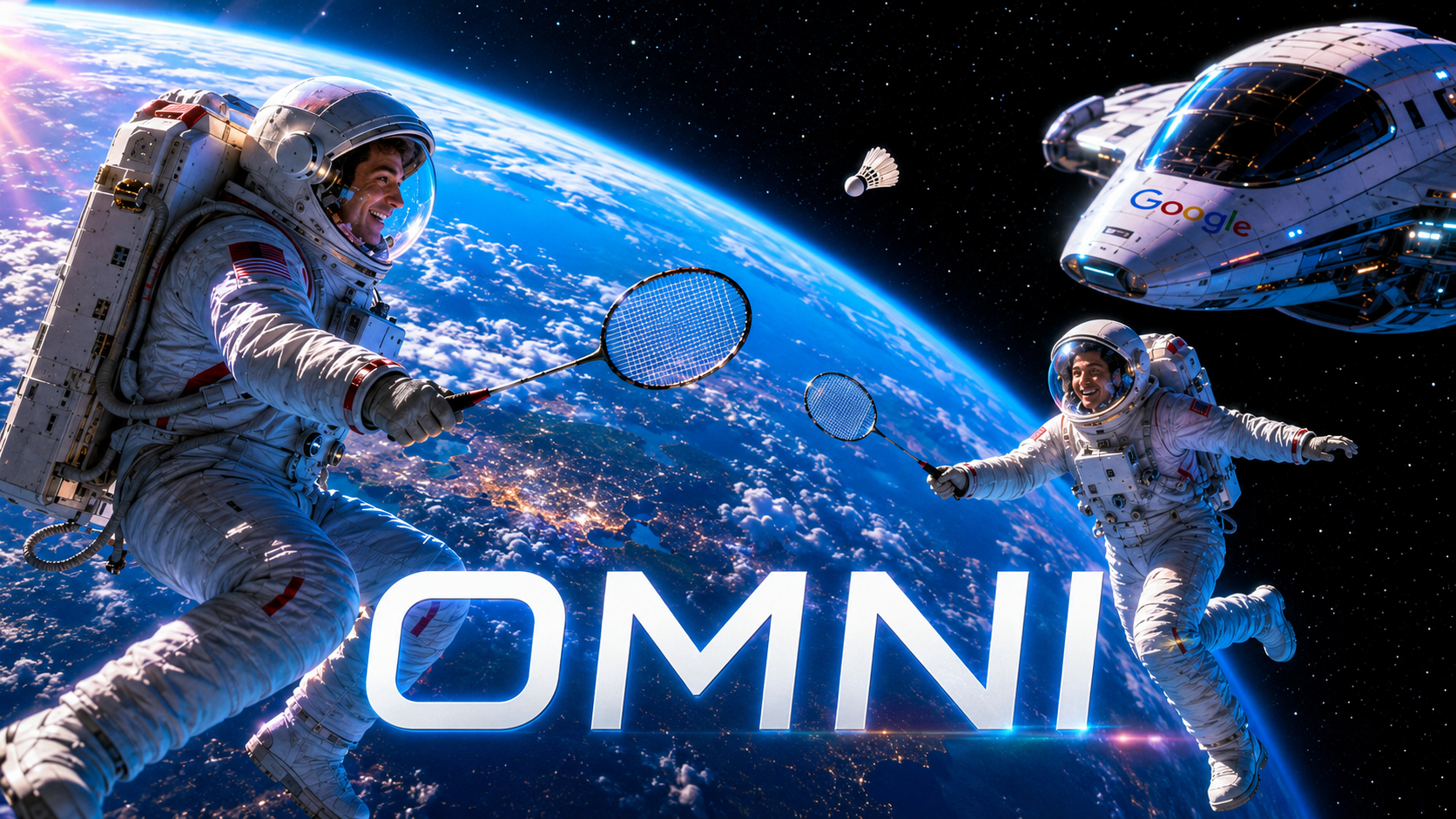
Google’s new Gemini Omni Flash arrives at a moment when AI video is shifting from novelty to production infrastructure. The first wave of tools impressed creators by turning text prompts into short cinematic clips. The next wave is more ambitious: it wants to understand images, audio, reference videos, character identity, editing intent, physical motion, and narrative continuity all at once. Omni Flash is Google’s bid to make video generation feel less like prompting a black box and more like directing a flexible creative system. The question is not simply whether it can produce beautiful clips. The real question is whether Google can turn its enormous AI ecosystem into a durable advantage against OpenAI, Runway, Luma, Adobe, ByteDance, Kling, and the growing field of specialized video labs.
From Text-to-Video to “Anything-to-Video”
Gemini Omni is Google’s new generative media family, and Omni Flash is its first release. According to Google’s announcement, the model is designed to create video from multiple input types, including text, images, audio, and existing video, while also allowing conversational editing. That matters because the most frustrating part of AI video has never been the first generation. It has been the second, third, and fourth revision. A clip may look impressive, but changing one object, preserving a character, adjusting a camera move, or extending a scene without breaking continuity can still feel like gambling.
Omni Flash is positioned as a correction to that problem. Rather than asking users to start over each time, Google is pushing a model that can interpret feedback in plain language and apply it to an existing clip. The company also says Omni is grounded in Gemini’s broader world knowledge, which could make it stronger at scenes that require factual context, real-world behavior, or cause-and-effect reasoning.
The “Flash” label is also important. In Google’s model naming, Flash usually signals a faster, more accessible tier rather than the absolute highest-quality version. That implies Omni Flash may be the first mass-market expression of a broader architecture, not the final form of Google’s video ambitions. It is built for distribution across Google’s consumer and creator surfaces, including the Gemini app, Flow, and YouTube-related tools, rather than being limited to a research demo or a premium production suite.
What Makes Omni Flash Different
The headline feature is multimodal input. Many AI video systems now support text-to-video and image-to-video, but Omni Flash is meant to take text, images, audio, and video together. In practical terms, that means a creator could provide a rough sketch, a reference photo, a voice note, and a short clip, then ask the system to produce a coherent video from that mixed creative brief.
That is a different mental model from traditional prompting. Text-to-video asks users to describe everything in words. Omni-style generation lets creators show the model what they mean. This can reduce prompt engineering and make the tool more useful for filmmakers, advertisers, educators, social creators, and product teams that already work with mood boards, storyboards, brand assets, audio references, and rough cuts.
The second differentiator is conversational editing. Google is not merely selling Omni Flash as a generator; it is selling it as an editor. That distinction matters. The winners in AI video will not necessarily be the models that generate the most dazzling first clip. They will be the systems that let users revise clips reliably. Creative work is iterative. A model that can remember context, preserve characters, respond to natural-language direction, and avoid destroying the composition during edits becomes much more valuable than one that produces a one-off visual spectacle.
The third differentiator is ecosystem placement. Google owns YouTube, Android, Gemini, Google Photos, Workspace, and a large developer platform. If Omni Flash becomes deeply integrated across these surfaces, it could gain a distribution advantage that independent AI video companies cannot easily match. A model inside YouTube Shorts or creator tools has a different path to adoption than a standalone web app that users must actively seek out.
The Veo Question
Omni Flash does not exist in isolation. Google already has Veo, its flagship video generation line. Veo 3 introduced native audio generation, including sound effects, ambience, and dialogue, while later Veo 3.1 updates emphasized stronger audio, narrative control, and creative controls through the Gemini API and Flow.
That creates an obvious question: is Omni Flash replacing Veo, complementing it, or becoming the new umbrella for Google’s generative media strategy?
The most plausible answer is complementing, at least for now. Veo appears optimized around high-quality video generation and cinematic control. Omni Flash appears optimized around multimodal creation and conversational editing. Veo is the engine for polished video synthesis; Omni is the broader creative intelligence layer that can reason across inputs and revisions. Over time, those lines may blur. Google may eventually fold Veo-like generation quality into Omni-branded products, or use Omni as the interface layer that routes tasks to specialized models underneath.
For creators, the distinction is less important than the workflow. If Omni Flash can take a reference image, a voice cue, an existing clip, and a natural-language edit instruction, then output a usable scene quickly, it will feel more like a creative assistant than a generator. That is the strategic shift.
Strengths: Google’s Biggest Advantages
Omni Flash’s first strength is input flexibility. In a market where most creators already combine assets from different sources, the ability to use multiple modalities is not a gimmick. It is closer to how creative work actually happens. Directors reference films. Designers use sketches. Marketers work from product shots. Musicians think in rhythm and tone. A video model that accepts all these signals can reduce the gap between intention and output.
Its second strength is conversational iteration. If Google can make editing reliable, Omni Flash could solve one of AI video’s biggest bottlenecks. Current tools often struggle when users ask for precise revisions. A prompt like “keep the same character, but change the background to a rainy Tokyo street and make the camera track left” may produce something close, but it may also change the face, clothing, lighting, or framing. A model designed around dialogue and context has a better chance of making AI video feel controllable.
The third strength is Gemini’s reasoning layer. Video generation has traditionally been judged on visual fidelity, but the next generation of systems will be judged on whether they understand what is happening. A model that knows how objects should behave, how people interact, how a scene should unfold, and how cause leads to effect can produce more believable motion. This is where Google’s claim that Omni connects Gemini’s reasoning with media creation becomes strategically important.
The fourth strength is distribution. Google can place Omni Flash in the Gemini app, Flow, YouTube Shorts, and other creator surfaces. That gives it access to casual users, professional creators, developers, and advertisers. OpenAI had a similar consumer-distribution insight with Sora’s social app strategy, but Google’s YouTube advantage is unique. If AI video becomes part of the everyday Shorts workflow, Google does not need to convince creators to move to a new platform.
The fifth strength is trust infrastructure. Google has spent years promoting SynthID watermarking for AI-generated content, and Omni Flash is arriving in a climate where deepfakes, synthetic influencers, political misinformation, and copyright disputes are central concerns. For enterprise users, advertisers, and media organizations, provenance and policy may matter almost as much as image quality. TechRadar reported that Google is emphasizing SynthID and verification tools around Omni’s rollout.
Weaknesses: Where Omni Flash Still Looks Exposed
The first weakness is duration. Early reporting indicates Omni Flash currently generates video and audio clips up to around 10 seconds, with longer durations planned. That is competitive for social snippets, ads, memes, product teasers, and concept shots, but it is not enough for full narrative production without stitching multiple generations together.
The second weakness is uncertainty around quality versus Google’s own Veo line. Flash-branded models are usually optimized for speed and accessibility. That may make Omni Flash highly usable, but it may not always match the highest visual fidelity of Veo, Sora, Runway, or Luma in premium use cases. Until creators test it broadly, the risk is that Omni Flash becomes known as the convenient Google model rather than the most cinematic one.
The third weakness is control. Conversational editing sounds powerful, but professional users need repeatability. They want to know whether the model can preserve a character across shots, maintain brand colors, follow camera language, honor exact timing, and export assets that fit real production pipelines. If Omni Flash handles broad edits well but fails on precise continuity, it will be more useful for social creation than serious filmmaking.
The fourth weakness is policy friction. Google tends to be more cautious than some competitors, particularly around real people, likenesses, and potentially sensitive content. That caution may make Omni safer for mainstream distribution, but it can also make creators feel constrained. The more powerful the model becomes, the more Google will need to balance creative freedom against abuse prevention.
The fifth weakness is market confusion. Google now has Gemini, Veo, Flow, Nano Banana, Gemini 3.5, Omni, and other AI brands in circulation. For insiders, this ecosystem makes sense. For creators and businesses, it may feel fragmented. Google needs to explain clearly what Omni Flash is for, when to use it instead of Veo, and how it fits into existing creative tools.
OpenAI Sora: The Cultural Rival
OpenAI’s Sora remains the most culturally recognizable AI video brand. Sora 2, released in 2025, emphasized greater physical accuracy, realism, controllability, and synchronized dialogue and sound effects. OpenAI framed it not just as a video model but as a step toward richer world simulation.
Against Sora, Omni Flash’s advantage is multimodal workflow and Google integration. Sora’s strength has been cinematic impact, viral usability, and OpenAI’s ability to create a product that feels immediately exciting. Omni Flash is more likely to win users who want to build from existing materials, revise through conversation, and publish across Google’s ecosystem.
Sora’s weakness has been controversy and operational complexity. AI video at consumer scale raises moderation, copyright, likeness, and compute-cost challenges. Omni Flash will face the same problems, but Google’s more controlled rollout and watermarking infrastructure may make it more palatable to advertisers and platforms. That said, caution can also slow momentum. OpenAI has often been willing to create a sharper consumer experience, while Google sometimes ships powerful tools inside product layers that feel less bold.
Runway Gen-4: The Filmmaker’s Tool
Runway Gen-4 is one of Omni Flash’s most important creative competitors because it focuses on consistency, one of AI video’s hardest problems. Runway says Gen-4 can maintain consistent characters, objects, and scenes across different lighting conditions, locations, and treatments using references. That is precisely the kind of reliability filmmakers need for multi-shot storytelling.
Compared with Runway, Omni Flash’s advantage is broader multimodality and potentially deeper reasoning. Runway has built a strong reputation among creators who care about visual workflows, stylization, and production-oriented tools. Google’s opportunity is to make the process more conversational and more deeply integrated with knowledge, audio, and distribution.
Runway’s advantage is focus. It is a company built around creative tooling. Its interface, community, and product language are aimed directly at filmmakers, designers, and studios. Google’s challenge is that its tools sometimes serve too many audiences at once. A YouTube creator, a Gemini user, an enterprise marketer, and a film editor do not need the same interface.
Luma Ray: Cinematic Motion and Visual Polish
Luma’s Ray models have earned attention for cinematic motion, image-to-video generation, and creator-friendly workflows. Ray 2 supported short video generations, including 5- and 9-second clips at 540p and 720p through Amazon Bedrock, while Luma’s newer Ray3 positioning emphasizes reasoning-driven video and cinematic creation.
Luma’s strength is visual taste. Its models have often appealed to creators looking for fluid camera moves, stylized realism, and polished short clips. Against Luma, Omni Flash will need to prove that intelligence does not come at the expense of beauty. A model can understand a prompt perfectly and still produce dull footage. For creative professionals, mood, lighting, texture, and motion language matter.
Omni Flash’s edge is likely to be editability and input diversity. Luma may remain attractive for creators chasing a specific cinematic look, while Omni Flash may appeal to users who want to combine assets, iterate quickly, and move from idea to publishable clip inside a broader platform.
Adobe Firefly Video: The Enterprise-Safe Alternative
Adobe Firefly Video occupies a different strategic position. It is not trying to be the wildest AI video playground. It is trying to be commercially safe, integrated into Creative Cloud, and suitable for professional production environments. Adobe has repeatedly emphasized that Firefly is designed around IP-safe generation, with Firefly Video powering tools such as Generate Video and Generative Extend in Premiere Pro.
This makes Adobe a serious competitor for enterprise users. A marketing department, agency, broadcaster, or brand studio may care less about viral AI magic and more about licensing risk, workflow integration, and legal confidence. Adobe’s advantage is trust within existing creative pipelines. Premiere Pro, After Effects, Photoshop, Illustrator, and Express are already where many professionals work.
Omni Flash’s advantage over Adobe is intelligence and distribution. Google can potentially make AI video creation more conversational, more multimodal, and more accessible across consumer platforms. Adobe may win the post-production suite; Google may win the creation layer for users who start in Gemini, YouTube, or Flow. The battle between them will be less about who can generate a better five-second clip and more about where creators want to spend their working day.
ByteDance Seedance and the China-Led Video Race
ByteDance’s Seedance is another major competitor, especially because it targets multi-shot generation, prompt adherence, smooth motion, and high-resolution output. Seedance 1.0 supports text- and image-based multi-shot video generation and claims 1080p output with cinematic aesthetics. Its technical report highlights instruction following, motion plausibility, and efficient inference as core goals.
Seedance 2.0 has pushed further into native multimodal audio-video generation, supporting text, image, audio, and video inputs, with reported generation durations from 4 to 15 seconds and native 480p or 720p output.
This makes Seedance one of the closest conceptual rivals to Omni Flash. Both are moving beyond text-to-video toward multimodal input and audio-video generation. ByteDance also has a massive short-video ecosystem through TikTok and Douyin, making it one of the few companies that can match Google’s distribution power in social video.
The difference is market geography, product access, and trust. Google’s ecosystem is stronger across Search, Android, YouTube, and enterprise cloud. ByteDance has unmatched short-video DNA and a deep understanding of creator behavior. If AI video becomes primarily a social format, ByteDance has a natural advantage. If it becomes an AI assistant and platform workflow, Google may have the upper hand.
Kling, Pika, and Specialized Creator Models
Kling has become a serious player in AI video, with newer model families emphasizing native audio generation, motion control, and complete audio-visual scenes. Scenario’s Kling documentation describes Kling 2.6 as supporting voices, sound effects, ambience, emotional tone, and synchronized motion in a single pass.
Pika, meanwhile, has leaned into creator-friendly features, including expressive animation and sound-synced performances. Pika’s own site promotes Pikaformance as a model for making images sing, speak, rap, or perform with synchronized audio.
These tools may not have Google’s infrastructure, but they often move quickly and serve specific creative behaviors. Pika understands meme culture and expressive edits. Kling has built a reputation for strong motion and accessible generation. Specialized tools can win niches even when larger platforms dominate the general market.
Omni Flash’s challenge is to avoid becoming too generic. The best AI video tools are not just technically capable; they develop a creative personality. Runway feels like a filmmaker’s lab. Pika feels playful. Adobe feels professional and safe. Sora feels viral and cinematic. Google needs Omni Flash to feel like something more specific than “the video feature inside Gemini.”
The Real Competitive Axis: Control, Consistency, and Context
The AI video market is often compared through resolution, duration, and realism. Those metrics matter, but they are not the full story. The deeper competition is about control, consistency, and context.
Control means the creator can steer the result. It includes camera motion, framing, lighting, pacing, character action, scene transitions, and audio design. Consistency means the same character remains recognizable, the same object keeps its form, and the same world persists across shots. Context means the model understands the purpose of the scene, not just the words in the prompt.
Omni Flash is clearly aimed at context. Its promise is that Gemini’s reasoning can guide media generation. If that works, it could make the model better at instructional clips, product explainers, educational animations, scientific visualizations, and narrative scenes where cause-and-effect matters.
But professional creators will judge it on control and consistency. They will ask whether they can build a campaign around the same character, produce multiple scenes with the same product, or revise a clip without starting from scratch. That is where Runway, Seedance, Veo, Sora, and Adobe will keep pressure on Google.
Safety, Deepfakes, and the Likeness Problem
Omni Flash also enters a more dangerous phase of AI media. Text-to-image misinformation was already a problem, but video plus audio plus likeness generation is much more powerful. A realistic synthetic clip with synchronized voice can influence markets, reputations, elections, and personal safety.
Google appears aware of this. Its use of SynthID and verification tools is not just a technical footnote; it is part of the product’s license to operate. The more Omni Flash spreads into YouTube and consumer tools, the more important provenance becomes.
Still, watermarking is not a complete solution. Bad actors can crop, compress, re-record, or alter media. Viewers may not check provenance. Platforms may enforce policies inconsistently. The broader challenge is cultural: when synthetic video becomes cheap and abundant, audiences may become less trusting of all video, including authentic footage.
This is where Google’s cautiousness could become a strength. A more restricted Omni Flash may frustrate some creators, but it could be more acceptable to regulators, advertisers, educators, and enterprises. The company’s ability to combine creation tools with detection and labeling may become a key differentiator.
What Omni Flash Means for Creators
For creators, Omni Flash suggests a future where video production becomes more conversational. Instead of learning complex editing software for every task, users may describe changes, provide references, and let the model perform the technical work. That does not eliminate craft. It changes where craft sits.
The creative advantage will move toward taste, direction, story, asset selection, and iteration. A creator who can communicate visual intent clearly, choose strong references, and refine outputs intelligently will outperform someone who merely types prompts. The model becomes a production partner, not a replacement for creative judgment.
For solo creators, this could be liberating. Short-form video, ads, trailers, explainers, and concept scenes could become faster and cheaper. For professional studios, the opportunity is previsualization, pitch material, background plates, rough concepts, and low-cost iteration. For brands, Omni Flash could turn static assets into campaign videos at scale.
The risk is sameness. If millions of creators use the same model through the same interface, visual styles may converge. The market will reward creators who bring distinctive direction, proprietary assets, and strong editorial taste.
What It Means for Google
For Google, Omni Flash is more than a video model. It is a strategic bridge between Gemini, YouTube, Flow, and generative media. Search is becoming more visual and interactive. YouTube is becoming more AI-assisted. Gemini is becoming more agentic and multimodal. Omni gives Google a creative layer that can operate across all of those surfaces.
The company’s biggest opportunity is to make AI video creation feel native. OpenAI can build a social app. Runway can build a production suite. Adobe can extend Creative Cloud. But Google can put multimodal video generation in the places where billions of people already search, watch, create, and share.
The danger is execution. Google has often had excellent AI research and uneven product packaging. If Omni Flash is fragmented across Gemini, Flow, YouTube Shorts, and developer tools without a clear user journey, competitors with sharper product focus may keep winning mindshare.
Verdict: A Powerful First Move, Not Yet a Knockout
Gemini Omni Flash looks like one of Google’s most strategically important media launches because it reframes AI video as multimodal, conversational, and ecosystem-native. Its strongest qualities are input flexibility, natural-language editing, Gemini-powered context, distribution through Google platforms, and a safety posture built around provenance.
Its weaknesses are equally clear. Early clip duration appears limited. The “Flash” tier may not always represent peak cinematic quality. Professional-grade consistency still needs proof. Google’s safety policies may constrain some creative use cases. And the product story must be clearer in a crowded lineup that already includes Veo and Flow.
Against Sora, Omni Flash may be less culturally explosive but more workflow-oriented. Against Runway, it may be broader but less filmmaker-focused. Against Luma, it may be smarter but must prove visual taste. Against Adobe, it may be more flexible but less embedded in professional post-production. Against Seedance and Kling, it must compete with fast-moving models that are increasingly strong in audio-video generation and multi-shot coherence.
The bigger takeaway is that AI video is entering its second act. The first act was about making clips from prompts. The second is about building controllable creative systems that understand context, preserve continuity, generate sound, accept references, and revise through conversation. Omni Flash is Google’s clearest signal yet that the future of video generation will not be text-to-video alone. It will be anything-to-video, edited by dialogue, distributed through platforms, and judged by whether it can turn creative intent into repeatable results.
For now, Omni Flash is not the end of the AI video race. It is Google declaring that the race has moved to a larger track.
-
 AI Model10 months ago
Tutorial: How to Enable and Use ChatGPT’s New Agent Functionality and Create Reusable Prompts
-

 AI Model10 months ago
Tutorial: Mastering Painting Images with Grok Imagine
-

 AI Model8 months ago
How to Use Sora 2: The Complete Guide to Text‑to‑Video Magic
-
 Tutorial8 months ago
From Assistant to Agent: How to Use ChatGPT Agent Mode, Step by Step
-

 AI Model11 months ago
Complete Guide to AI Image Generation Using DALL·E 3
-

 AI Model11 months ago
Mastering Visual Storytelling with DALL·E 3: A Professional Guide to Advanced Image Generation
-

 News11 months ago
Anthropic Tightens Claude Code Usage Limits Without Warning
-
 AI Model1 year ago
Crafting Effective Prompts: Unlocking Grok’s Full Potential