
News
Meta’s Megascale AI Gamble: Zuckerberg’s Bid for Superintelligence Supremacy

- Share
- Tweet /data/web/virtuals/375883/virtual/www/domains/spaisee.com/wp-content/plugins/mvp-social-buttons/mvp-social-buttons.php on line 63
https://spaisee.com/wp-content/uploads/2025/07/metaai-1000x600.png&description=Meta’s Megascale AI Gamble: Zuckerberg’s Bid for Superintelligence Supremacy', 'pinterestShare', 'width=750,height=350'); return false;" title="Pin This Post">
A Billion-Dollar Vision for a Trillion-Dollar Race
In a move that may redefine the scale of artificial intelligence development, Meta CEO Mark Zuckerberg recently announced that his company is preparing to spend “hundreds of billions of dollars” to construct one of the largest AI infrastructure grids the world has ever seen. At the heart of this announcement lies an audacious ambition: to be the first company to achieve artificial superintelligence, a milestone Zuckerberg believes will require a fusion of unprecedented compute power, elite research talent, and a relentless pace of innovation.
Speaking to reporters and investors, Zuckerberg laid out Meta’s sprawling blueprint for AI expansion. The plan includes the construction of multiple next-generation data center clusters—each capable of drawing over a gigawatt of power—designed to fuel Meta’s evolving generative AI systems. With a roadmap that stretches over the next decade and beyond, the investment will far outpace Meta’s historical spending patterns, reflecting the high stakes in the global race for AI dominance.
Superclusters and Tent Cities: Building the Future of Compute
The data center build-out includes names that evoke mythological ambition: Prometheus, Hyperion, and a series of “titan clusters” that aim to dwarf even the most advanced current AI infrastructures. Prometheus, the first of these gigawatt-scale clusters, is expected to come online in 2026. Meanwhile, Hyperion is being designed to eventually scale to five gigawatts, effectively becoming one of the largest power consumers of any single corporate initiative on Earth.
These clusters aren’t just about raw power; they are physical behemoths, occupying vast tracts of land. The company likens the size of each cluster to chunks of Manhattan, and Meta’s engineers are actively working to speed up construction timelines by utilizing modular and even temporary tent-based facilities to host compute hardware while permanent structures are completed.
While the imagery of data centers springing up in temporary tent cities might evoke improvisation, the strategy is anything but haphazard. Rather, it reflects the breakneck speed at which Meta is trying to scale. By sidestepping bureaucratic delays and infrastructure bottlenecks, Meta hopes to leapfrog its competition and establish a compute foundation robust enough to support both current large language models and future generations of superintelligent systems.
Financial Firepower and Long-Term Leverage
To fund this enormous endeavor, Meta is tapping into its prodigious cash flow. In 2024 alone, the company generated $165 billion in revenue, primarily driven by advertising across its family of apps, including Facebook, Instagram, and WhatsApp. Its operating cash flow topped $91 billion, giving it a formidable war chest to draw from.
For 2025, Meta has raised its capital expenditure budget to a staggering $64 to $72 billion, much of it dedicated specifically to AI infrastructure. While that number already dwarfs most other corporate R&D budgets, Zuckerberg’s vision extends far beyond a single fiscal year. When he speaks of spending “hundreds of billions,” he’s referring to a multi-year transformation that could reconfigure Meta from a social media titan into a global leader in artificial general intelligence.
This level of investment signals a pivotal shift in strategy. Where once Meta was content to be a fast follower in AI—integrating third-party models, licensing technology, or leveraging public compute—the new goal is to own the entire AI stack, from silicon to superintelligence. The bet is that by controlling every aspect of AI production, from training hardware to model design and deployment, Meta can position itself at the forefront of an industry poised to revolutionize not just technology, but the very fabric of human cognition.
The Talent Wars: Building a Brain Trust for Superintelligence
Complementing its infrastructure blitz is an aggressive talent acquisition campaign. Meta has launched a new division called Meta Superintelligence Labs, charged with building the next generation of AI models capable of reasoning, learning, and improving autonomously. To lead this initiative, Meta has recruited high-profile names from across the tech ecosystem, including former OpenAI collaborators and executives from AI startups.
Reports suggest that Meta is offering nine-figure compensation packages to lure away elite AI researchers from rivals like Apple, Google DeepMind, and OpenAI itself. This recruitment push isn’t just about numbers; it’s about building a core team with the density of talent capable of solving the hardest problems in machine learning and computational optimization. In Zuckerberg’s words, the goal is to ensure that each researcher is paired with a “disproportionate amount of compute,” maximizing the productivity and impact of the team.
One of the most noteworthy moves was Meta’s recent $14.3 billion investment in Scale AI, a company founded by Alexandr Wang. Following the deal, Wang joined Meta’s AI initiative, lending his expertise in data labeling, model evaluation, and enterprise AI infrastructure. The company has also acquired smaller startups like Play.AI, whose voice generation and real-time simulation capabilities are expected to enhance Meta’s consumer-facing products as well as internal research tools.
The unifying theme here is leverage: Meta wants to amplify the output of each scientist and engineer by orders of magnitude. That’s why, beyond offering top-tier salaries, the company is also providing access to unparalleled compute resources, customized development environments, and experimental freedom. If successful, this could result in a productivity delta that no competitor can match.
From Ad Revenue to Autonomous Intelligence
Although this grand-scale push toward superintelligence is inherently future-facing, its effects are already rippling through Meta’s core business. In the short term, generative AI is being used to enhance ad targeting, content creation, and user engagement across Meta’s platforms. The introduction of Meta AI, an assistant embedded into products like Instagram and WhatsApp, is designed to not only boost user retention but also streamline customer service and internal operations.
Meanwhile, new AI tools allow marketers to generate videos from static images or text prompts, helping to increase ad conversion rates. These incremental improvements translate into measurable business outcomes, providing both validation for ongoing AI investment and a revenue stream to support long-term research.
At the same time, Meta is developing AI-enhanced consumer products, including AR glasses and next-gen smart assistants. These tools not only offer new interfaces for human-computer interaction but also serve as data feedback loops, training Meta’s models in real-world environments. It’s a virtuous cycle: as the models improve, the products become more useful, generating more data to feed back into the models.
Still, the true prize lies in the long-term horizon. Meta is betting that by being the first to crack scalable artificial general intelligence, it will unlock a new economic paradigm. Whether through fully autonomous agents, universal translators, or AI-native operating systems, the goal is to own the platform upon which the next era of computing will be built.
Strategic Rivalries and the Road Ahead
Meta’s announcement arrives amid fierce competition. OpenAI, backed by Microsoft, continues to push the boundaries of multimodal learning and agentic behavior. Google DeepMind has been quietly advancing its own superintelligence roadmap, integrating its models into products like Gemini and Android. Even Amazon has begun to invest heavily in foundation models and dedicated AI silicon.
In this context, Meta’s initiative is both an arms race and a moonshot. By staking its future on superintelligence, Meta is not just keeping pace—it’s attempting to redefine the very rules of the game. The sheer scale of its data center buildout, combined with its talent concentration and access to capital, gives it a real shot at achieving its vision. But the risks are commensurate with the ambition. Costs could spiral, models may plateau, or breakthroughs may materialize elsewhere. If Meta falters, the investment could become one of the most expensive miscalculations in tech history.
Yet Zuckerberg appears undeterred. He sees Meta’s historical advantage—its ability to scale globally, rapidly iterate, and monetize attention—as a transferable skill set. And in many ways, this project is the ultimate extension of his early vision: to connect people through technology. Only now, the connections span not just human social graphs, but networks of cognition, logic, and intelligence.
Conclusion: The Future on the Edge of Now
Meta’s pursuit of artificial superintelligence represents one of the boldest technological investments of the 21st century. With a budget measured in hundreds of billions, infrastructure sprawling across gigawatts of capacity, and a research team stacked with some of the brightest minds in AI, the company is racing headlong into uncharted territory.
Whether it succeeds or stumbles, the implications will be profound. Success could establish Meta as the definitive architect of intelligent systems, shaping industries, economies, and societies for generations. Failure would be a cautionary tale about the dangers of hubris and the unpredictability of scientific progress.
But one thing is certain: Meta is not waiting for the future to arrive. It is building it fast, big, and with an ambition that rivals anything Silicon Valley has seen since the dawn of the internet age. The AI wars have entered a new phase, and Meta has placed its bet. The rest of the world is now watching, wondering whether this gamble will pay off or change everything.










Artificial intelligence did not become a trillion-dollar battleground because chatbots learned to write poems or image generators learned to imitate oil paint. It became a battleground because the world’s most valuable AI systems were built on data: news archives, books, photographs, code, lyrics, legal databases, scientific papers, public websites and private creative labor collected at planetary scale. Now the courts are being asked a deceptively simple question with enormous consequences: when an AI company learns from copyrighted work, is it innovating, copying, competing unfairly, or all three at once?
The lawsuits below are not merely disputes over files, licenses or damages. They are test cases for the future business model of generative AI. If courts broadly bless training on copyrighted material as fair use, AI companies will gain extraordinary leverage over publishers, artists and data owners. If courts require licenses for high-value training material, the industry’s economics could shift toward a cleaner, more expensive, more permissioned data supply chain. And if courts split the difference, as early rulings already suggest, the next phase of AI may be shaped less by model size than by provenance: where the data came from, how it was acquired, and whether companies can prove it.
1. Bartz v. Anthropic: The $1.5 Billion Warning Shot Over Pirated Books
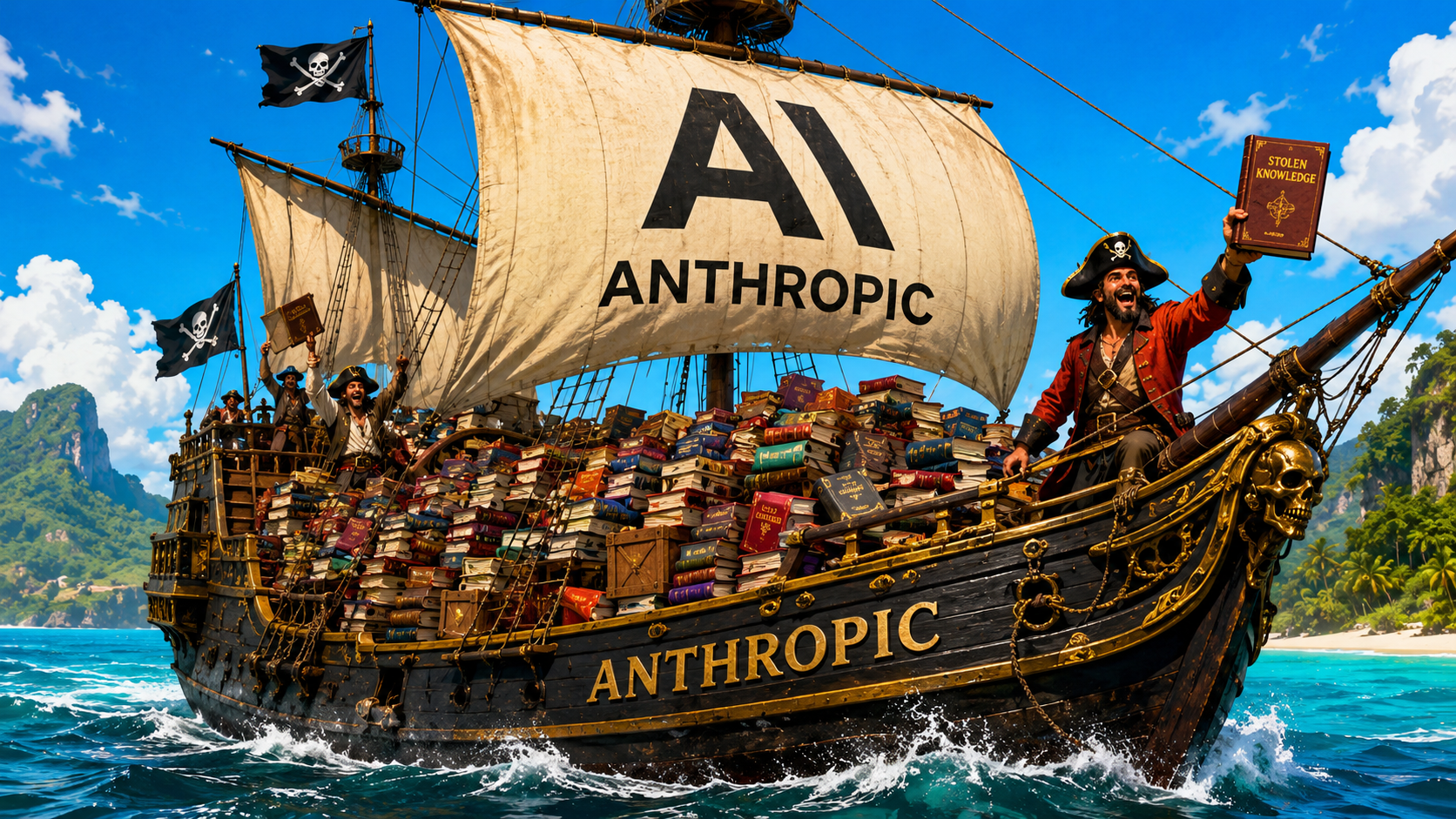
The biggest AI lawsuit so far, by disclosed financial outcome, is Bartz v. Anthropic, the class action brought by authors over Anthropic’s use of books in training Claude. Its headline number is staggering: Anthropic agreed to a $1.5 billion settlement, a figure widely described as the largest copyright settlement in U.S. history and the most concrete price tag yet attached to AI training-data risk. The official settlement site stated that the deadline to submit claims was March 30, 2026, while Reuters reported that nearly 120,000 authors and copyright holders filed claims covering roughly 91 percent of the eligible works.
The case mattered because it separated two issues that AI companies often try to merge. The first is whether training an AI model on copyrighted books can be fair use. The second is whether an AI company can get away with acquiring those books from pirate libraries. In June 2025, Judge William Alsup drew a line that instantly became one of the most important legal markers in the AI industry: using lawfully acquired books for training could qualify as fair use, but retaining pirated copies was not excused by that theory. The Authors Guild summarized the ruling as allowing fair use for legally acquired training copies while leaving Anthropic exposed over pirated books.
That distinction is crucial. It suggests courts may not automatically reject AI training as copyright infringement. But it also tells AI developers that “the model learned from it” is not a magic wand that cleanses dirty data pipelines. The way material is obtained matters. A company that buys books, scans them, documents the process and destroys unnecessary copies may be in a different legal posture from one that ingests shadow-library archives and later argues that the end product is transformative.
For the AI industry, this is a governance story disguised as a copyright fight. Anthropic is one of the companies most associated with safety branding, constitutional AI and enterprise trust. Yet the case showed that even a sophisticated AI lab could face massive liability if its data-acquisition process looked careless, aggressive or opaque. The settlement did not require a sweeping judicial declaration that all AI training is illegal. It did something more practical: it put a market-visible number on a specific category of risk.
That number matters to every AI executive, investor and board member. A $1.5 billion settlement is not a nuisance cost. It is a capital-allocation event. It can influence due diligence, insurance, data-room documentation, model audits, indemnity clauses, licensing negotiations and acquisition prices. A startup claiming it trained on “publicly available data” now has to expect the next question: publicly available where, under what rights, and with what records?
Bartz also accelerated the emergence of what might be called the “clean data premium.” Until recently, the market rewarded AI companies mainly for compute access, model performance and user growth. The settlement strengthens the case that legally traceable data is itself an asset. Publishers and authors may not win every fair-use argument, but they now have a bargaining chip: if a company used pirated material, statutory damages and class-action exposure can become existential.
The most strategic part of the case is that it does not give either side a total victory. AI companies can point to the fair-use portion and argue that model training is not automatically unlawful. Authors can point to the settlement and argue that data provenance is not optional. That ambiguity is powerful because it will shape behavior before appellate courts settle the doctrine. Companies do not need to know the final law to start managing the risk. They only need to see that the downside is large enough.
For writers, the case also changed expectations. Copyright litigation has historically been too expensive for individual authors to pursue at scale. Class actions change that equation. If hundreds of thousands of works can be gathered into a single settlement structure, then copyright owners who would never sue individually can still become part of a collective claim. That may invite more organized litigation against AI firms, especially where plaintiffs can identify specific datasets, downloaded archives or retained copies.
For AI labs, the lesson is not simply “do not pirate books.” It is broader: maintain evidence. Keep dataset manifests. Track acquisition dates. Separate legally purchased material from scraped material. Preserve terms of use. Document opt-outs. Record filtering decisions. Build internal review processes before training, not after litigation begins. In the age of trillion-parameter models, copyright risk is no longer just a legal department problem. It is part of model operations.
Bartz is the biggest lawsuit because it produced the biggest concrete settlement. But its deeper importance is that it reframed the industry’s risk model. The core question is no longer only whether training is transformative. It is whether the AI company can prove that the path from source material to model weights was lawful, documented and defensible.
2. The New York Times v. OpenAI and Microsoft: The Battle Over Journalism, Substitution and the Value of Trusted Archives
If Bartz is the biggest AI lawsuit by settlement value, The New York Times v. OpenAI and Microsoft may be the most consequential unresolved case for the commercial architecture of generative AI. Filed in December 2023, the lawsuit targets the central partnership of the AI boom: OpenAI, creator of ChatGPT, and Microsoft, its most important strategic backer and distribution partner. The Times alleges that millions of its articles were used without authorization to train AI systems that can compete with its journalism, summarize its reporting, and in some cases reproduce or closely mimic protected expression.
The case is powerful because it is not just about copying. It is about substitution. The Times is not merely saying that its archive was ingested. It is arguing that AI products built on that archive can divert readers, erode subscriptions, weaken licensing markets and reduce the economic incentive to fund high-quality reporting. That makes the lawsuit a direct challenge to one of the most attractive business propositions in AI: replacing search, aggregation and research workflows with conversational answers.
In April 2025, Judge Sidney H. Stein issued an important ruling on motions to dismiss. The court allowed several key claims to proceed, including direct infringement claims involving earlier conduct and contributory copyright infringement claims, while dismissing some other claims such as certain DMCA and unfair-competition theories. The ruling did not decide the ultimate merits, but it ensured that the case would move deeper into litigation rather than being swept away at the pleading stage.
That procedural survival is a big deal. AI defendants often prefer early dismissal because discovery can be dangerous. Discovery may expose training datasets, internal communications, licensing assumptions, safety evaluations, benchmark practices and product-design choices. For a company like OpenAI, whose competitive advantage depends partly on proprietary technical and data practices, litigation discovery is not just burdensome. It can be strategically uncomfortable.
The Times case also has symbolic force. Unlike many individual creators, The New York Times is a sophisticated media company with money, lawyers, technical experts and a long institutional memory of defending its content. It has a deep archive, a subscription business, licensing relationships and brand value tied to trust. That makes it a formidable plaintiff and a useful proxy for the broader news industry.
The central legal fight will likely turn on fair use. OpenAI and Microsoft are expected to argue that training is transformative because models do not merely republish articles; they learn statistical relationships that allow them to generate new responses. The Times will argue that the use is commercial, massive, non-consensual and harmful to actual or potential licensing markets. It will also emphasize examples where model outputs allegedly reproduce Times material or provide near-substitute summaries.
The case forces courts to confront a tension that older copyright doctrine was not designed to resolve. Search engines copied web pages to index them, but they generally sent traffic back to publishers. Generative AI systems can absorb information and answer users directly, sometimes reducing the need to visit the original source. That makes the “public benefit” argument more complicated. A chatbot that explains the news may be useful to users, but if it weakens the economics of reporting, the public-interest calculus becomes less straightforward.
There is also a market-design issue. Some publishers have already signed licensing deals with AI companies. Others have refused. If courts find that unlicensed training is fair use, those licensing markets may shrink. If courts find that high-value news archives require licenses, AI companies may face a new cost structure in which premium verified content becomes a paid input. That could benefit large publishers while leaving smaller outlets in a weaker negotiating position. Either way, the outcome will influence who gets paid in the AI information stack.
The Microsoft dimension adds another layer. Microsoft is not just a passive investor. It integrated OpenAI technology into products such as Copilot and Bing-related experiences, making the case about deployment as well as model development. If liability extends meaningfully to distribution partners, the risk calculus changes for every enterprise embedding third-party AI models. Cloud providers, software platforms and app developers will pay closer attention to indemnities, data warranties and contractual allocation of copyright exposure.
This is why the Times case is watched so closely beyond journalism. It is a template for how owners of valuable text archives may litigate against frontier-model companies. Legal publishers, education companies, financial-data vendors, scientific journals and trade publications all face similar questions. Their content is valuable precisely because it is organized, edited and trusted. That is also why it is valuable for model training.
For OpenAI, a loss could be expensive, but the larger threat is structural. If the case produces a ruling that certain forms of training or output substitution require licensing, the frontier-model business becomes more like the streaming business: rights acquisition becomes a core operating function. If OpenAI wins broadly, publishers may have to rely more on technical blocking, private contracts, regulatory lobbying and brand differentiation rather than copyright litigation.
The Times case is also about trust. Generative AI has a hallucination problem; news organizations have a credibility business. The irony is that AI systems need reliable information to become more useful, but the institutions producing that information need revenue to survive. The lawsuit asks whether AI companies can appropriate the value of trust without paying for the institutions that created it.
That makes the case bigger than one newsroom. It is a referendum on whether the internet’s old bargain still works. For two decades, publishers tolerated a web economy in which platforms indexed, excerpted and ranked their work, sometimes returning traffic and sometimes capturing advertising value. Generative AI threatens to end even that partial exchange. It can turn the open web into training fuel and then present the answer inside a closed interface.
If Bartz is a warning about dirty data, The New York Times case is a warning about high-quality data. The cleanest, most reputable archives are also the ones most likely to demand payment. And if courts recognize that demand, the economics of AI knowledge systems will change.
3. Getty Images v. Stability AI: The Visual Copyright Case That Put Model Weights, Watermarks and Creative Labor on Trial
The third giant AI lawsuit is Getty Images v. Stability AI, the defining legal battle over image-generation models. Getty sued Stability AI over Stable Diffusion, alleging that the company used millions of Getty images and associated metadata without permission to train an image generator that could compete with stock photography and produce outputs bearing distorted Getty-style watermarks. The case has unfolded across jurisdictions, with particularly important developments in the United Kingdom and related implications for the U.S. litigation.
Getty’s lawsuit goes to the heart of visual AI. Text cases often involve abstract arguments about learning language patterns. Image cases make the dispute visceral. Users can see AI-generated pictures that resemble stock-photo styles, celebrity shots, editorial compositions or watermarked licensing images. For photographers and visual agencies, the threat is direct: if clients can generate usable substitutes, the market for licensed images could contract.
The U.K. High Court’s November 2025 ruling was nuanced. The court largely rejected the copyright claims that remained before it, especially the argument that Stable Diffusion itself was an infringing copy because it contained copies of Getty works. Legal analyses of the ruling noted that the court concluded the models did not contain or store reproductions of the relevant works and therefore were not “infringing copies” for secondary copyright purposes. At the same time, Getty highlighted that the ruling confirmed limited trademark infringement where Getty or iStock marks appeared in AI-generated outputs, and that the court made findings relevant to whether Getty works had been used in training.
The technical finding matters enormously. Courts are being asked to decide whether model weights are copies, databases, statistical artifacts, derivative works or something else entirely. If a trained model is treated as a copy of the works it learned from, the legal exposure for AI companies could become massive. If a model is treated as a non-copying mathematical system, plaintiffs must focus more heavily on the act of training, the source data, the outputs, or market harm.
The Getty ruling leaned away from the idea that the model itself stores copies of training images in the ordinary sense. The High Court judgment described Stable Diffusion as an inference system that does not require training data at generation time and stated that the model itself does not store training data, even though its functionality is indirectly shaped by that data.
That is helpful to AI defendants, but it is not a complete victory. The same dispute also showed how outputs can create separate liability. The watermark issue is particularly damaging from a public-relations standpoint. When an image generator produces garbled Getty-like marks, it appears to confirm what creators fear: that the model absorbed not only generic visual concepts but traces of a licensing ecosystem. Even if the legal theory is trademark rather than copyright, the optics support Getty’s broader argument that AI systems extract value from curated creative archives.
The case also illustrates the importance of jurisdiction. Getty’s U.K. claims narrowed partly because there was no evidence that training and development occurred in the United Kingdom. That does not necessarily resolve claims elsewhere. AI training is global, cloud-based and distributed, while copyright law remains territorial. Where the scraping happened, where the training occurred, where the model is hosted, where users generated outputs, and where harm was felt can all matter.
For AI companies, Getty is a lesson in litigation geography. A model trained in one country, served through another, downloaded in a third, and used globally does not fit neatly into legacy copyright categories. Plaintiffs will search for jurisdictions with favorable doctrines. Defendants will emphasize territorial limits and technical architecture. The result may be a patchwork of rulings rather than one universal answer.
For the creative industry, Getty remains a flagship case because it involves a plaintiff with a sophisticated licensing business. Getty is not merely an artist claiming moral injury. It operates a global marketplace for images, captions and metadata. That makes its market-harm theory concrete. If AI image tools reduce demand for stock photos, editorial images or commercial illustration, Getty can argue that unlicensed training directly attacks an existing licensing market.
The case is also strategically important because it links images and metadata. AI training does not only benefit from pixels. Captions, tags, descriptions and categorization systems are extremely valuable because they teach models relationships between words and visuals. A photograph labeled with detailed metadata is far more useful for text-to-image training than a random unlabeled file. That means the creative labor at issue includes not just the photographer’s composition, but also the infrastructure of classification built by image agencies.
Getty’s fight with Stability AI has already influenced the market. Some image companies now emphasize licensed, indemnified, commercially safe AI products. Adobe, Getty and others have positioned “clean” generative tools as alternatives for businesses that do not want copyright uncertainty. This is where lawsuits become product strategy. Legal risk can become a marketing advantage for companies that can promise traceable training sources.
For Stability AI and the broader open image-model ecosystem, the stakes are equally high. Stable Diffusion helped democratize generative image creation because it was widely accessible and adaptable. But openness complicates enforcement and responsibility. If users can run models locally, fine-tune them, remove filters or generate infringing material, where does responsibility sit? With the model developer? The platform? The user? The distributor? The Getty case pushes courts toward these questions.
The answer will shape the future of open models. If developers face broad liability for downstream outputs, they may lock systems down, restrict weights or avoid releasing powerful models openly. If liability sits mostly with users, rights holders may struggle to enforce claims at scale. A middle-ground approach may require stronger filters, provenance tools, watermarking, licensing records and model documentation.
Getty is one of the biggest AI lawsuits because visual AI is one of the most commercially disruptive forms of generative technology. It affects advertising, design, entertainment, journalism, e-commerce, gaming and social media. The lawsuit is not only about whether Stability AI trained on Getty images. It is about whether the visual culture of the internet can be converted into a synthetic-image engine without compensating the people and companies that built the source material.
Why These Three Cases Matter More Than the Rest
There are many other major AI lawsuits. Authors have sued OpenAI and Meta. Music publishers have sued Anthropic. Record labels have pursued AI music companies. Voice actors, visual artists, coders, privacy plaintiffs and consumers have all brought claims against different corners of the AI ecosystem. Some may ultimately produce more dramatic rulings than the cases discussed here.
But Bartz, The New York Times and Getty stand apart because they cover three foundational categories of training data: books, journalism and images. Together, they map the legal battlefield around modern generative AI.
Books test whether large-scale ingestion of long-form creative works can be justified as transformative learning, especially when acquisition involved piracy. Journalism tests whether high-quality, time-sensitive, subscription-funded reporting can be used to build products that may substitute for the original source. Images test whether visual models trained on massive creative archives can lawfully compete with the licensing markets from which those archives came.
The common thread is not simply copyright. It is bargaining power. AI companies built systems first and negotiated later. Copyright owners are now trying to reverse that sequence. Courts are being asked to decide whether the AI boom rests on permissible learning, uncompensated extraction or something that demands a new licensing order.
The early signals are mixed, which is exactly why the lawsuits are so important. Courts appear reluctant to say that AI training is always illegal. They also appear unwilling to give AI companies a free pass for pirated data, misleading outputs or market substitution. The emerging message is more disciplined: training may be defensible, but provenance, output behavior and commercial impact matter.
That creates a strategic fork for the AI industry. One path is continued maximalism: scrape broadly, litigate aggressively, argue fair use, and settle only when necessary. The other path is institutionalization: license premium corpora, document datasets, build opt-out systems, invest in provenance, and treat training data like a regulated supply chain. The first path is faster and cheaper in the short term. The second may be more durable.
The biggest AI companies are likely to move toward hybrid models. They will defend fair use in court while signing selective licenses with high-value publishers, music companies, image libraries and data vendors. This lets them preserve legal flexibility while reducing business risk. Smaller startups may have fewer options. They may rely on open datasets, synthetic data, public-domain material or licensed specialist corpora. Some will gamble. Some will be acquired. Some will disappear when investors ask for proof that their models are not built on legal explosives.
For creators, the picture is also complicated. Litigation may generate compensation, but it may also concentrate power among large rights holders. The New York Times can sue. Getty can sue. Major publishers can negotiate. Individual writers, photographers and artists may still struggle unless class actions or collective licensing systems become stronger. The danger is that AI licensing becomes another market where large intermediaries capture most of the value.
For users, these lawsuits will quietly shape the tools they use every day. If rights holders win stronger protections, AI products may become more expensive but more reliable for commercial use. If AI companies win broad fair-use rulings, tools may remain cheaper and more capable, but creators may see their markets erode faster. If courts impose output-based liability, models may become more cautious, filtered and provenance-aware. The legal doctrine will show up as product design.
The Real Verdict Is Still Ahead
The biggest AI lawsuits are not just about the past. They are about the next architecture of the internet. The first web was built on linking, indexing and user-generated content. The AI web is being built on extraction, compression and generation. That shift breaks old assumptions. A search engine pointed outward. A chatbot often answers inward. A stock-photo library licensed images one at a time. A generative model can produce infinite substitutes. A book archive once served readers. Now it can serve as training fuel for a system that writes.
Bartz v. Anthropic shows that courts and markets will punish dirty data practices at enormous scale. The New York Times v. OpenAI and Microsoft will help decide whether premium journalism becomes paid AI infrastructure or free training material. Getty Images v. Stability AI is defining how visual culture, model weights, watermarks and image markets fit into copyright and trademark law.
The outcome will not be a simple win for humans or machines. It will be a negotiation over value. AI systems need human-created data. Human creators need markets that reward production. The courts are now forcing both sides to confront what the AI boom has often tried to obscure: intelligence may be artificial, but the inputs were not.
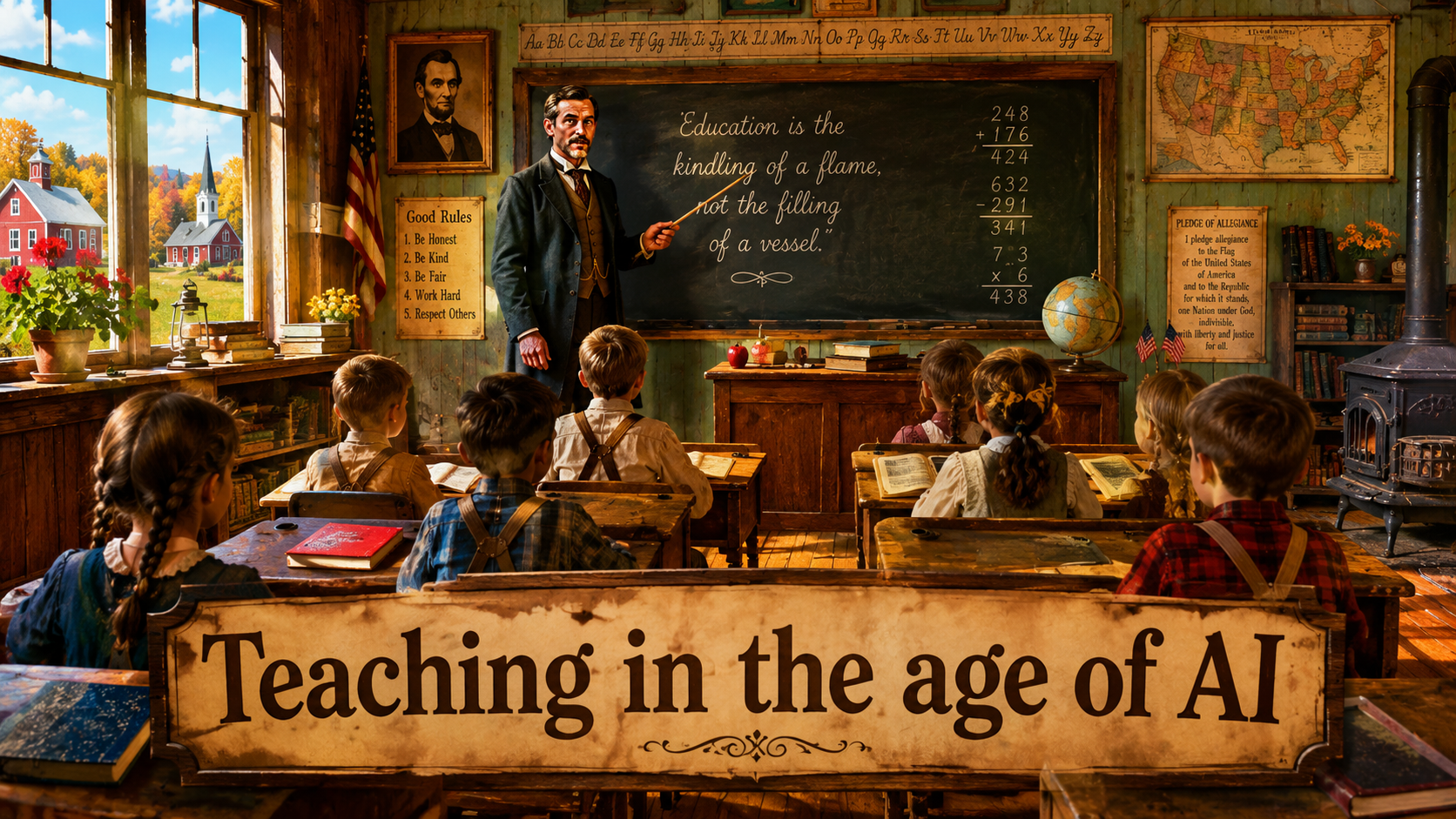
Education has always changed when the tools of knowledge changed. The printing press widened access to books. The calculator forced schools to rethink arithmetic. The internet moved facts from library shelves to search bars. Artificial intelligence is different because it does not merely store information or speed up calculation. It talks back. It explains, questions, summarizes, translates, critiques, generates examples, writes code, creates quizzes, and adapts its tone to the learner sitting in front of it. That makes AI one of the most powerful educational technologies ever introduced, but also one of the most disruptive.
The education industry is now facing a structural shift. AI is changing how students study, how teachers teach, how institutions assess knowledge, and how employers interpret credentials. The old classroom model was built around scarcity: limited teacher time, limited feedback, limited access to specialized instruction, and limited opportunities for individualized practice. AI challenges that scarcity model. A student can now ask for a physics explanation at midnight, receive instant feedback on an essay draft, generate practice questions for an exam, translate a difficult concept into their native language, or simulate a debate with a historical figure.
But the same tools can also flatten learning into shortcuts. They can produce polished essays without understanding, solve assignments without effort, reinforce bias, invent false information, weaken critical thinking, and deepen inequality between students who know how to use AI well and those who use it passively. The question is no longer whether AI belongs in education. It is already there. The real question is whether schools will teach students to use AI as an intellectual partner rather than a replacement for thinking.
The Shift From Information Access to Cognitive Assistance
For most of the internet era, digital education was built around access. Search engines helped students find information. Online courses expanded access to lectures. Learning management systems organized assignments and grades. Videos made it possible to replay explanations. These tools changed delivery, but they did not fundamentally change the relationship between student and material.
AI does. A generative AI tutor can respond to a student’s confusion in real time. It can rephrase an explanation five different ways, create analogies, identify gaps in reasoning, and offer targeted practice. Instead of asking students to adapt to a fixed lesson, AI can adapt the lesson to the student.
This matters because learning is rarely linear. One student may struggle with algebra because they missed a concept in fractions years earlier. Another may understand the formula but not the language used in the textbook. A third may know the material but freeze when asked to explain it in writing. Traditional classrooms often move too quickly to diagnose these differences. AI systems can make personalized support more available, especially where teacher time is stretched.
UNESCO has framed the rise of generative AI in education as a moment that requires both immediate policy action and long-term human-centered planning. Its guidance emphasizes that AI should serve education’s broader social goals rather than simply accelerate automation. That distinction is critical. The value of AI in education is not that it can generate homework answers faster. Its real value is that it can help students engage more deeply with difficult material when designed and used responsibly.
How Students Can Actually Learn With AI Tools
The best use of AI for students is not asking, “What is the answer?” It is asking, “How do I understand this?” That difference defines whether AI becomes a tutor or a crutch.
A student learning mathematics can ask an AI system to walk through a problem step by step, but the smarter move is to ask it to hide the final answer and give hints instead. The student can request a similar practice problem, try solving it independently, then ask the AI to check the reasoning. This turns AI into a feedback loop rather than an answer machine.
In writing, AI can help students brainstorm arguments, test essay structure, identify unclear sentences, and challenge weak logic. A student might paste a paragraph and ask, “Where is my reasoning vague?” or “What counterargument would a skeptical reader make?” Used this way, AI does not replace writing. It makes revision more immediate and interactive.
For language learning, AI can act as a conversation partner. Students can practice dialogue, receive corrections, ask for grammar explanations, or simulate real-world scenarios such as ordering food, interviewing for a job, or negotiating in a business setting. The tool’s patience is valuable. It does not get tired of repetition, and repetition is central to fluency.
For coding, AI can explain error messages, generate small examples, compare approaches, and act as a debugging assistant. The danger is that students may copy code without understanding it. The stronger learning method is to ask the AI to explain each line, predict what will happen before running the code, or create a bug intentionally so the student can diagnose it.
For research, AI can help organize questions, summarize complex material, and map competing viewpoints. But students must verify claims against credible sources. AI can sound confident while being wrong. That makes verification not an optional add-on, but a core AI literacy skill.
For exam preparation, AI can create personalized quizzes, flashcards, spaced-repetition schedules, and mock oral exams. A student can ask it to identify weak areas based on wrong answers and then generate a targeted review plan. This is where AI can be particularly powerful: it converts studying from passive rereading into active retrieval practice.
In short, students learn best with AI when they use it to question, practice, explain, compare, critique, and reflect. They learn worst when they use it to skip the struggle that makes learning durable.
Personalized Learning Becomes More Practical
Personalized learning has been promised for decades, but in practice it has often been difficult to deliver. Teachers may have thirty students in a classroom, each with different strengths, weaknesses, motivations, and home circumstances. Even excellent teachers cannot give every student continuous one-on-one attention.
AI makes some version of personalization scalable. It can adjust reading levels, generate alternative explanations, provide instant formative feedback, and suggest next steps based on performance. A student who is ahead can move into advanced applications. A student who is behind can revisit foundational material without embarrassment.
This could be especially useful in subjects where confidence collapses early. Mathematics, coding, science, and foreign languages often create psychological barriers. Once students decide they are “bad at math” or “not a language person,” they disengage. AI tools can lower the emotional cost of asking basic questions. Students can admit confusion privately, repeat lessons, and practice without feeling judged.
The OECD’s work on AI and skills has highlighted the need to monitor what AI systems can do and what that means for education and employment. As AI becomes capable of performing more cognitive tasks, education systems will have to rethink not only how students learn, but what they need to learn.
That point is easy to underestimate. Personalization is not just about helping students master today’s curriculum more efficiently. It is also about preparing them for a world in which routine cognitive work is increasingly automated. The future value of education will depend less on memorizing standard answers and more on asking better questions, interpreting outputs, judging credibility, collaborating with machines, and applying knowledge in unfamiliar situations.
Teachers Are Not Replaced; Their Role Expands
The most shallow prediction about AI in education is that it will replace teachers. That view misunderstands both teaching and learning. Teachers do far more than deliver information. They motivate, interpret silence, read emotional cues, design social learning environments, mediate conflict, build trust, model curiosity, and help students develop judgment.
AI can support many instructional tasks, but it cannot replace the human relationship at the center of meaningful education. In fact, if used well, AI may make teachers more important by shifting their role from information delivery to learning design.
Teachers can use AI to draft lesson plans, generate differentiated materials, create quizzes, design examples, simplify readings, and provide faster preliminary feedback. This can reduce administrative load and free more time for mentoring, discussion, and individual support. In schools where teachers are overburdened, that matters.
Recent reporting on schools has pointed to a major mismatch between AI adoption and teacher guidance, with many teachers receiving little or no formal training on how to use these tools effectively. That is not a minor operational issue. If teachers are expected to manage AI without institutional support, the result will be confusion, inconsistent rules, and widening inequality between classrooms.
The best schools will not simply buy AI software and call it innovation. They will train teachers, define acceptable use, redesign assignments, protect student data, and create shared norms. AI integration is not a technology project. It is a pedagogical project.
Assessment Must Change Because Homework Has Changed
AI has broken the old assumption that take-home assignments reliably show what a student knows. A polished essay, a solved equation, or a working code snippet can now be generated with minimal understanding. This does not mean homework is dead, but it does mean assessment must evolve.
Schools will need to place more emphasis on process. Instead of grading only the final essay, teachers may ask students to submit outlines, drafts, revision notes, source evaluations, and reflections on how their argument changed. Instead of only grading a finished coding project, instructors may ask students to explain design decisions, debug live, or modify code under supervision. Instead of banning AI entirely, some assignments may require students to document how they used it and what they accepted, rejected, or revised.
Oral assessment may also return in importance. When students have to explain their reasoning in conversation, it becomes harder to outsource understanding. Project-based learning may grow as well, especially tasks that require local context, personal observation, collaboration, experimentation, or original data collection.
This shift could be healthy. Much traditional assessment rewarded product over process. AI is forcing educators to ask a deeper question: what does real understanding look like when machines can generate convincing answers?
The Pros: Access, Feedback, Confidence, and Scale
The strongest argument for AI in education is access. A student in a rural school, an overcrowded classroom, or a household without private tutoring can use AI to receive explanations and practice that would otherwise be unavailable. AI is not a substitute for investment in teachers and schools, but it can extend support to more learners.
Instant feedback is another major benefit. In traditional education, students often wait days or weeks to learn whether they misunderstood something. By then, the learning moment has passed. AI can provide immediate correction, which is especially useful for skill-building subjects.
AI can also help students become more independent learners. When used properly, it teaches them how to ask questions, break problems down, compare explanations, and monitor their own understanding. These metacognitive skills are valuable beyond school.
For students with disabilities, AI can improve accessibility. Speech-to-text, text-to-speech, simplification, translation, captioning, and adaptive interfaces can help students engage with material in ways that better match their needs. AI can assist learners who struggle with reading, writing, attention, executive function, or communication.
For multilingual students, AI can reduce language barriers. A learner can ask for an explanation in their native language, compare terminology across languages, or practice academic writing in a second language. This does not eliminate the need to master the language of instruction, but it can prevent language from becoming an unnecessary wall between the student and the concept.
AI also supports creativity. Students can use it to simulate historical interviews, build prototypes, generate project ideas, test business concepts, create storyboards, or explore scientific scenarios. In this sense, AI becomes a sandbox for experimentation.
At the institutional level, AI can help schools analyze learning patterns, identify students at risk, and improve resource allocation. Used ethically, this can make education systems more responsive. Used carelessly, it can become surveillance. The difference lies in governance.
The Cons: Cheating, Dependency, Bias, Privacy, and Inequality
The risks are just as real as the benefits. The most visible concern is academic dishonesty. Students can use AI to generate essays, solve problem sets, write lab reports, or complete discussion posts. Detection tools are unreliable and can falsely accuse students, especially non-native speakers or students with unconventional writing styles. A purely punitive approach will not work.
A deeper concern is cognitive dependency. If students use AI to avoid thinking, their skills may weaken. Learning requires friction. Struggle is not a bug in education; it is part of how memory, reasoning, and mastery develop. When AI removes too much friction, it can produce the illusion of competence. The student receives a good answer but does not build the mental structure needed to produce or evaluate that answer independently.
Teachers have already raised concerns that AI may affect students’ critical thinking when used as a substitute for effort rather than a tool for guided practice. Educator concerns also point to a tension between AI’s tutoring potential and the risk that students become passive consumers of machine-generated output.
Bias is another major problem. AI systems are trained on large datasets that reflect existing social, cultural, linguistic, and economic inequalities. They may produce examples centered on dominant cultures, misunderstand local contexts, or underrepresent non-Western perspectives. This matters in education because curriculum is never neutral. The examples students see shape what they consider normal, valuable, or possible.
Privacy is also critical. Students are minors in many educational contexts. Their prompts, essays, mistakes, learning patterns, and behavioral data are sensitive. Schools must know what data is collected, where it is stored, how it is used, and whether vendors can train future models on student information. Convenience should not become an excuse for weak data protection.
Inequality may widen if AI becomes a premium layer of education. Wealthier students may get access to better tools, faster models, private AI tutors, and parents who know how to guide their use. Poorer students may get limited free versions, outdated devices, or restrictive school policies. The result could be a new form of educational divide: not just who has internet access, but who has access to high-quality AI and the literacy to use it well.
There is also the risk of institutional laziness. Schools may use AI to cut costs rather than improve learning. Automated tutoring could be offered as a replacement for human support. Automated grading could reduce feedback to shallow metrics. Predictive analytics could label students too early. The danger is not AI itself, but the temptation to use AI to make education cheaper instead of better.
AI Literacy Is Becoming a Core Academic Skill
In the past, digital literacy meant knowing how to search the web, evaluate websites, use productivity software, and communicate online. AI literacy goes further. Students must understand what AI can do, where it fails, how to prompt effectively, how to verify outputs, how bias appears, and when not to use it.
This is not just a technical skill. It is a civic and professional skill. In the workplace, AI will increasingly be embedded into writing tools, coding environments, analytics platforms, design software, customer service systems, legal research tools, medical workflows, and financial analysis. Students who leave school without AI literacy may be disadvantaged, just as students without internet literacy were disadvantaged in the previous generation.
AI literacy should include skepticism without cynicism. Students should not assume AI is always right, but they also should not treat it as magic or as cheating by default. They need practical judgment. When is AI useful for brainstorming? When does it distort the task? When should a human expert be consulted? When does using AI violate academic integrity? When does it create privacy risk?
Recent research on generative AI in higher education has found that many students are already using AI academically, often for explanations and feedback, but also sometimes to automate assignments. The research also highlights that institutional policies can shape usage patterns, though uneven compliance may create unequal effects among students.
That finding points to an important reality: students are not waiting for perfect policy. They are experimenting now. Schools that ignore AI are not preserving academic purity. They are simply leaving students to learn the rules informally, unevenly, and often badly.
The New Study Method: Learn With AI, Not From AI Alone
Students need a practical framework for using AI well. The most effective approach is to keep the student intellectually active at every stage.
Before using AI, students should attempt the task independently. This creates a baseline and reveals what they actually know. Then AI can be used to diagnose confusion, provide hints, generate practice, or critique reasoning. After receiving AI feedback, students should explain the concept in their own words, solve a similar problem without help, or teach the idea to someone else.
The key is output discipline. A student should not accept AI-generated text as final work without interrogation. They should ask: Is this accurate? Is it specific enough? What assumptions does it make? What evidence supports it? What would a critic say? What is missing?
For reading, students can use AI to preview difficult material, define terms, and generate guiding questions. But they still need to read the original text. For writing, AI can help improve clarity, but the argument should remain the student’s. For coding, AI can explain and debug, but students should be able to reproduce the logic. For math, AI can guide, but students should practice without assistance.
AI works best when it behaves like a coach. A coach does not run the race for the athlete. A coach designs practice, observes performance, gives feedback, and pushes the learner toward independence.
What This Means for Universities
Higher education faces an especially sharp challenge because much of university assessment relies on essays, reports, coding assignments, and take-home projects. These formats are now easy to assist or automate with AI. Universities cannot solve this by returning entirely to closed-book exams. That would ignore the reality that professional work increasingly involves AI tools.
Instead, universities need to teach disciplinary AI use. A law student should learn how AI can assist with legal research while understanding its risks. A medical student should learn how AI may support clinical reasoning without replacing professional judgment. A computer science student should learn how to work with code assistants while still understanding algorithms, architecture, and security. A journalism student should learn how AI can support research and editing without fabricating facts or flattening voice. A business student should learn how AI can model scenarios while questioning the assumptions behind the model.
Universities also need clearer disclosure norms. Students should know when AI use is allowed, when it must be cited or described, and when it is prohibited. Vague rules create anxiety for honest students and loopholes for dishonest ones.
The deeper opportunity for universities is curricular renewal. If AI can produce competent summaries and generic essays, then higher education must move beyond generic tasks. Students should work on harder, messier, more authentic problems: original research, live case studies, fieldwork, prototypes, debates, data interpretation, ethical analysis, and interdisciplinary projects.
What This Means for Schools
K-12 schools face a different challenge. Younger students are still developing foundational skills. If AI does too much too soon, it may interfere with reading fluency, writing stamina, numeracy, memory, and attention. Schools must decide where AI supports development and where it short-circuits it.
For younger learners, AI should be more constrained and teacher-mediated. It can support storytelling, vocabulary, accessibility, and guided practice, but students still need to write by hand, read sustained texts, memorize essential facts, and practice basic computation. Foundational skills matter more, not less, in an AI world because they allow students to judge machine output.
For older students, AI use can become more explicit. They can compare AI-generated answers, identify invented claims, analyze bias, improve prompts, and debate ethical dilemmas. By secondary school, students should be learning not only with AI but about AI.
Parents also have a role. AI should not become an invisible homework machine. Families need to discuss acceptable use, effort, honesty, and privacy. A student who uses AI to understand a concept is doing something very different from a student who submits AI-generated work as their own.
The Education Industry Will Be Rebuilt Around Hybrid Intelligence
The business of education is already changing. Edtech companies are embedding AI tutors into platforms. Publishers are turning textbooks into interactive systems. Language-learning apps are adding conversational agents. Test-prep companies are using adaptive diagnostics. Universities are experimenting with AI teaching assistants. Corporate training platforms are building personalized learning paths.
This will create winners and losers. Companies that simply add a chatbot to old content may fade. The most valuable platforms will combine strong pedagogy, reliable content, teacher control, privacy protection, and measurable learning outcomes. Schools will become more cautious buyers, especially as early hype gives way to questions about evidence.
Stanford’s 2025 AI Index reported strong momentum in generative AI investment and adoption, reflecting how quickly AI has moved from experimental technology into mainstream economic and institutional use. Education will not be isolated from that broader shift. As employers adopt AI, they will expect graduates to know how to work with it.
That does not mean every student must become a machine-learning engineer. It means every student needs to understand AI as a general-purpose cognitive tool. Just as spreadsheets became essential across finance, science, logistics, and management, AI interfaces may become part of everyday knowledge work across nearly every field.
The Human Skills Become More Valuable, Not Less
A common fear is that AI will make human learning less important. The opposite is more likely. As AI handles more routine production, human value shifts toward judgment, creativity, ethics, taste, collaboration, leadership, and the ability to define worthwhile problems.
When everyone can generate a passable report, the scarce skill is knowing what should be in the report, whether it is true, whether it matters, and how it should influence action. When everyone can generate code, the scarce skill is understanding systems, security, user needs, and trade-offs. When everyone can summarize a topic, the scarce skill is asking the question that reveals something new.
Education should therefore become more human, not less. Students need discussion, mentorship, experimentation, failure, revision, and real-world context. AI can support these experiences, but it cannot replace them.
The danger is that institutions respond to AI by narrowing education into prompt skills and productivity hacks. That would be a mistake. Prompting is useful, but it is not the foundation. The foundation is domain knowledge. A student who knows history can ask better historical questions and detect shallow answers. A student who understands biology can spot a flawed explanation. A student who has read widely can recognize generic writing. AI rewards knowledgeable users because knowledge improves judgment.
The Real Divide: Passive Users Versus Active Learners
The future educational divide may not be between students who use AI and students who do not. It may be between passive users and active learners.
Passive users ask AI to finish tasks. Active learners ask AI to improve their thinking. Passive users copy outputs. Active learners interrogate them. Passive users become dependent. Active learners become more capable. Passive users hide their use. Active learners document, reflect, and refine.
This distinction should guide education policy. Blanket bans are unlikely to work, especially when AI is embedded into everyday software. Total openness without guidance is equally irresponsible. Schools need a middle path: allow AI where it supports learning, restrict it where it undermines learning, and teach students how to make that distinction.
The goal should be intellectual independence. A good AI-supported student should eventually need less help, not more. The tool should build capacity.
Conclusion: AI Will Not Save Education, But It Will Force Education to Change
AI is not a miracle solution for overcrowded classrooms, underpaid teachers, outdated curricula, or unequal access. It will not automatically make students wiser, more motivated, or more ethical. Technology never does that by itself.
But AI is a powerful catalyst. It exposes weaknesses that already existed: shallow assessment, one-size-fits-all instruction, slow feedback, unequal tutoring access, and curricula that reward memorization over reasoning. It also creates new possibilities: personalized practice, accessible explanations, multilingual support, faster feedback, teacher assistance, and more creative forms of learning.
The education industry now has a choice. It can treat AI as a cheating problem and fight a defensive battle it will probably lose. It can treat AI as a cost-cutting machine and damage the human core of education. Or it can treat AI as a new layer of cognitive infrastructure that requires redesigned teaching, stronger ethics, better assessment, and deeper student agency.
The students who thrive in this new environment will not be those who let AI think for them. They will be those who learn how to think with it, against it, and beyond it. That is the real promise of AI in education: not easier learning, but more powerful learning, provided we have the discipline to use the technology in service of human growth rather than intellectual shortcuts.
AI Model
Anthropic’s Mythos Moment: Why the First Public Release Feels Like More Than Another AI Model

The first thing to understand about Anthropic’s Mythos release is that it did not arrive like a normal model launch. It came wrapped in warnings, guardrails, enterprise case studies, cybersecurity anxiety, and a new name for the version most people can actually use: Claude Fable 5. For months, Mythos had been treated less like a product and more like a threshold — the model too capable to simply drop into the public internet. Now that a public Mythos-class system has arrived, the early reaction is split between awe, frustration, suspicion, and a very practical question: if this is the “safe” version, what exactly has Anthropic built behind the gate?
The Model Is Public, But Mythos Itself Is Still Gated
Anthropic’s new release is best understood as a two-track launch. Claude Fable 5 is the widely available model, described by Anthropic as a Mythos-class system made safe for general use. Claude Mythos 5 is the closely related version reserved for selected cyberdefenders, infrastructure providers, and other approved users through Project Glasswing. In plain English, Fable is the version most users can touch; Mythos is the version Anthropic still does not want freely circulating in the wild.
That distinction matters because much of the public conversation still uses “Mythos” as shorthand for the whole model family. The architecture and capability class are closely connected, but the access model is not. Fable 5 includes safeguards that can redirect certain risky cybersecurity, biology, or chemistry requests to Claude Opus 4.8, Anthropic’s next-most-capable model. Mythos 5, by contrast, is available only to approved partners with some of those safeguards lifted in specific domains.
This is why the release feels strange. It is public, but not fully public. It is Anthropic’s most capable generally available model, but not the most unrestricted form of the underlying system. It is a consumer and enterprise product, but also a policy statement about how frontier AI may be distributed from now on.
What Fable 5 Can Do
Anthropic presents Fable 5 as its strongest public model so far, with particular gains in software engineering, knowledge work, vision, scientific reasoning, long-context work, and agentic tasks. The company says the model’s advantage grows as tasks become longer and more complex, which is the most important claim in the launch. The value proposition is not simply that Fable answers harder questions. It is that it can stay coherent across larger projects, hold goals over longer stretches, and operate with less hand-holding than previous Claude models.
For software teams, the headline capability is code transformation at scale. Anthropic says early testers used Fable 5 for large migrations, debugging, and production-grade engineering tasks. One cited Stripe example involved a migration across a 50-million-line Ruby codebase that the model reportedly completed in a day, compared with an estimated two months of manual work by an engineering team. That is the kind of example that will make CTOs pay attention, even if they immediately ask how much human review was required before anything reached production.
The model is also positioned as stronger in analytical work. Anthropic highlights gains in document reasoning, chart interpretation, table analysis, financial reasoning, and root-cause analysis. This is especially relevant for funds, research shops, law firms, consultancies, and crypto-native analysts who already use AI to read filings, smart-contract documentation, governance proposals, market reports, and technical specs. A model that can read more context, sustain a more nuanced argument, and make fewer shallow leaps is more valuable than a chatbot that merely sounds fluent.
Vision is another major part of the launch. Fable 5 can analyze dense visual information, extract numbers from scientific figures, interpret screenshots, and even rebuild web-app source code from images, according to Anthropic’s examples. This turns the model into a more serious tool for product teams, auditors, designers, and technical researchers working across text, code, charts, and interfaces. The boundary between “reading” and “operating” becomes thinner when a model can understand what is on screen and act on that understanding.
The long-context story is equally important. Anthropic’s developer documentation says Fable 5 and Mythos 5 support a 1 million token context window by default and up to 128,000 output tokens per request. That puts the model in a category designed for huge codebases, long legal records, financial archives, research corpora, multi-document due diligence, and extended agent workflows. For crypto users, that could mean reading entire protocol repositories, governance histories, audit reports, tokenomics documents, and risk disclosures in one working session rather than breaking them into fragments.
The Cybersecurity Shadow Over the Launch
The reason Mythos has attracted such attention is not only that it is good at coding. It is that Anthropic has repeatedly framed the model family as unusually powerful in cybersecurity. The earlier Mythos Preview was introduced through Project Glasswing, a defensive-security program built around the idea that frontier models could help secure critical software before attackers use similar capabilities. Anthropic said the model demonstrated an ability to find and exploit vulnerabilities at a level that raised serious release concerns.
That framing has shaped every reaction to the public release. For supporters, Anthropic is doing the responsible thing: releasing the general-purpose benefits while limiting the most dangerous capability channels. For critics, the company is creating an elite-access model where governments, cloud providers, and major infrastructure players get the strongest tools while ordinary users receive a filtered version. For skeptics, the whole narrative looks like a sophisticated marketing campaign: declare the model too dangerous, release a “safe” version, and turn safety into scarcity.
The truth may be less theatrical but more consequential. Cybersecurity is one of the first domains where frontier AI can plausibly change the offense-defense balance. If a model can reason across unfamiliar codebases, generate exploit paths, reproduce bugs, and assist with patching, it can be valuable to defenders and dangerous in the wrong workflow. Anthropic’s decision to keep Mythos 5 restricted while shipping Fable 5 suggests the company believes the risk is not theoretical.
First Reactions: Awe From Power Users, Anxiety From Everyone Else
The first wave of reactions has not settled into one narrative. Early-access reviewers and enterprise testers are mostly impressed. Ethan Mollick, who tested Claude Fable 5 before public release, described it as a real leap over previous models and argued that it changes the relationship between users and AI by making the system feel more capable across complex work rather than merely faster at familiar tasks.
Enterprise reactions published by Anthropic are predictably positive but still revealing. The strongest praise centers on fewer turns, deeper reasoning, better long-horizon coding, and stronger performance in analytical benchmarks. These are not cosmetic improvements. They address a real pain point in current AI workflows: models often do well in short bursts but drift, forget constraints, or require constant correction when work becomes multi-step. If Fable 5 reduces that supervision burden, its value is not just in answer quality but in management cost.
The public reaction is more complicated. On Reddit and other AI forums, many users have focused less on benchmark claims and more on access politics. A popular theme is that frontier AI is becoming a gated utility: the best systems are no longer simply released to everyone at the same time, but segmented by trust, payment tier, enterprise status, and risk category. One Reddit discussion framed Fable 5 as a preview of “AI inequality,” arguing that the important story is not merely better coding but a future where the most capable AI is distributed unevenly.
There is also skepticism about Anthropic’s danger framing. In earlier discussions around Mythos Preview, some users described the announcement as hype, public relations, or a way to justify withholding the strongest model from ordinary users. Others argued that the model’s real constraint may be compute cost rather than safety alone. Those reactions matter because they show a growing trust gap around frontier AI launches. Users no longer evaluate a model only by what it can do; they evaluate the company’s story about why some capabilities are shown, hidden, priced differently, or reserved for partners.
The Guardrails Are Already Part of the Product Experience
Anthropic says Fable 5’s safeguards trigger in less than 5% of sessions on average, but that small percentage could still loom large for developers, researchers, and security professionals. If a user is working near a sensitive boundary — cybersecurity, bioinformatics, chemistry, vulnerability analysis, dual-use research — the model may refuse or route the request to Opus 4.8. That means Fable 5 is not simply a more capable Claude. It is a model whose full capability depends on the topic being discussed.
This is likely to create two different user experiences. For writers, analysts, general developers, product teams, and most business users, Fable 5 may feel like a straightforward upgrade: smarter, more patient, better with long tasks, stronger with code, and more useful with visual inputs. For security researchers and technical users operating close to the model’s restricted zones, the experience may feel inconsistent. A harmless request can be caught by a conservative classifier, while a complex but benign research workflow may suddenly drop into a less capable model.
That creates a strategic issue for enterprises. If companies build workflows around Fable 5, they will need to understand not only the model’s intelligence but also its routing behavior. A compliance team will want refusals. A red team may find them frustrating. A cloud security team may need approved Mythos access to do serious defensive work. An ordinary SaaS startup may decide that Fable 5 is enough for everyday engineering but not reliable for advanced security automation.
Why Developers Are Paying Attention
For developers, the strongest promise of Fable 5 is not autocomplete. It is project-level execution. The model is being marketed around codebase-wide migration, long-running agents, tool use, memory, and fewer conversational loops. That is a different product category from the coding assistants of the last few years. It points toward AI systems that do not just suggest patches but plan and execute large software changes with human review at key checkpoints.
This could reshape engineering economics. A model that can migrate frameworks, refactor legacy code, write tests, document systems, and diagnose production issues across a large repository is not merely saving developer minutes. It is attacking the backlog. Every company has technical debt that is understood but deferred because the work is too boring, risky, or resource-intensive. If Fable 5 can make those projects cheaper, it could unlock a wave of modernization inside banks, exchanges, infrastructure firms, and crypto companies.
Crypto is a particularly interesting use case. Protocol teams live inside complex combinations of smart contracts, front-end code, indexers, governance tooling, bridges, wallets, and off-chain services. A stronger long-context model could help reason across those layers. It could compare implementation against white papers, inspect upgrade logic, review governance proposals, generate test suites, and summarize audit histories. It will not replace formal verification or expert security review, but it could become a powerful second pair of eyes.
The catch is obvious: smart-contract security sits close to the dual-use boundary. The same reasoning that helps identify vulnerabilities can help exploit them. That means Fable 5 may be extremely useful for benign code comprehension and test generation, while more aggressive exploit-oriented workflows may trigger safeguards or require controlled access. In crypto, where the line between audit research and exploit development can be thin, that distinction will matter.
The Business Model: Expensive, But Not Absurd for Serious Work
Fable 5 and Mythos 5 are priced at $10 per million input tokens and $50 per million output tokens. That is expensive compared with many mainstream models, but Anthropic argues the model can be more efficient because it may solve hard tasks in fewer steps. The important economic question is not the per-token price in isolation. It is whether the model reduces total workflow cost.
For casual users, the price may feel abstract until usage credits enter the picture. Anthropic says Fable 5 is included for Pro, Max, Team, and seat-based Enterprise users through June 22, 2026, after which use will require credits unless capacity allows an extension. That rollout sends a clear signal: Anthropic expects demand to be high and capacity management to be difficult. This is another reason the release feels like a controlled opening rather than a normal product update.
For enterprises, the calculus is different. If a model helps compress weeks of engineering or analysis into days, the token bill can be trivial compared with payroll, opportunity cost, or security risk. That is why high-end AI pricing increasingly resembles cloud infrastructure pricing rather than consumer software pricing. The most capable models will be justified not by monthly subscription psychology but by whether they produce measurable leverage in expensive workflows.
This is also where the access gap becomes more visible. Wealthy enterprises can absorb high token costs, negotiate access, and integrate models into internal systems. Independent developers, researchers, and small startups may experience the same model as scarce, rationed, or too costly for experimentation. The result is a frontier AI market that looks less like an app store and more like enterprise cloud computing.
Why the Release Feels Politically Charged
Mythos arrives at a time when the politics of AI access are becoming unavoidable. The industry spent years telling users that the frontier would be broadly available through chat interfaces and APIs. Now the frontier is being divided into layers: consumer models, enterprise models, government models, trusted-access models, and restricted versions with domain-specific safeguards.
Anthropic is not alone in moving this direction, but Mythos makes the shift unusually explicit. The company is effectively saying that some capabilities are too powerful to distribute without knowing who is using them and why. That may be responsible. It may also concentrate power. Both things can be true at once.
The early user reaction reflects that tension. Developers want the strongest tools. Security teams want defensive advantage. Ordinary users want transparency. Critics worry about a future where only large institutions get access to the highest-capability AI. Safety advocates worry about open access to systems that can accelerate cyber or biological misuse. The model launch has become a debate about institutional trust.
What This Means for AI Competition
Fable 5 raises the bar for Anthropic’s competitors in a specific way. It is not enough to release a model that scores well on standard benchmarks. The competitive frontier is moving toward models that can sustain long-horizon work, use tools, understand visual environments, remember intermediate progress, and operate across huge contexts. The next generation of competition will be less about chatbot cleverness and more about workflow endurance.
That has direct implications for OpenAI, Google, xAI, Meta, Mistral, DeepSeek, and other model builders. If Anthropic’s claims hold up under broad public testing, users will start expecting frontier models to behave less like answer engines and more like technical collaborators. They will want models that can read entire repos, manage project plans, revise their own work, interpret dashboards, inspect screenshots, and carry a complex task from idea to implementation.
The pressure will also increase around safety segmentation. If Anthropic can ship a powerful public model while keeping sensitive capabilities controlled, rivals may be pushed to explain their own release strategies. If Fable’s safeguards frustrate users too often, competitors may attack Anthropic from the openness angle. If an unrestricted competitor enables obvious misuse, Anthropic’s caution may look prescient.
The First Real Test Will Be Messy Public Use
Launch-day claims are always polished. The real test begins when thousands of developers, analysts, researchers, and power users try to break the model’s narrative. They will test whether Fable 5 really handles giant codebases better. They will compare it against GPT-5.5, Gemini, Grok, DeepSeek, and open models. They will measure whether it hallucinates less, writes better tests, plans more reliably, and respects constraints over long sessions. They will also probe the guardrails, complain about false positives, and publish examples where routing to Opus 4.8 feels disruptive.
This public testing will be valuable because frontier model launches increasingly rely on a mix of official benchmarks, partner testimonials, and controlled demos. Those are useful, but they do not replace adversarial everyday use. A model can be superb in a curated evaluation and still awkward inside a messy engineering organization with legacy code, unclear requirements, poor documentation, and contradictory stakeholder demands.
The most interesting early question is whether Fable 5 feels different in sustained work. Many recent models have improved incrementally, but users often describe them in familiar terms: better at coding, better at writing, better at reasoning. Mythos-class systems are being pitched as a more structural shift — models that can remain useful over longer arcs of work. That is harder to benchmark, but easier to feel if it is real.
The Strategic Takeaway for Companies
For companies already using AI in serious workflows, the Mythos/Fable release should prompt a reassessment of where frontier models belong in the stack. The obvious first use cases are software migration, internal knowledge analysis, financial research, legal-document review, data-room analysis, product prototyping, incident postmortems, and large-scale documentation. These are tasks where long context, structured reasoning, and tool use can matter more than raw conversational charm.
But companies should avoid treating Fable 5 as magic infrastructure. The model still needs governance, evaluation, logging, permissioning, and human review. It should be tested against internal benchmarks before being trusted in production workflows. Teams should measure not just answer quality but total task completion time, error rate, review burden, cost per successful workflow, and behavior near restricted domains.
Security teams should be especially deliberate. Fable 5 may be highly useful for defensive documentation, secure coding guidance, test generation, and vulnerability triage, but Anthropic’s safeguards mean advanced security workflows may not behave like ordinary coding tasks. Organizations that need deeper cyber capability may have to pursue approved Mythos access or design workflows around the public model’s boundaries.
The Crypto Angle: Powerful, Useful, and Uncomfortable
For the crypto industry, Fable 5 lands at an important moment. The sector is increasingly complex, with protocols spanning smart contracts, rollups, bridges, wallets, decentralized exchanges, staking systems, governance layers, and compliance tooling. The industry also remains a prime target for exploits. A stronger AI model can help builders move faster, but speed is not the same as safety.
Used well, Fable 5 could become a serious tool for protocol design and review. It could help teams reason through governance mechanisms, simulate edge cases, review Solidity or Rust code, compare implementation against documentation, generate fuzzing strategies, and explain risk to non-engineering stakeholders. It could also help analysts parse token unlock schedules, read financial disclosures, inspect on-chain data exports, and build internal research systems.
Used carelessly, it could increase overconfidence. AI-generated audits are not audits. AI-written smart contracts are not secure by default. AI-generated explanations can sound clean while missing a subtle invariant. The better the model gets, the more tempting it becomes to trust its fluency. In crypto, that temptation is dangerous because small mistakes can become irreversible losses.
The right approach is not to avoid the model. It is to use it as leverage inside a disciplined process. Fable 5 may be excellent at generating hypotheses, finding suspicious patterns, and accelerating review. Human experts, formal tools, test suites, and independent audits still matter. The frontier model should become part of the security pipeline, not a substitute for it.
Why Users Are Both Excited and Suspicious
The emotional split around Fable 5 is easy to understand. Users are excited because the model seems genuinely more capable. They are suspicious because the release is layered, restricted, expensive, and wrapped in a narrative about danger. The AI community has become highly sensitive to the possibility that “safety” can serve multiple functions at once: real risk management, brand positioning, regulatory strategy, and premium access control.
That does not mean Anthropic is wrong to be cautious. It means the company’s communication burden is higher than before. When an AI lab says a model is powerful enough to require gating, users will ask who gets access, who decides, what criteria apply, how abuse is monitored, and whether public users are receiving a degraded product. Those are not fringe questions. They are governance questions for the next phase of AI.
The first reactions show that the public is no longer passive. Power users read the fine print. Developers compare pricing. Researchers inspect benchmark claims. Reddit users debate strategic incentives. Enterprise buyers ask what the model can do to their backlog. Security professionals ask whether the defensive gains arrive before the offensive risks. Every major launch is now a technical event, a market event, and a trust event.
The Bottom Line
Claude Fable 5 is the first broadly available Mythos-class model, and that alone makes it one of the most important AI releases of the year. It promises stronger long-horizon reasoning, better software engineering, deeper analytical work, advanced visual understanding, huge context capacity, and more agentic behavior. Early reactions from testers are impressed; early reactions from public communities are mixed, with enthusiasm tempered by concerns about access, cost, safeguards, and hype.
The most accurate reading is that Anthropic has released something significant but not simple. Fable 5 is not merely “Mythos for everyone.” It is Mythos-class capability filtered through a safety and access strategy. Mythos 5 remains reserved for trusted users in sensitive domains. That split may become the template for frontier AI: powerful public systems, more powerful controlled systems, and a growing argument over who gets to stand closest to the edge.
For users, the practical advice is straightforward. Test Fable 5 on real work, not toy prompts. Measure it against your current model stack. Use it where long context, code reasoning, visual analysis, and multi-step execution matter. Treat its outputs as high-leverage drafts, not unquestionable truth. And pay close attention to where the model refuses, routes, or hesitates, because those boundaries tell us almost as much about the future of AI as the capabilities themselves.
Mythos has arrived, but only partly. That is the story. The age of universally released frontier models may be giving way to something more stratified, more powerful, and more politically charged. Fable 5 is the public face of that shift. Mythos is the locked room behind it.
-
 AI Model10 months ago
Tutorial: How to Enable and Use ChatGPT’s New Agent Functionality and Create Reusable Prompts
-

 AI Model10 months ago
Tutorial: Mastering Painting Images with Grok Imagine
-

 AI Model8 months ago
How to Use Sora 2: The Complete Guide to Text‑to‑Video Magic
-

 AI Model12 months ago
Complete Guide to AI Image Generation Using DALL·E 3
-
 Tutorial8 months ago
From Assistant to Agent: How to Use ChatGPT Agent Mode, Step by Step
-

 AI Model12 months ago
Mastering Visual Storytelling with DALL·E 3: A Professional Guide to Advanced Image Generation
-

 News11 months ago
Anthropic Tightens Claude Code Usage Limits Without Warning
-
 AI Model1 year ago
Crafting Effective Prompts: Unlocking Grok’s Full Potential