


The answer could shape how quickly always-available AI moves from experimental devices into everyday products. Instead of asking users to open an app or dictate a note, Apple’s new tools are designed to listen in the background, identify useful moments and produce information on demand.
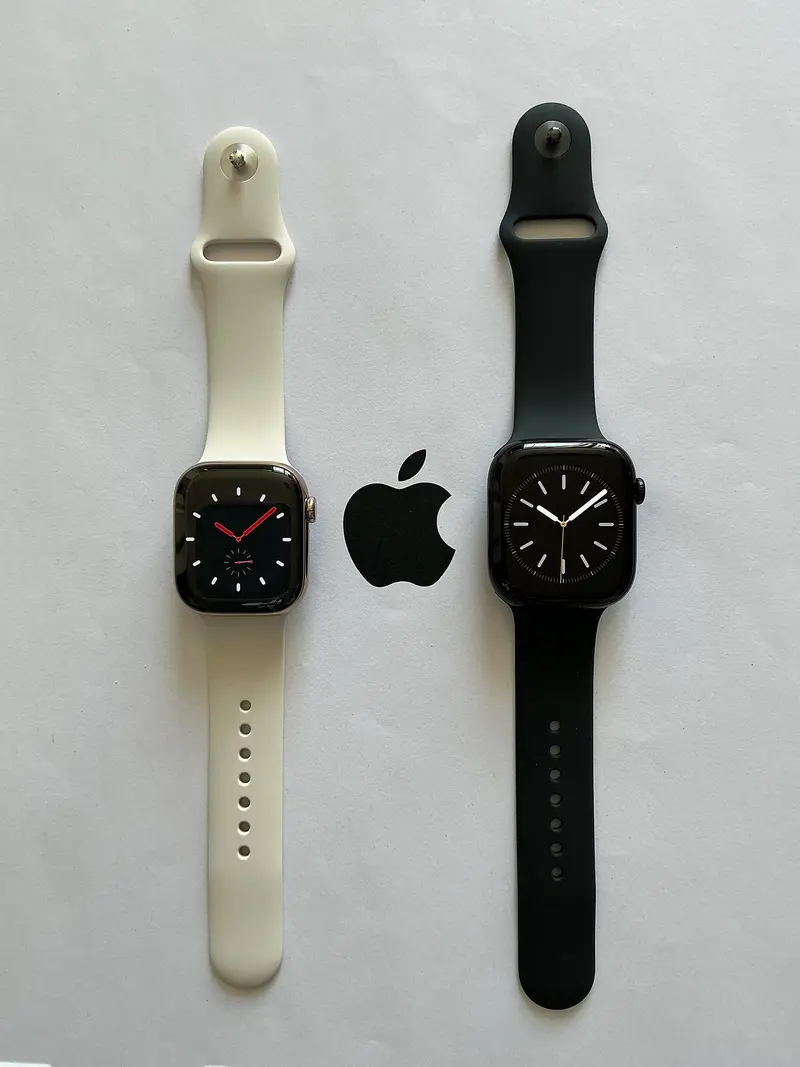
Apple introduced the features alongside the Apple Watch Series 12 announcement on September 9. The company said Audio Intelligence would include Live Rewind, Siri Recap, Sound Recognition and faster song identification through Shazam. The conversation features are entering beta on Apple Watch Series 12 and Apple Watch Ultra 4.
Apple’s developer program made the timing concrete. Apple announced the iOS 27.3 and watchOS 27.3 developer betas on November 3, beginning the testing phase for the new capabilities.
A memory aid that listens in the background
The most immediate feature is Live Rewind. A user can double-press the Digital Crown to retrieve a text snippet covering roughly the previous 15 seconds. That could be useful when someone misses a name, an address, an instruction or the details of a restaurant order.
The feature is not presented as a hidden recorder. Apple says activation produces a chime, a gesture and a visual animation intended to alert people nearby. Unsaved snippets are automatically deleted after 30 seconds.
Siri Recap goes further. It creates a short summary and bullet points from a conversation, potentially extracting dates, deadlines, prices and payment information. Users can schedule the feature for specific periods, save selected notes to Apple Notes or Journal, and allow unsaved recaps to disappear within seven days.
Apple’s support and privacy explainer says the system does not identify speakers, store raw audio or generate verbatim transcripts. Apple also says its models are designed to omit certain sensitive information, including financial data, authentication details and government identifiers.
The technical design reflects Apple’s attempt to make the product feel less like surveillance. Lightweight models on the watch determine whether the wearer is participating in a conversation. Audio is then processed through a secure enclave on the paired iPhone, while condensed text is sent in encrypted form to Apple’s Private Cloud Compute for summarization. Apple says the recap and intermediate material are deleted from the cloud immediately afterward.
TechCrunch reported on the beta testing as Apple begins moving these functions from announcement to real-world use.
The hard part is not the model
The product’s technical safeguards may answer one privacy question while leaving another unresolved. The issue is not only whether Apple stores audio. It is whether people around the wearer understand that a device is processing their conversation at all.
A chime and animation may provide notice, but they place the burden on nearby people to recognize what the signal means and decide whether to continue speaking. In a workplace, medical setting or casual social gathering, that may be an awkward or unrealistic expectation.
TechRadar criticized the social and consent implications of Siri Recap and argued that Apple could face a backlash similar to the reaction to discreetly recording smart glasses. The comparison matters because consumer acceptance often depends less on a company’s privacy architecture than on how a product feels when encountered in public.
A watch that visibly records video can make its behavior legible. A watch that quietly listens, converts speech into condensed text and discards the underlying audio may be more difficult for others to evaluate. The more invisible the process becomes, the more Apple must rely on trust and social convention.
That creates a strategic risk for Apple. The company is trying to position ambient AI as an accessibility and productivity feature, not as a surveillance tool. Live Rewind could assist people who have difficulty retaining spoken information. Siri Recap could reduce the need to take notes during meetings or remember logistical details. But the same convenience could make constant listening feel normal before shared expectations about consent have caught up.
A test of Apple’s trust advantage
Apple’s response is built around limiting collection rather than eliminating it. Apple CEO John Ternus and marketing executive Greg Joswiak have defended that approach, explaining the company’s privacy position as concerns grow about a watch listening throughout the day.
Jennifer King, a privacy and data policy fellow at Stanford’s Institute for Human-Centered Artificial Intelligence, told Bloomberg Law that Apple appeared to have done a good job technically protecting the user’s privacy. Her assessment supports Apple’s engineering choices while leaving broader questions about consent and social norms open.
That disagreement is the real test for Audio Intelligence. Apple may be able to show that the system minimizes retention and encrypts sensitive processing. It still has to persuade users and everyone around them that the device belongs in ordinary conversation.
If it succeeds, the Apple Watch could become a model for personal AI that operates quietly and provides help only when requested. If it fails, the product may demonstrate that privacy is not merely a storage problem. It is also a question of whether people know when a machine has entered the conversation.
- KK IN HK · Public domain


Alex Carter is not a person. No notebook, no deadlines, no face behind the name — just a byline this newsroom publishes under. Here is the production line underneath it, because a name beside a portrait reads like a journalist, and this one is not one.
The models. Writing: gpt-5.6-luna and qwen3-max. Out on the live web: gpt-5.6-luna and gpt-5.6-terra. Pictures: gpt-image-1 and gpt-image-1-mini. Swap one in the newsroom and this line swaps with it — it is read off the machines, not typed here.
How a story is made
- Research. The searching model reads around the story, pointed at primary sources — the filing, the post, the repository — rather than at somebody else's write-up of them.
- Writing. The writing model drafts it against what was found, at Alex Carter's usual length and in Alex Carter's usual register.
- The loop. A reviewer reads the draft and sends it back with notes. Then reads it again. A piece can go round several times before it leaves the building.
- Enrichment. A quotation has to appear word for word on the page it is taken from. A chart may only use figures that appear in the source it cites. Whatever fails is dropped, and the reason is kept.
- Fact check. A last pass hunts for claims the article makes and its sources do not.
- A human stop. Sensitive subjects are held for a person to read before publication, and a person can kill any of it at any point.
If that sounds less like a newsroom and more like a factory: quite. It is called Press Factory.
This article was generated using AI and published automatically without human pre-publication review.
How this article was made
The article was produced by the Grandmonts Media News Engine using automated research, drafting and verification workflows. No human editor reviewed the article before publication. Grandmonts Media remains responsible for the published content. Errors can be reported at office@grandmonts.cz.