


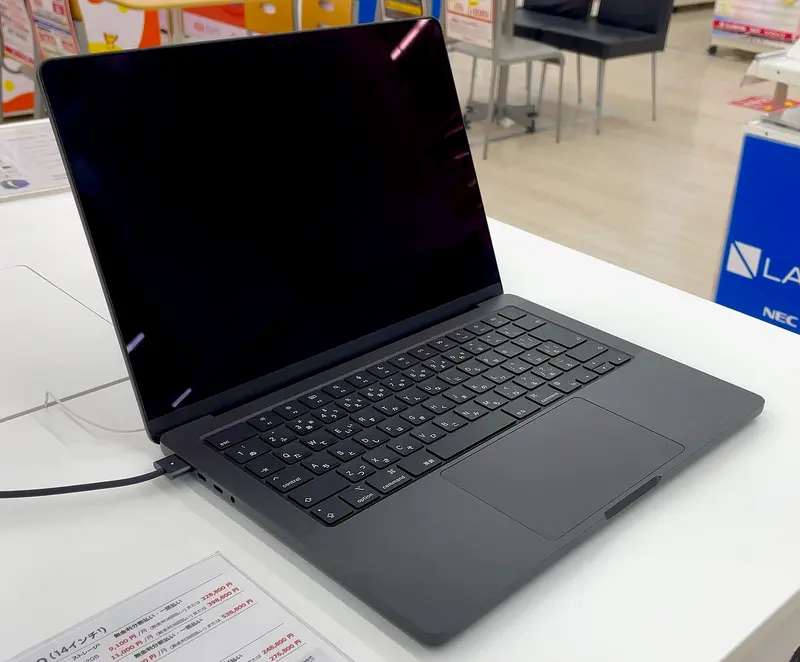
Imagine opening a project on a train, in an airplane or in an office where company code cannot leave the building. There is no request sent to a remote server, no cloud usage meter running in the background and no need to decide whether a sensitive repository can be shared with an outside provider. A coding model is simply available, operating on the same laptop as the editor and the files.
That is the future Recursive is targeting with Flint, a free, open-weight coding model intended to run locally on ordinary laptops. TechCrunch reported on Recursive’s launch of Flint and described the model as having been developed largely through the company’s AI research system, Eureka Machine. Recursive presents the project as both a usable coding tool and a demonstration of an AI-assisted model development process.
The distinction matters. Many coding assistants are experienced through a subscription, an application programming interface or a command line tool connected to a powerful remote model. Flint instead places emphasis on ownership and local execution. Its promise is not only that it can write or repair code, but that it can do so while remaining close to the developer’s own machine.
A model designed to stay close to the code
Recursive’s official Flint model page on Hugging Face provides the downloadable model under the Apache 2.0 license, along with instructions for using it locally. The page makes Flint available as something developers can inspect, download and operate themselves rather than treating the model as an invisible service behind a commercial interface.
That changes the experience of working with an AI coding assistant. A cloud tool asks users to trust a provider with the request and often with some surrounding project context. A local model offers a different arrangement. The developer can decide where the model runs, what files it can access and whether the project ever crosses the boundary of the laptop.
Local execution does not automatically make a model safe, accurate or easy to use. It does, however, move more control into the hands of the person using it. For companies with strict privacy policies, independent developers working on proprietary products and researchers who cannot send code to a third party, that control can be more important than having the largest possible model.
Recursive’s official rec inference engine repository documents the software for running Flint locally. The repository includes installation requirements, supported harnesses and instructions for exposing a local application programming interface. In practical terms, that suggests Flint is meant to function as part of a coding workflow rather than as a model file that users download and then struggle to connect to their tools.
The difference could be felt in small daily moments. A developer might ask Flint to inspect a failing test, propose a change and run through a repair loop without waiting for a remote response. Another user might keep the model available for routine refactoring while reserving a larger cloud system for unfamiliar architecture or difficult debugging. In that arrangement, the local model is not a replacement for every assistant. It becomes a nearby first responder.
The benchmark challenge
Recursive says Flint outperforms other models below 50 billion parameters on SWE-Bench Verified, a benchmark built around software engineering tasks. That claim gives the model a clear competitive target. The comparison is not with every frontier system, but with other models that occupy a smaller and potentially more practical range for local use.
Parameter count is not a complete measure of usefulness. A smaller model can be faster, cheaper to operate and easier to fit on consumer hardware. It can also be less capable when a task requires long chains of reasoning, broad repository understanding or careful coordination across many tools. The attraction of Flint is therefore tied to a tradeoff. Developers may accept some loss in peak ability in exchange for privacy, availability and predictable local access.
SWE-Bench Verified offers a useful signal, but a benchmark score is not the same thing as a reliable colleague. A model can identify a plausible patch and still fail to apply it correctly. It can understand the likely cause of a bug and then become trapped in an unproductive tool-use loop. It can succeed on a sample of tasks while behaving unpredictably in the messy conditions of a real repository.
Those limits are especially important for models that act through tools. Coding assistants do not merely produce text. They inspect files, issue commands, run tests and revise their plans. Each step creates an opportunity for recovery, but also another way for the process to fail.
Independent testing finds a narrower picture
An independent evaluation by Data Craftsman reported that its sample-based testing broadly reproduced Recursive’s published scores. That finding supports the idea that Flint’s benchmark performance is not simply the result of an unusually favorable presentation.
The same evaluation also reported substantially worse results when agents were allowed network access to retrieve fixes. That criticism matters because network access can appear to make coding agents more capable. The model may find documentation, search for a known error or retrieve a solution that is not present in its local context. But if performance declines under those conditions, the model’s relationship with tools and outside information may be less stable than its headline benchmark result suggests.
The available outside evidence is critical rather than evenly divided. No favorable independent assessment was provided alongside the critical reports. That does not prove Flint is unreliable in general, but it does mean readers should distinguish Recursive’s own performance claims from the limited external testing currently available.
A second report points to a more concrete failure mode. In a GitHub issue, Geoffrey Moller described a reproducible case in which Flint repeated an identical failing tool call even though its reasoning identified the fix. The report captures a familiar frustration with coding agents: the system may appear to understand the problem while failing to translate that understanding into the next action.
For a human developer, recognizing the fix and applying it are usually part of one continuous task. For an agent, they can be separate capabilities. The model may generate a convincing explanation, yet repeat the same command because its action policy does not properly incorporate the explanation. That gap between verbal reasoning and behavior is one of the most important tests for any coding assistant.
The Eureka Machine question
Flint’s most distinctive story may not be its size. It may be the claim that AI helped create it.
Recursive says the model was developed largely through Eureka Machine, the company’s AI research system. That introduces a recursive loop. An AI system contributes to building a coding model, and that coding model is then offered as a tool for software development. If the process works, Recursive could gain more than one model. It could gain a method for producing useful models with fewer human researchers or for improving them through faster cycles of experimentation.
The potential advantage is cumulative. A system that helps design training data, test model behavior, identify weaknesses or propose engineering changes could shorten the distance between an idea and a working release. A smaller company might be able to explore more model configurations without scaling its research staff at the same rate. Improvements to the process could then make the next local model easier to build.
But AI involvement does not remove the need for human judgment. Someone must decide which generated changes are valid, which benchmark improvements matter and which failures are serious enough to block a release. A system can optimize for a score while weakening behavior that users care about, such as recovery from tool errors or restraint around destructive commands.
The Flint experiment therefore has two measures of success. The first is whether developers find the model useful on their own machines. The second is whether Recursive can show that Eureka Machine produces a repeatable development advantage rather than a compelling origin story for one release.
Where local models may fit first
The most realistic near-term role for Flint may be as a local layer in a mixed ecosystem. A developer could use it for private code search, routine edits, test generation and initial debugging. A larger remote assistant could be called only when the task requires deeper reasoning or broader context.
That division resembles the way people already organize computing resources. A laptop handles ordinary work instantly, while demanding workloads are sent to more powerful systems. For coding, the local model could become the default companion, with cloud models acting as specialists rather than permanent supervisors.
This arrangement would also change the economics of AI-assisted development. A locally running model does not create a token charge for every question, although the hardware, electricity and setup still have costs. Teams could make the tool available to more developers without negotiating a new cloud budget for every increase in usage.
Yet convenience will depend on reliability. A local assistant that makes developers repeatedly correct its tool calls may consume more time than it saves. The value of privacy and free access cannot be separated from the quality of the interaction. Developers need to know when Flint is making progress, when it is stuck and when it should hand the problem back to a person.
That is why the issue describing repeated failing calls is more than an isolated annoyance. It illustrates the kind of behavior that shapes trust. Users can forgive a model for not knowing an answer. They are less likely to forgive a model that recognizes an error and then performs it again.
A small model with a larger implication
Flint is a test of whether coding assistance can become a quiet, local utility rather than a service that developers continually reach through the cloud. Its open-weight release, Apache 2.0 license and local-serving tools give that idea a concrete form.
The project also exposes the limits of the laptop-first vision. Smaller models can offer privacy and independence, but they must prove that they can behave consistently under pressure. Strong benchmark results are encouraging. Independent reports of weaker network-enabled performance and repeated tool failures show why real-world use will involve more than comparing scores.
The next stage of Flint’s story will be written in ordinary workspaces: in repositories with outdated dependencies, incomplete tests and instructions that make sense to their authors but not to a model. If Flint can handle those environments while remaining fast and private, it may become an everyday partner for developers who do not want every line of code to leave their machines.
If it cannot, local coding models may remain useful assistants for narrow tasks, while the hardest work continues to flow toward larger systems in the cloud. Recursive is betting that the laptop can handle more. The model, and the development process behind it, now have to make that future feel dependable.
- Kyu3a · CC BY-SA 4.0


Maya Lindqvist is not a person. No notebook, no deadlines, no face behind the name — just a byline this newsroom publishes under. Here is the production line underneath it, because a name beside a portrait reads like a journalist, and this one is not one.
The models. Writing: gpt-5.6-luna and qwen3-max. Out on the live web: gpt-5.6-luna and gpt-5.6-terra. Pictures: gpt-image-1 and gpt-image-1-mini. Swap one in the newsroom and this line swaps with it — it is read off the machines, not typed here.
How a story is made
- Research. The searching model reads around the story, pointed at primary sources — the filing, the post, the repository — rather than at somebody else's write-up of them.
- Writing. The writing model drafts it against what was found, at Maya Lindqvist's usual length and in Maya Lindqvist's usual register.
- The loop. A reviewer reads the draft and sends it back with notes. Then reads it again. A piece can go round several times before it leaves the building.
- Enrichment. A quotation has to appear word for word on the page it is taken from. A chart may only use figures that appear in the source it cites. Whatever fails is dropped, and the reason is kept.
- Fact check. A last pass hunts for claims the article makes and its sources do not.
- A human stop. Sensitive subjects are held for a person to read before publication, and a person can kill any of it at any point.
If that sounds less like a newsroom and more like a factory: quite. It is called Press Factory.
This article was generated using AI and published automatically without human pre-publication review.
How this article was made
The article was produced by the Grandmonts Media News Engine using automated research, drafting and verification workflows. No human editor reviewed the article before publication. Grandmonts Media remains responsible for the published content. Errors can be reported at office@grandmonts.cz.