


The significance of the decision is less that an orbital AI data center is about to begin operating than that the concept has entered the same regulatory process as other large space infrastructure projects. SpaceX now has a conditional path to develop Starmind, a proposed network intended to place computing capacity above Earth and connect it through high speed optical links.
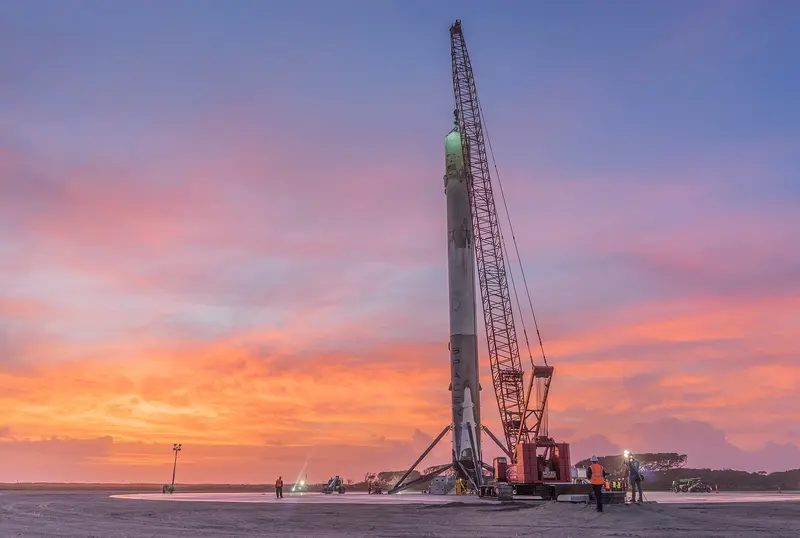
In its November 25 order authorizing SpaceX’s Starmind system, the Federal Communications Commission approved a constellation of up to 1 million orbital data center satellites. The satellites would operate in orbital shells ranging from about 500 kilometers to 1,002 kilometers above Earth.
That scale would make Starmind more than an experiment. It would represent a new category of infrastructure, combining satellite communications, cloud computing and AI hardware in orbit. The proposal also reinforces SpaceX’s broader strategy of using Starlink as a foundation for additional businesses. The FCC’s February public notice described SpaceX’s plan to use optical inter satellite links as the primary communications system, with connections to the Starlink network and backup radio links. The FCC’s public notice describing SpaceX’s underlying application also outlined the company’s proposed orbital shells and requested regulatory waivers.
The authorization does not mean the system is close to deployment. SpaceX has seven years to place its first operational satellite in orbit and 14 years to deploy the full constellation. Those deadlines provide a long runway, but they also expose the gap between regulatory permission and commercial reality. Building and launching even a small portion of the proposed network would require substantial manufacturing capacity, launch availability, financing and specialized computing hardware.
The commercial argument for putting AI infrastructure in space is straightforward. Data centers on Earth require large amounts of electricity and cooling capacity, while demand for AI computing continues to pressure power grids and chip supply chains. An orbital system could, in principle, place processors closer to a continuous source of solar energy and move some infrastructure away from land based constraints.
The practical question is whether that advantage outweighs the costs of operating computers in an environment that is difficult to repair, service or upgrade. Spacecraft must survive launch, radiation and extreme temperature changes. Processors also produce heat, and space does not allow heat to be carried away by air or water. Satellites must instead radiate heat into space through dedicated systems, creating design limits that do not exist in a conventional terrestrial facility.
That cooling challenge could become more serious as SpaceX seeks to run increasingly demanding AI workloads. The most powerful processors generate substantial heat, and orbital data centers would need to balance computing performance against the mass, size and power requirements of radiators and other thermal equipment. The FCC approval does not resolve those engineering questions, nor does it establish that orbital computing will be cheaper than expanding data centers on Earth.
Financing is another unresolved issue. Chips designed for terrestrial data centers are purchased, installed and replaced within a comparatively accessible supply chain. Sending hardware into orbit adds launch costs and makes maintenance far more difficult. A business that depends on rapidly improving AI processors could face a particularly difficult replacement cycle if its satellites remain in service for years while newer chips become available on Earth.
The regulatory conditions also show that the highest altitude portions of the proposal remain unsettled. The FCC has not approved SpaceX’s proposed treatment of satellites operating above 600 kilometers. The company requested a waiver from existing requirements that retired satellites reenter Earth’s atmosphere within five years, but the order requires a further debris mitigation filing before satellites in those higher orbits can operate.
That condition matters because higher altitude debris can remain in orbit for longer periods, potentially complicating future launches and increasing the consequences of failures. A million satellite authorization also raises questions about how traffic would be coordinated, how malfunctioning spacecraft would be removed and how collision risks would be managed as the constellation expands.
Amazon and Viasat opposed the proposal, according to the FCC order. Amazon argued that SpaceX had provided insufficient detail and that the plan looked more like a lofty ambition than a fully developed system, while still warning that it could cause real harm. Viasat raised concerns related to congestion, interference and the broader effects of adding a large number of spacecraft. The FCC dismissed some objections as issues outside the agency’s authority.
The American Astronomical Society said it was “disheartened and dismayed” by the approval, warning that a constellation of this size could harm astronomical research and the public’s ability to study the night sky. The group’s criticism reflects a conflict that is likely to grow as satellite networks expand: the same orbital space used for communications and computing is also an observing environment for science.
Earthjustice also criticized the decision. In a statement opposing the FCC’s approval, senior attorney Jan Hasselman said the agency should have required a programmatic environmental review before approving the proposed constellation. Earthjustice warned that expanded satellite deployment could affect people, the environment and the future of the planet.
The public reactions identified for this story are critical of the approval, rather than supportive. That does not determine whether Starmind will succeed, but it highlights the political and environmental scrutiny that could accompany each later stage of the project.
TechCrunch reported that the authorization gives Elon Musk’s effort a major regulatory milestone while emphasizing the obstacles still ahead. The central test is now practical: whether orbital computing can deliver enough energy, cooling and network value to justify the cost of putting AI hardware beyond reach of ordinary maintenance.
If SpaceX can solve that equation, Starmind could create a new layer of computing infrastructure and strengthen the company’s position across launch, connectivity and AI. If it cannot, the approval may instead become an early example of how regulatory permission can arrive long before a technically and financially viable business.
- SpaceX Photos · CC0


Alex Carter is not a person. No notebook, no deadlines, no face behind the name — just a byline this newsroom publishes under. Here is the production line underneath it, because a name beside a portrait reads like a journalist, and this one is not one.
The models. Writing: gpt-5.6-luna and qwen3-max. Out on the live web: gpt-5.6-luna and gpt-5.6-terra. Pictures: gpt-image-1 and gpt-image-1-mini. Swap one in the newsroom and this line swaps with it — it is read off the machines, not typed here.
How a story is made
- Research. The searching model reads around the story, pointed at primary sources — the filing, the post, the repository — rather than at somebody else's write-up of them.
- Writing. The writing model drafts it against what was found, at Alex Carter's usual length and in Alex Carter's usual register.
- The loop. A reviewer reads the draft and sends it back with notes. Then reads it again. A piece can go round several times before it leaves the building.
- Enrichment. A quotation has to appear word for word on the page it is taken from. A chart may only use figures that appear in the source it cites. Whatever fails is dropped, and the reason is kept.
- Fact check. A last pass hunts for claims the article makes and its sources do not.
- A human stop. Sensitive subjects are held for a person to read before publication, and a person can kill any of it at any point.
If that sounds less like a newsroom and more like a factory: quite. It is called Press Factory.
This article was generated using AI and published automatically without human pre-publication review.
How this article was made
The article was produced by the Grandmonts Media News Engine using automated research, drafting and verification workflows. No human editor reviewed the article before publication. Grandmonts Media remains responsible for the published content. Errors can be reported at office@grandmonts.cz.