
A new Chinese open model promises to turn a local graphics card into a long-memory software assistant. The more important question is not whether it can match cloud systems, but whether its sparse design makes private, affordable agents practical for developers.
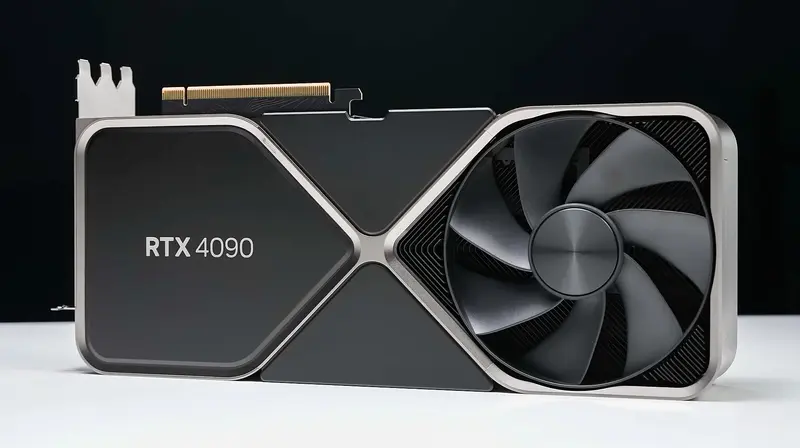
Imagine an agent running on a workstation in a small design studio. It reads a large codebase, remembers the instructions from earlier in the day, searches local files, calls a testing tool and proposes a fix without sending the project to a cloud server. The machine does not need a data center class accelerator. According to its developer, it needs roughly the memory available on a high-end consumer graphics card.
That is the proposition behind Xing4.0-29B-A4B, an agentic mixture-of-experts model released by China Telecom AI. The model has 29 billion parameters in total, but activates about 4 billion for each token. This sparse structure is intended to reduce the computing burden while preserving a larger pool of learned capabilities.
In its official announcement, China Telecom says Xing4.0-29B-A4B supports long-context processing, tool use and autonomous execution. The company also describes low-bit quantization designed for deployment on consumer GPUs and says the model is available through open-source repositories. Those details point to a practical goal: not simply publishing another large model, but making an agent that can operate outside a hosted service.
The 4 billion parameter experience
A mixture-of-experts model can be understood as a large library with a small team of specialists selected for each question. The full model may contain many more parameters than the hardware actively uses at one moment. That does not make the system small in every respect, because its weights still need to be stored, but it can reduce the work required during inference.
The distinction matters for agents. A chatbot that answers one question can often tolerate a short interaction and limited memory. An agent is expected to maintain a plan, inspect documents, use tools and react to intermediate results. Every additional step increases the value of lower operating costs. If a developer can run repeated tasks locally, an agent becomes less like an occasional API call and more like a persistent application.
The model’s official GitHub repository documents a 256K-token context window, with an extension to 512K, along with deployment instructions, framework support and an Apache-2.0 license. It also lists company-reported benchmark results, including a 75.0 score on SWE-bench Verified.
A context window of that size could let an agent work across substantial repositories, long product specifications or collections of internal documents without constantly compressing its memory. In a future office, that might mean a developer asks the system to trace a bug across months of design notes, source files and test results. A legal or research team could keep more of a working record in one session.
Yet context length is not the same as understanding. A system may accept a large prompt while overlooking crucial details, repeating information or losing track of its plan. The useful test will be whether Xing4.0-29B-A4B remains reliable after many tool calls, not whether it can technically accept a large number of tokens.
Quantization changes the deployment map
Low-bit quantization is central to the single-GPU claim. It stores model values with fewer bits, reducing memory requirements at a potential cost to accuracy. The trade-off resembles shrinking a high-resolution image to fit on a phone. The result may remain useful, but the details most sensitive to compression can suffer.
The official Hugging Face model repository provides the weights and configuration, identifies the system as a 29B model with 4B active parameters, and describes its agent-oriented architecture, 256K context and supported inference frameworks. Its documentation also outlines the benchmark methodology supplied by the project.
That availability could expand the choices facing developers. A team handling confidential source code, customer records or industrial designs may prefer a local model because data does not need to leave its own network. A small company may also avoid usage-based cloud bills when an agent runs continuously, although electricity, hardware, maintenance and engineering time still carry costs.
Open availability can also make experimentation cheaper. Developers can adapt the model to a workflow, connect it to private tools or test different inference stacks without waiting for a hosted provider to expose every capability. The Apache-2.0 license, as documented by the project, is especially relevant for organizations assessing whether a model can be integrated into commercial software.
But open weights do not automatically deliver a complete local product. Running a model requires compatible hardware, memory management, drivers and software. Tool permissions must be designed carefully. An agent that can edit files, execute commands or access internal systems needs boundaries, logging and a way for a person to approve risky actions.
The benchmark question
The reported SWE-bench Verified result is attention-grabbing because software engineering is a natural test for an agent. A score of 75.0 suggests strong performance under the project’s stated evaluation setup. It does not, by itself, establish that the model will solve a company’s private bugs, follow unfamiliar coding conventions or recover gracefully when a tool fails.
The announcement is primarily company-supplied material, so independent testing will be important. Evaluators should compare the quantized local versions with larger or cloud-hosted systems, measure speed and memory use, and test long sessions rather than isolated prompts. They should also examine failure modes: fabricated tool results, incomplete patches, insecure code and plans that appear plausible but do not finish.
TechCrunch reported that the release is positioned as a versatile agentic model capable of running on a single GPU, reflecting the same practical emphasis as China Telecom’s announcement.
The larger significance is therefore economic and architectural. If sparse activation and quantization preserve enough reliability, developers could place capable agents closer to the data they use. The future would not be a choice between a simple local chatbot and an expensive cloud platform. It could include private, specialized assistants running quietly on machines already sitting under desks.
Xing4.0-29B-A4B has not yet proved that future. It has offered a concrete experiment: trade some precision and infrastructure for local control, long memory and lower operating costs. The success of that bargain will be measured not by parameter counts, but by how often the agent completes useful work without needing a human to rescue it.
- 极客湾Geekerwan · CC BY 3.0

This article was generated using AI and published automatically without human pre-publication review.
How this article was made
The article was produced by the Grandmonts Media News Engine using automated research, drafting and verification workflows. No human editor reviewed the article before publication. Grandmonts Media remains responsible for the published content. Errors can be reported at office@grandmonts.cz.